
Politics
12 min read
Victoria's CFA Funding Dispute: Unpacking the Latest Report
The Guardian
January 20, 2026•2 days ago
AI-Generated SummaryAuto-generated
Victoria's Country Fire Authority (CFA) received its highest funding in five years, totaling $361.3 million. Despite this increase and improved financial performance, the CFA still recorded a deficit. A dispute persists, with the opposition claiming real-terms funding cuts due to inflation, while the government asserts the CFA is well-resourced. Concerns also remain regarding aging equipment and the need for broader investment.
What does the report say about CFA funding?
The 2024–25 annual report showed the CFA’s funding reached its highest level in five years, with a total of $361.3m in government grants.
This is an increase of $21.8m on the previous financial year, when the CFA received its lowest funding across the forward estimates of $339.5m. It is also higher than the 2020-21 financial year, when it received $351.6m. The government has maintained that annual budgets fluctuate according to fire risk.
The annual report also shows the CFA’s total income has increased by $26.4m, from $451m in 2023-24 to $477.4m in 2024-25. As has its asset base, from $2.12bn to $2.23bn.
Despite this, the service recorded a $50.5m deficit, an improvement on the 2023-24 deficit of $75.5m but a worse result than the $357.7m surplus in 2022-23. In his foreword, the CFA’s chief executive, Greg Leach, said the organisation would continue to focus on “the challenge of achieving financial sustainability and providing fleet and assets to support our volunteers in delivery of services to the community”.
It is important to note the figures in the annual report don’t include additional funds provided by the government to the CFA in November, following the release of the seasonal bushfire outlook, which showed the state was at higher risk of fires over the summer. This will be included in the 2025-26 report.
The CFA’s chief officer, Jason Heffernan, told reporters last week this top-up funding allowed for earlier access of the air fleet, the release of the “Get Fire Ready” information campaign and bulk water supplies.
Why was the report so delayed?
In Victoria, all government agencies are required to provide their annual report to their relevant minister to be tabled in parliament on or before 31 October each year, or on the next available date if parliament’s not sitting.
When asked last week why the government hadn’t tabled the CFA report, the premier blamed the Victorian Auditor-General’s Office (VAGO) for the hold up. But in a rare statement, VAGO rejected it was responsible.
VAGO said it approved the report for publication on 11 November, leaving the government enough time to table the report before the end of the sitting year.
In a letter attached to the annual report, the emergency services minister, Vicki Ward, said she received the report on 18 December.
She told reporters last week she had planned to table it when parliament resumed in February but brought the date forward amid the funding stoush.
Will this bring an end to the CFA funding dispute?
In short, no. Ward said the report was proof the CFA was “stronger, better funded and better resourced under a Labor government” and again accused the opposition of “fear‑mongering” and “spreading misinformation and conspiracy theories”.
However, the opposition isn’t backing down, with the party’s emergency services spokesperson and the Nationals leader, Danny O’Brien, claiming the increase in funding actually accounts for a $55m “cut” in real terms since 2020 when accounting for inflation.
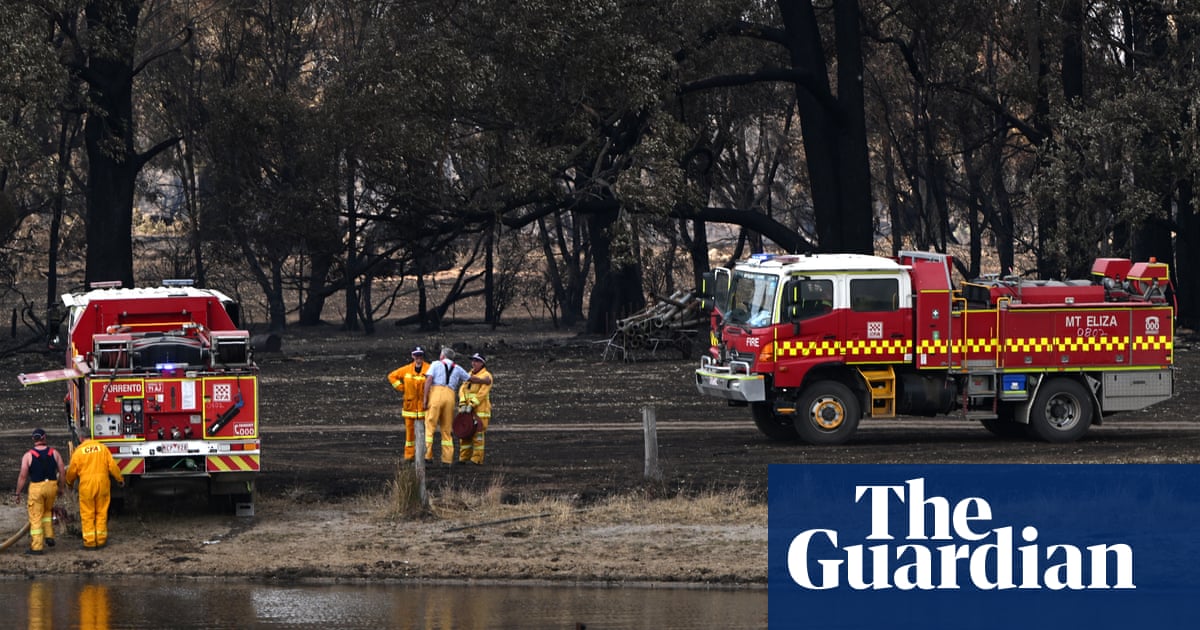
Last week, the United Firefighters Union secretary, Peter Marshall, said even if the annual report were to show an increase in funding, the CFA and its aging fleet had been affected by years of neglect.
He claimed 800 CFA tankers were out-of-date, with 230 of those over 31 years old, while 138 of Fire Rescue Victoria’s trucks – or 65% – were also out-of-date.
Stephen McDonald from Volunteer Fire Brigades Victoria, the official representative body for CFA volunteers, said the fleet was only “one part – albeit a highly visible part, of a much bigger problem”.
He said “every volunteer-based emergency service in the country is struggling” and that there needs to be a “non-partisan” plan to invest not just in trucks but other equipment, facilities, and “behind the scenes” systems and processes.
Rate this article
Login to rate this article
Comments
Please login to comment
No comments yet. Be the first to comment!