
Geopolitics
17 min read
Decoding Donald Trump's Chilling Message to Norway's Leader
The Age
January 20, 2026•2 days ago
AI-Generated SummaryAuto-generated
Donald Trump's communication to Norway regarding Greenland, coupled with his Nobel Peace Prize grievance, signals a transactional and potentially destabilizing approach to international relations. This posture creates uncertainty for Europe and NATO, as Trump's actions are viewed as leverage-driven posturing. While some advocate for congressional intervention, others suggest Europe must establish obstacles while addressing Arctic security concerns.
January 20, 2026 — 11:56am
You have reached your maximum number of saved items.
Remove items from your saved list to add more.
Save this article for later
Add articles to your saved list and come back to them anytime.
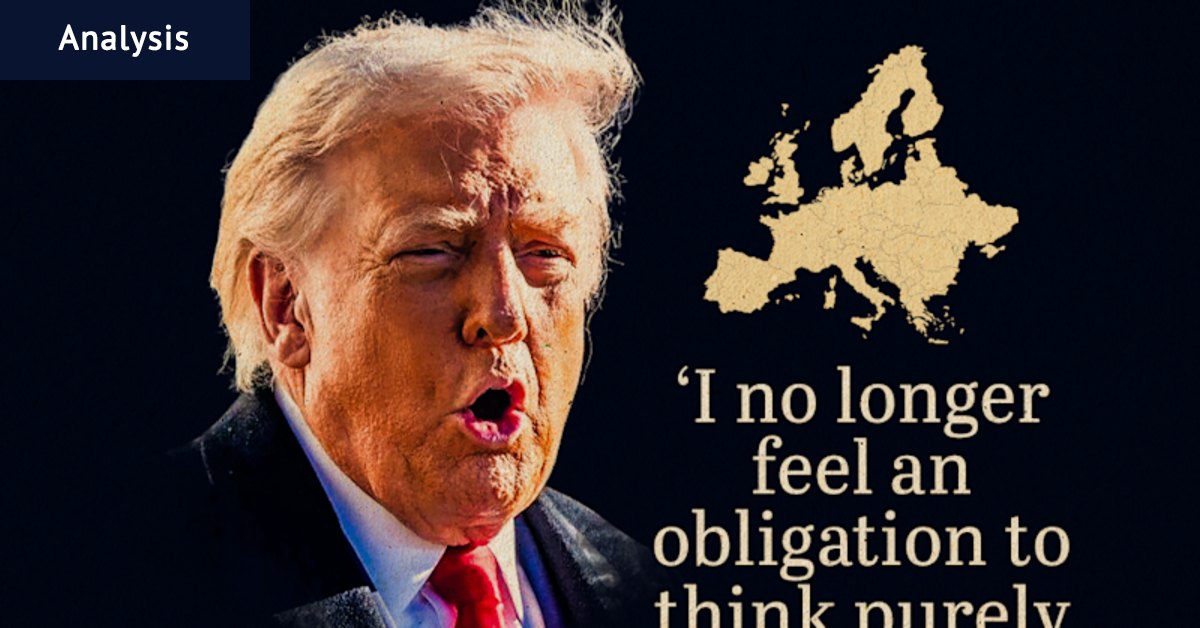
Donald Trump’s latest missive – that he no longer feels the need to exclusively pursue peace because he did not receive the Nobel Peace Prize – sends a chilling message to the world that the US president is off the leash.
The US president’s message to Norwegian Prime Minister Jonas Gahr Støre was about the US acquiring Greenland, but it also says something about his broader disposition towards Europe and the NATO alliance. As we know, with Trump, there is no such thing as history or principle; there is only transaction and leverage.
It ought to make for a compelling few days in Switzerland, where the world’s political and business elite will gather this week for the World Economic Forum.
“Trump is coming to Davos to meet with a lot of European leaders at a time when he is threatening to rip up the transatlantic alliance and to engage in undermining the territorial integrity of one of its closest, albeit small, allies,” Eurasia Group president Ian Bremmer said. “If that’s the way this ends up, it’s the end of NATO.”
Advertisement
Back in the United States, there is, as ever, a soft drumbeat of expectation that now will be the time Trump’s Republican colleagues will have to intervene. The Norway letter “should be the last straw”, wrote Pulitzer prize-winning historian Anne Applebaum in The Atlantic.
Democratic Senator Patty Murray said on X: “These are not the words of a President who thinks rationally. Our allies are forced to take this seriously … It is WAY past time for this Republican Congress to intervene.”
The kind of bold intervention sought by Trump’s opponents and Washington’s shell-shocked foreign policy establishment is not going to happen. But it remains entirely possible that Trump will backtrack once Europe is compelled – again – to bend to his will.
At this stage, his moves have all the hallmarks of Trumpian posturing: a two-week deadline before new tariffs, the sabre-rattling before a big international meeting, an incendiary text message to jolt everyone into action.
Advertisement
Speaker Mike Johnson, who oversees Trump’s slim House of Representatives majority, tried to calm the waters when he appeared on the BBC.
“I don’t foresee military intervention in Greenland. I think diplomatic channels is the way to go,” he said. He added that perhaps the point of Trump’s threats was to get European friends and allies to “recognise anew” Greenland’s geostrategic importance.
Daniel Fried, a former US ambassador to Poland and a distinguished fellow at the Atlantic Council think tank, says Johnson’s comments were potentially instructive.
“If Mike Johnson is articulating it in his way, it suggests that that represents an overwhelming majority of the House Republicans,” Fried says. “Which means it is possible that Congress will act. They would prefer to do so quietly.”
Advertisement
That may involve Johnson telling Trump that there is overwhelming support for bills to block US aggression against Greenland, and that he won’t be able to stop it.
“The question is: are Trump’s worst statements and his temper tantrums the final word, or are they an attempt to bully everybody?” Fried asks. “I’m sure he would love to conquer Greenland, but he is sensitive – or has shown himself to be sensitive – to obstacles.”
It’s incumbent on Europe to throw up those obstacles, but also to respond to the valid points Trump is making about Arctic security and repelling threats from Russia and China. Granted, it’s difficult to stomach at the same time Trump is inviting Vladimir Putin to his so-called Board of Peace.
Trump’s latest complaint about the Nobel Prize is part of the same set of grievances this administration has expressed about Europe since day one; essentially, that the US has been doing all the heavy lifting on global security, with little credit or reward.
Advertisement
Joshua Shifrinson, a foreign policy expert at the University of Maryland, says Europe’s dependency on the US for its security gives Trump great leeway and limits Europe’s options in responding to his antics.
If they don’t cajole Trump, he can accelerate the US’s long-term pivot away from Europe, which would leave NATO allies vulnerable. On the other hand, if they begin distancing themselves, Trump might take that as a signal that America’s services are no longer needed for the continent.
“They’re in a real pickle ... they’re caught between two unpalatable grand strategic options,” Shifrinson, who is also a non-resident fellow at the libertarian Cato Institute, says.
He says Europe’s best bet is to extend an olive branch to Washington while quietly preparing to become more independent, and potentially making noise about co-operation with China to “fire a shot across the American bow”.
Advertisement
You have reached your maximum number of saved items.
Remove items from your saved list to add more.
More:
Trump diplomacy
Donald Trump
Foreign relations
Greenland
EU
Analysis
For subscribers
Trump's White House
NATO
Norway
US politics
USA
Michael Koziol is the North America correspondent for The Age and Sydney Morning Herald. He is a former Sydney editor, Sun-Herald deputy editor and a federal political reporter in Canberra.Connect via Twitter or email.
Rate this article
Login to rate this article
Comments
Please login to comment
No comments yet. Be the first to comment!