
Geopolitics
20 min read
Is Trump Planning a Military Strike on Iran? Pakistan's Precarious Position Explained
Moneycontrol
January 19, 2026•3 days ago
AI-Generated SummaryAuto-generated
Speculation of a US military strike on Iran is fueled by increased US deployments and escalating rhetoric from President Trump. While no formal plans are announced, reinforced military posture includes aircraft carrier groups and fighter jets. This situation places Pakistan in a precarious position due to its regional ties and dependence on US aid, fearing potential blowback from any escalation.
Washington has not formally announced plans for military action against Iran. Yet a steady expansion of US military deployments across West Asia and the Indian Ocean region, combined with escalating rhetoric from US President Donald Trump, is fuelling speculation about a possible surprise strike.
The uncertainty is compounded by regional instability, Iran’s deadly internal crackdown, and the increasingly awkward position Pakistan finds itself in as tensions rise between Washington, Tehran and Tel Aviv.
A visible US military buildup
The United States has significantly reinforced its military posture in and around West Asia in recent days, signalling readiness even as it stops short of announcing direct action.
One of the most notable developments is the movement of the aircraft carrier USS Abraham Lincoln and its strike group towards the US Central Command area of responsibility. The carrier, along with destroyers USS Spruance and USS Michael Murphy, has transited the Strait of Malacca and is expected to enter CENTCOM-controlled waters shortly.
At the same time, the US Air Force has deployed additional fighter aircraft to the region. At least 12 F-15 fighter jets have arrived in Jordan, with more aircraft believed to be en route.
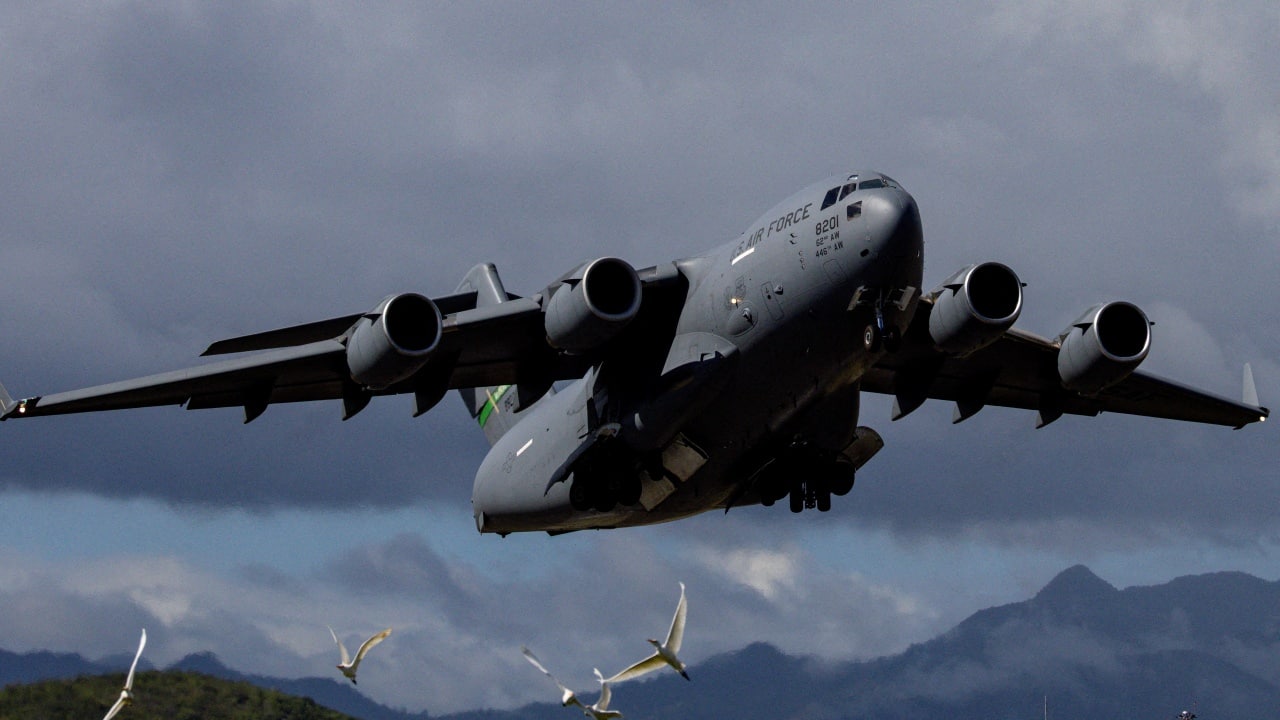
According to reports, US C-17 Globemaster transport aircraft have also landed at the American military base on Diego Garcia, pointing to the movement of troops, equipment and logistical supplies needed to sustain potential operations.
American officials told The Jerusalem Post that “all options are now on the table,” adding that the goal is to create a force posture that gives Trump maximum flexibility if he chooses to act against Iran.
Trump, Tehran and the war of words
Trump’s language towards Iran’s leadership has grown increasingly confrontational amid Tehran’s brutal crackdown on protests.
Speaking to Politico, Trump said, “It’s time to look for new leadership in Iran.”
Earlier, he openly encouraged Iranians to continue protesting and urged them to “take over institutions,” claiming that “help is on its way.”
A day later, Trump claimed credit for a pause in executions, stating, “The best decision he ever made was not hanging more than 800 people two days ago.”
Iran’s Supreme Leader Ayatollah Ali Khamenei responded sharply, accusing the US president of instigating chaos.
“We find the US President guilty due to the casualties, damages and slander he inflicted upon the Iranian nation,” Khamenei wrote on X.
He also accused Trump of misrepresenting violent groups as the Iranian people, calling it “an appalling slander.”
Trump fired back after being shown the posts.
“What he is guilty of, as the leader of a country, is the complete destruction of the country and the use of violence at levels never seen before,” Trump said.
He added, “Leadership is about respect, not fear and death.”
Trump went further, personally attacking Khamenei by saying, “The man is a sick man who should run his country properly and stop killing people.”
Why Iran is on edge
Iran’s current crisis stems from protests that erupted in December, initially over economic grievances but quickly evolving into a nationwide challenge to clerical rule.
According to the US-based Human Rights Activists News Agency, at least 3,919 people were killed in the crackdown, while Reuters cited an Iranian official who put the toll at over 5,000, including around 500 security personnel.
Iranian authorities have blamed the unrest on foreign interference, repeatedly pointing fingers at the US and Israel.
Despite a reduction in street protests, discontent persists, with reports of nightly anti-Khamenei chants in cities such as Tehran, Shiraz and Isfahan, alongside sweeping internet restrictions.
What kind of strike is being discussed
Former US ambassador to Israel Dan Shapiro suggested Trump may be considering a dramatic move to match his earlier rhetoric.
“Trump called for the Iranian people to go to the streets, promising he would be with them,” Shapiro told The Jerusalem Post.
“But when the regime killed thousands, no price was paid because the US lacked the necessary forces in the region at the time.”
Shapiro speculated that Trump could consider eliminating Iran’s supreme leader, but warned of serious consequences.
“Eliminating Khamenei is dramatic, but it wouldn’t necessarily change the regime,” he said. “You would likely see the Islamic Revolutionary Guard Corps take over, at least for a time.”
Where Pakistan fits and why it is worried
As Washington keeps the Iran option open, Pakistan is increasingly caught in an uncomfortable and dangerous middle.
Islamabad has deep economic and energy ties with Iran, a long and porous border, and a history of instability in its western provinces. At the same time, Pakistan remains heavily dependent on the US and its allies for financial support, IMF bailouts and military assistance.
ALSO READ | Caught between Trump and Tehran: Why Asim Munir fears blowback as America keeps Iran option open
Reports indicate that Pakistan’s military leadership, including Army Chief Asim Munir, is deeply concerned about potential blowback if the US strikes Iran.
Any escalation risks refugee inflows, sectarian tensions, and militant spillover into Pakistan’s already volatile Balochistan region. It also threatens Pakistan’s delicate balancing act between Iran, the US, China and the Gulf states.
Unlike Gulf countries that have reportedly denied Washington permission to use their territory for strikes on Iran, Pakistan does not have the diplomatic leverage or internal stability to absorb the consequences of a regional conflict.
In short, while Islamabad tries to project neutrality, it lacks the capacity to stay insulated if tensions spiral.
So is a US strike imminent?
There is no formal confirmation that the US is preparing to strike Iran. Trump reportedly cancelled a planned attack earlier after being briefed on operational and diplomatic constraints.
Yet the scale of the military buildup, the hardened rhetoric, and Washington’s insistence that “all options are on the table” suggest that the threat is being deliberately kept alive.
For Iran, the message is deterrence through uncertainty.
For Pakistan, it is a reminder that regional instability often lands hardest on states that are weakest, most exposed, and least prepared to manage the fallout.
Rate this article
Login to rate this article
Comments
Please login to comment
No comments yet. Be the first to comment!