
Economy & Markets
28 min read
Market Warning: How Investors Are Reacting to Trump's Political Moves
The Age
January 21, 2026•1 day ago
AI-Generated SummaryAuto-generated
Global markets are showing nervousness. Japan's bond market crashed due to election promises on tax cuts, reminiscent of a "Liz Truss moment." US markets tumbled after Donald Trump threatened new tariffs on European exports and demanded Greenland. These events highlight investor anxiety amidst high global debt and Trump's trade strategies.
Advertisement
Opinion
Melting down: Trump sent a warning by markets
Stephen BartholomeuszSenior business columnist
January 21, 2026 — 12:07pm
January 21, 2026 — 12:07pm
You have reached your maximum number of saved items.
Remove items from your saved list to add more.
Save this article for later
Add articles to your saved list and come back to them anytime.
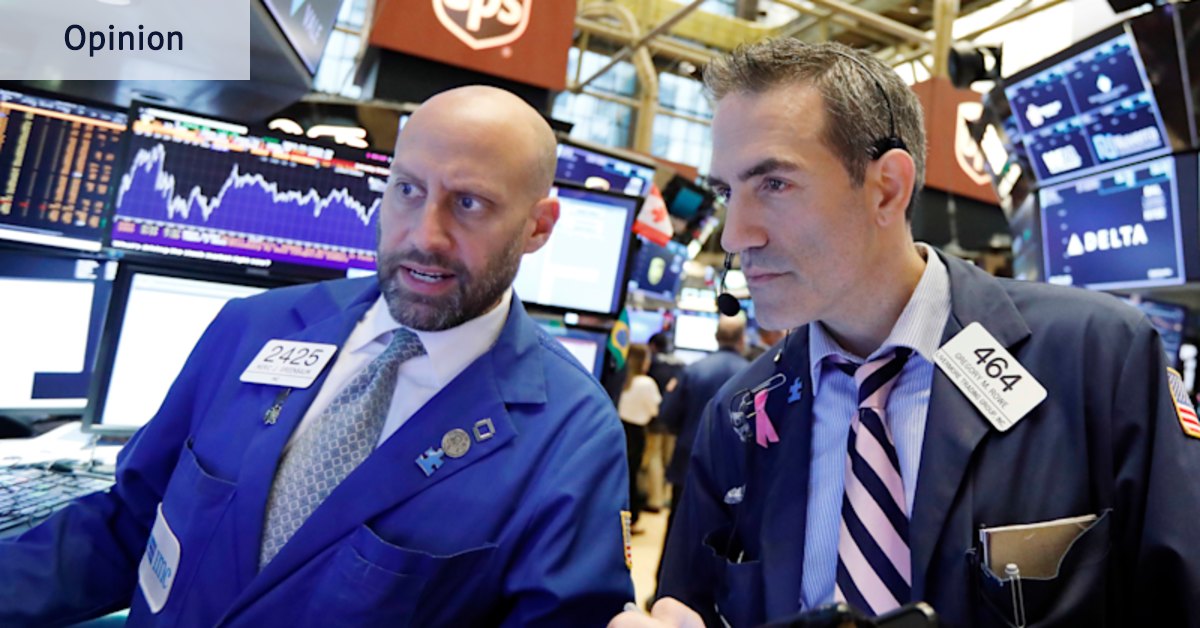
On both sides of the Pacific, investors are becoming nervous, with the Japanese bond market crashing in response to its new prime minister’s election promises and US markets tumbling in response to the threat of new tariffs on European exports.
The coincidence of the turmoil in two of the world’s key markets comes with the world awash with debt and struggling to come to terms with Donald Trump’s destructive tariff-driven trade and geopolitical strategies. The world is vulnerable to a spike in global bond yields.
In Japan, the catalyst for a meltdown in its bond market, with the yields on its most long-dated bonds hitting record levels, was Prime Minister Sanae Takaichi’s calling of a snap election on Monday, with an election promise that she would exclude food and beverages from Japan’s 8 per cent consumption tax for two years, at a cost of ¥5 trillion ($47 billion) a year.
For a government with a debt-to-GDP ratio of about 230 per cent, the unfunded pledge was reminiscent of the “Liz Truss moment” in the UK, whose announcement of unfunded tax and spending cuts caused a bond market revolt and earned her the dubious distinction of becoming the shortest-serving British prime minister in history.
Advertisement
In the US, the sharemarket slumped more than 2 per cent and bond yields spiked in response to Donald Trump’s threat to impose a new 10 per cent tariff of eight European and Nordic countries, with the rate rising to 25 per cent in June if they don’t deliver Greenland to the US. He also threatened France with a 200 per cent tariff on French champagne unless France joins his “Board of Peace”.
Not surprisingly, gold, which has been on a record-breaking tear since Trump regained the presidency and began his trade wars against the rest of the world, hit another record on Tuesday.
The surge in bond yields globally (Australian bond yields also rose across the board on Tuesday) is occurring amidst a sea of global debt, with the global debt-to GDP ratio now more than 235 per cent. In the US the ratio is about 125 per cent and in Japan, the world’s most indebted developed economy, about 240 per cent.
While they are not alone, the US and Japan – two of the world’s key economies with two of the world’s most important financial centres – are particularly vulnerable to a sharp increase in government borrowing costs.
Advertisement
Trump has shown himself acutely sensitive to movements in the US bond market, backing off his April 2 “Liberation Day” tariff announcement after the US bond market plunged and yields spiked.
Takaichi, riding a wave of popularity for an agenda that appears to designed to grow and inflate Japan out of a potential debt trap, doesn’t appear as fearful of the bond vigilantes in her market.
The cross-currents being created by the movements in bond yields in the US and Japan are complex but potentially significant.
On Tuesday Japan’s 10-year bond yield jumped 10 basis points to 2.34 per cent. It started the year at 2.06 per cent. The movement in yields on its longer-dated bonds was even more pronounced, with the 30-year bond yield jumping 27 basis points, to 3.4 per cent, and the yield on 40-year bonds surpassing 4 per cent for the first time.
Advertisement
In the US, the 10-year yield was up 15 basis points, to 4.29 per cent and the 30-year yield 9 basis points to 4.92 per cent. (There’s an inverse relationship between bond prices and yields – as prices fall the yields rise).
Japan’s bond market is dominated by domestic investors, who hold roughly 90 per cent of the bonds, with the central bank, the Bank of Japan, owning more than half of all the bonds after more than a decade of quantitative easing.
That probably make it less vulnerable to capital flight than the US market, where there have been several bouts of “Sell America” evident since Trump regained office.
It also raises the possibility that, when the dust settles and losses on existing trades have been absorbed – hedge funds have been unwinding their trades and longer-term investors are already in the red – Japanese domestic investors, who have exported capital ever since their economy plunged into a prolonged and deflationary economic winter after the collapse of its property bubble in the early 1990s, may start repatriating it because of the higher yields and favourable currency hedging costs.
That would have major implications for other markets, notably the US, where Japanese entities hold about $US1.2 trillion ($1.8 trillion) of US Treasury securities.
Advertisement
With US deficits and debt set to increase as the cost of Trump’s One Big Beautiful Bill Act’s tax cuts hits, any material loss of buying support for US government debt would adversely affect bond prices and yields.
America’s creditworthiness is deteriorating and trust in the stability of government and the US legal system is being eroded.
Trump has shown, via his intense criticism of the Federal Reserve Board and his continuing attempts to gain influence or control over its rate-setting decisions, how sensitive he is to US interest rate movements. He wants lower rates to respond to the US affordability crisis and to lower the cost of servicing the rising debt levels.
While there have been “Sell America” moments in response to Trump’s erratic and aggressive policymaking, they haven’t developed into the mass exodus the US is vulnerable to because of its debt and its current account deficit.
The US needs to borrow from the rest of the world to sustain growth and standards of living and has been able to because of the primacy of its markets and economy, trust in its courts and other institutions and the key role and power of the US dollar in global economic and financial activity.
Advertisement
The dollar is weakening against the basket of its major trading partners’ currencies, sliding 0.8 of a percentage point on Tuesday. It has depreciated 9.8 per cent against the basket since Trump’s inauguration, reflecting some level of capital flight.
That could become something more threatening if, as some in Europe are suggesting, European institutions and governments, who between them are, with more than $US12 trillion of US assets, the largest source of foreign investment in the US, start dumping some of those assets.
Its unlikely that will occur on a significant scale – most of them are held by private entities and couldn’t be directed to act – but even relatively modest sales could have an impact, particularly if this coincided with a withdrawal from the US markets by Japanese investors.
It could be happening in modest levels anyway. America’s creditworthiness is deteriorating and trust in the stability of government and the US legal system is being eroded. The decline of the US dollar reflects that deterioration in perceptions of America as a good and safe investment destination.
Advertisement
There are funds that will shrink their exposure to the US because of the volatility of its political and economic settings and the concentration on a handful of artificial intelligence stocks within its sharemarket. One Danish fund manager, AkademikerPension, which manages around $25 billion, has said it would sell about $US100 million of its US Treasuries holdings this month.
Norway (which Trump seems to get confused with Denmark when demanding the US be allowed to buy Greenland) has a $US2.1 trillion sovereign wealth fund that has more than half its assets in the US, including about $US184 billion of Treasuries. It might, in the current climate, decide it would prefer to lower its exposure.
China, once the largest foreign investor in US Treasuries, has been steadily reducing its holdings, shrinking them by 10 per cent, to about $US680 billion, in the past year. Just over a decade ago, it owned about $US1.2 trillion of those securities.
It wouldn’t take that much to precipitate a wider sell-off of US debt that would force the Trump administration to rethink strategies that hinge on those countries Trump is targeting simply doing what they’re told under the threat of his tariffs.
The Business Briefing newsletter delivers major stories, exclusive coverage and expert opinion. Sign up to get it every weekday morning.
You have reached your maximum number of saved items.
Remove items from your saved list to add more.
More:
World markets
Opinion
Sharemarket
Japan
Donald Trump
Sanae Takaichi
Greenland
Trade wars
For subscribers
Stephen Bartholomeusz is one of Australia’s most respected business journalists. He was most recently co-founder and associate editor of the Business Spectator website and an associate editor and senior columnist at The Australian.Connect via email.
Rate this article
Login to rate this article
Comments
Please login to comment
No comments yet. Be the first to comment!