
Geopolitics
19 min read
Trump's Board of Peace Signing Ceremony: A New Era in Conflict Resolution?
The Times of Israel
January 20, 2026•2 days ago
AI-Generated SummaryAuto-generated
The US plans a Board of Peace signing ceremony in Davos to advance a Gaza peace plan and establish a global conflict resolution body. However, participation is uncertain due to concerns about the board potentially undermining the UN. Israel objects to Qatar and Turkey's inclusion on a related Gaza committee. Some nations are cool to the board's $1 billion permanent membership fee.
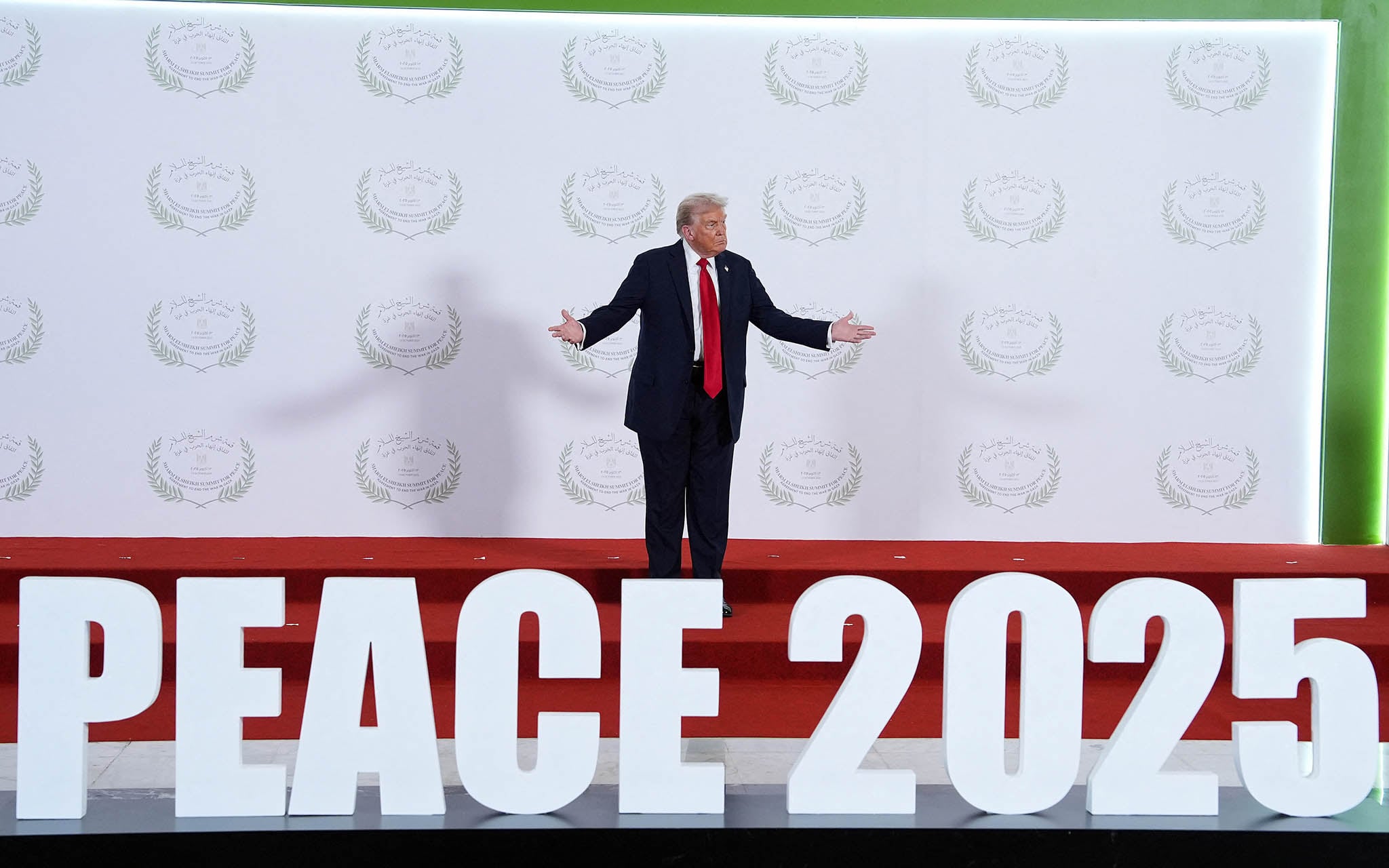
The US is planning to hold a signing ceremony for President Donald Trump’s Board of Peace later this week, as it seeks to jumpstart phase two of his Gaza peace plan while also turning the nascent international oversight body as the address for conflict resolution around the globe.
The signing ceremony is scheduled to be held on Thursday at 10:30 a.m. on the sidelines of the World Economic Forum in Davos, Switzerland, according to a copy of the invitation circulating online whose authenticity was confirmed by a US official.
It’s unclear how many leaders will participate in the ceremony, though, amid mounting discomfort with Washington’s apparent effort to use the Board of Peace to usurp the United Nations.
The panel for world leaders headed by Trump was initially presented as one that would exclusively oversee the postwar management of Gaza, and that was what the UN Security Council voted to give it a two-year mandate to do in November.
But the charter obtained by The Times of Israel makes no mention of Gaza and appears to take a swipe at the UN, saying that the new board should have “the courage to depart from approaches and institutions that have too often failed.”
The document was attached to invitations to join the board that were sent to dozens of world leaders on Friday. Since then, the leaders of Albania, Australia, Belarus, Canada, Cyprus, Egypt, Germany, Greece, India, Israel, Jordan, Pakistan, Paraguay, Poland, Russia, Singapore, Thailand, Turkey, and Uzbekistan confirmed receiving an invitation, while only Argentina, Hungary, Morocco, and Vietnam announced decisions to accept the offer.
President Isaac Herzog is slated to attend the forum, while Prime Minister Benjamin Netanyahu is not. Netanyahu confirmed having received an invitation to join the Board of Peace on Monday, but he has criticized Washington’s decision to place senior representatives from Turkey and Qatar on the Board of Peace’s operational arm for Gaza called the Gaza Executive Committee.
It’s therefore unclear whether he’ll want to legitimize the latter panel’s makeup by joining the Board of Peace, which is technically an umbrella body, even if it is expected to play a marginal role in Gaza-related decision-making.
Netanyahu called US Secretary of State Marco Rubio on Monday to further express his frustration over the Gaza Executive Committee’s makeup, Channel 12 reported.
Hours earlier, Netanyahu’s office claimed he had instructed Foreign Minister Gideon Sa’ar to make the call, but the latter has largely been boxed out of involvement in Israel’s ties with the US.
Netanyahu stressed to Rubio Israel’s opposition to Qatar and Turkey’s inclusion, and emphasized that Israel was surprised by the US statement announcing the makeup of the Gaza Executive Board, Channel 12 said.
Sources told the network that Netanyahu realizes, however, that there is no way to turn back the clock on the decision, now that the White House has announced it.
Amid Israel’s frustration over the makeup of the consequential Gaza Executive Committee, the Ynet news site reported on Monday that a small group of senior cabinet ministers decided a day earlier against reopening the Rafah Crossing between Gaza and Egypt, bucking US demands that the gate resume operating as envisioned by Trump’s 20-point plan for ending the Gaza war.
Israel has argued that it shouldn’t reopen Rafah in both directions before Hamas agrees to disarm and returns the body of the final Israeli hostage, Ran Gvili.
Meanwhile, several key allies reacted coolly to the Board of Peace charter’s stipulation that members pay $1 billion if they want to receive a permanent spot on the panel after an initial three-year term.
“At this stage, France cannot accept,” French Foreign Minister Jean-Noel Barrot said Monday during a debate with French lawmakers, noting that the board’s charter goes beyond the scope of rebuilding and running post-war Gaza endorsed by the United Nations.
He added that it is “incompatible with France’s international commitments and in particular its membership in the United Nations, which obviously cannot be called into question under any circumstances.”
France is one of the five veto-wielding, permanent members of the UN Security Council, along with the United States, China, Russia and Britain.
A Canadian government source said Ottawa will not pay to be on the board, and hasn’t gotten a request to pay, after Prime Minister Mark Carney indicated he would accept an invitation to join.
Polish President Karol Nawrocki has reportedly expressed concern over the inclusion of Russian President Vladimir Putin, and Polish Prime Minister Donald Tusk tweeted that joining the Board of Peace would require approval by the parliament, “and we will not let anyone play us.”
Paul Williams, professor of international affairs at George Washington University, told AFP that the offer of permanent membership for $1 billion showed Trump is “trying to turn it into a pay-to-play alternative to the UN Security Council but where Trump alone exercises veto power.”
Trump has regularly criticized the United Nations and announced this month that his country will withdraw from 66 global organizations and treaties — roughly half affiliated with the UN.
The world body — which suffers chronic funding shortfalls and political deadlock in the Security Council — pushed back Monday.
La Neice Collins, spokesperson for the president of the UN General Assembly, told reporters, “There is one universal, multilateral organization to deal with peace and security issues, and that is the United Nations.”
Daniel Forti at the International Crisis Group think tank said some world leaders may view joining the Board of Peace as a way to curry favor with Trump, but many member states would see it as power grab.
Trump would have the power to remove member states from the board, subject to a veto by two-thirds of members, and to choose his replacement should he leave his role as chairman.
Ian Lesser at the German Marshall Fund think tank told AFP he would be surprised if many countries are willing to sign up “at a time when most are focused on preserving the existing multilateral institutions.”
Rate this article
Login to rate this article
Comments
Please login to comment
No comments yet. Be the first to comment!