
Space & Astronomy
17 min read
Toxic Gas Devastated 50% of Ocean Life 530 Million Years Ago
Earth.com
January 18, 2026•3 days ago
AI-Generated SummaryAuto-generated
Around 530 million years ago, toxic hydrogen sulfide gas wiped out approximately 45% of ocean life. Sediment analysis from South China indicates this occurred in oxygen-poor waters, proving lethal to marine animals by preventing oxygen use in their tissues. This event followed a significant increase in complex animal life during the Cambrian explosion.
About 530 million years ago, during the early rise of complex animal life, a massive marine die-off erased roughly 45% of ocean species.
Sediment cores from the Yangtze Platform in South China point to hydrogen sulfide, a toxic gas produced in oxygen-poor water.
Chemical fingerprints in ancient sediments can last for eons, letting researchers infer seawater conditions when animals disappeared.
The work was led by Chao Chang, a geochemist at Northwest University in Xi’an, China. His research focuses on trace metals that move with water chemistry, because those elements often stay locked in rock layers.
Fossils mark a sudden loss
Rock layers after the Cambrian explosion, a burst of new animal forms, show diversity climbing quickly before the extinction began.
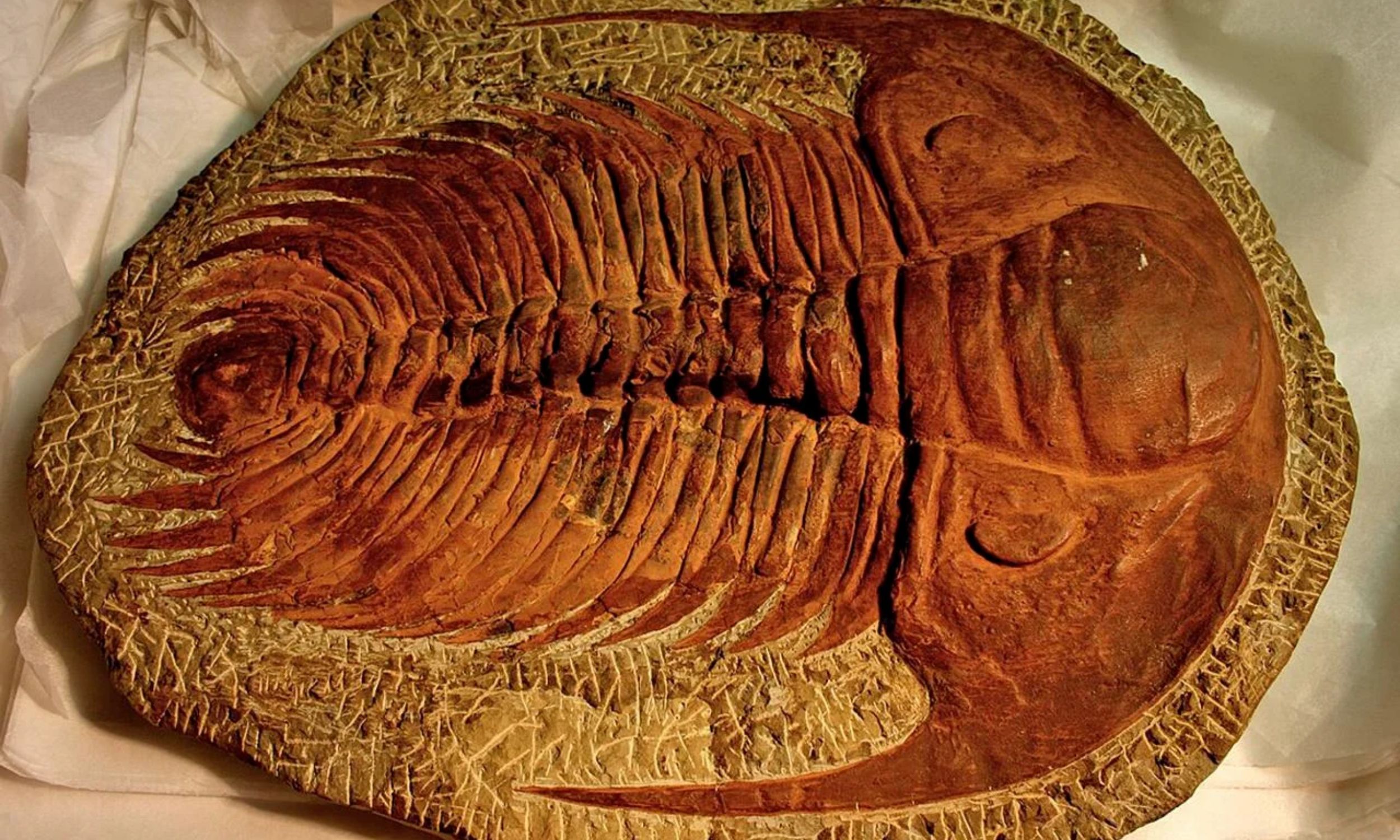
Trilobites and many other shelly animals drop out of the record about 20 million years later, often in two pulses.
Those stepwise losses make it possible to match chemical changes in the same strata to real biological disruption.
Why hydrogen sulfide kills
At low levels, hydrogen sulfide can stress animals, but at higher levels it stops oxygen use inside their tissues.
The gas blocks a key enzyme in cells, and the CDC profile describes rapid oxygen starvation in sensitive organs.
“That chemical is lethal to all the marine animals,” said Chang.
In the Yangtze Platform rocks, high molybdenum levels show up at extinction layers. When seawater contains both molybdenum and sulfur, the metal forms insoluble compounds that sink and become part of sediment.
High molybdenum levels do not prove a worldwide poison by themselves, but they signal water chemistry changed in dangerous ways.
Molybdenum and hydrogen sulfide
Molybdenum comes in forms with different mass, and an isotope, atoms of one element with different weight, records that mix.
Sediments from the extinction interval include molybdenum isotope values close to modern seawater, pointing to sulfur-rich low-oxygen water.
Other samples show a wider range, meaning local processes also altered the signal and must be accounted for.
Molybdenum stays in seawater for long stretches, and its residence time matters, meaning, the average time a substance remains in water.
Because ocean circulation mixes water faster than molybdenum is removed, sediments can capture chemistry that reflects more than one region.
The catch is that short-lived local blooms of toxicity may still be smoothed out in the final record.
Particles that carry metals
Tiny particles made of iron and manganese can grab molybdenum in oxygenated water and release it deeper down.
This recycling changes how much of each isotope ends up in mud, especially when the boundary between oxygen and no oxygen moves.
Because the process depends on local circulation, the team had to check several chemical indicators together, not one alone.
Some intervals show the chemocline, a layer where water chemistry changes fast, rising toward the sunlit surface.
When that boundary moves upward, oxygen disappears from shallower water and hydrogen sulfide spreads into places animals live.
Those surface-water incursions help explain why even mobile swimmers could not simply move away from trouble.
Global molybdenum levels
Molybdenum isotope ratios serve as a proxy, an indirect measure of past ocean chemistry, when fossils are scarce.
Because molybdenum cycles slowly, signals in one part of the Cambrian ocean can hint at wider conditions.
Still, the method works best when sediment layers are well dated and when local basins were not isolated.
Older explanations focused on oxygen loss, but the new work points to euxinia, low oxygen with hydrogen sulfide in water, as worse.
Under those conditions, animals face oxygen shortage and chemical attack at once, which reduces their chance of survival.
The key point is that low oxygen was part of the story, but it was not the whole story.
Microbes made hydrogen sulfide
In oxygen-poor seafloor mud, microbes use sulfate, a common seawater salt ion, to break down leftover organic matter.
That pathway produces hydrogen sulfide as waste, and a booming microbial population can raise the gas faster than mixing removes it.
If oxygen later returns, hydrogen sulfide stops forming and the signal can fade, so the record may miss brief toxic bursts.
Modern coasts sometimes develop a dead zone, an area where oxygen gets too low, after heavy nutrient runoff.
Bacteria then consume that extra food and strip oxygen from bottom waters, which can also allow hydrogen sulfide to form.
The Cambrian case was far larger and slower, but it shows how biology and chemistry can reinforce each other.
Hydrogen sulfide, molybdenum, and extinction
Evidence for widespread toxic seas helps explain why the extinction hit so many groups, even during a time of rising diversity.
The finding also warns that oxygen levels alone can hide the most dangerous chemistry, especially in shallow continental waters.
Future work will need more sites outside South China, because a single margin cannot capture every part of a global ocean.
Together, fossils and geochemistry show the extinction followed a boom in life, then turned deadly when toxic water spread widely.
Better maps of ancient ocean chemistry could clarify which stresses mattered most, but each map depends on careful sampling.
The study is published in Geophysical Research Letters.
Image credit: Mike Peel.
—–
Like what you read? Subscribe to our newsletter for engaging articles, exclusive content, and the latest updates.
Check us out on EarthSnap, a free app brought to you by Eric Ralls and Earth.com.
—–
Rate this article
Login to rate this article
Comments
Please login to comment
No comments yet. Be the first to comment!