
Space & Astronomy
6 min read
Scientists Discover Tissue-Regenerating Cells: A Breakthrough for Cancer & Burn Patients
ANI News
January 18, 2026•4 days ago
AI-Generated SummaryAuto-generated
Scientists have identified specific cells responsible for tissue regeneration after severe damage, a process known as compensatory proliferation. Researchers observed these cells in fruit flies, where they initiate self-destruction but halt before dying. These surviving cells then rapidly multiply, rebuilding damaged tissue. This breakthrough offers potential new approaches for preventing cancer relapse and treating burn victims.
Tel Aviv [Israel], January 18 (ANI/TPS): For the first time, scientists have identified the specific cells that allow severely damaged tissue to regenerate after widespread destruction, a discovery that could change how cancer relapse is prevented, researchers at the Weizmann Institute of Science told The Press Service of Israel.
Their study, recently published in the peer-reviewed Nature Communications, focuses on a phenomenon known for decades as "compensatory proliferation" -- the ability of tissue to regrow after radiation wipes out large numbers of cells. The effect was first observed in the 1970s in fruit flies, but until now, scientists did not know which cells were responsible or how the process worked at a molecular level.
Professor Eli Arama from the Department of Molecular Genetics at the Weizmann Institute, who supervised the study, told TPS-IL that while the phenomenon itself was not new, seeing the process unfold at the cellular level was unprecedented.
"The phenomenon was identified 50 years ago. It was understood that not all cells die after radiation. Some survive, divide, and recreate the tissue. But no one actually saw these cells. We were able to identify them for the first time," he said.
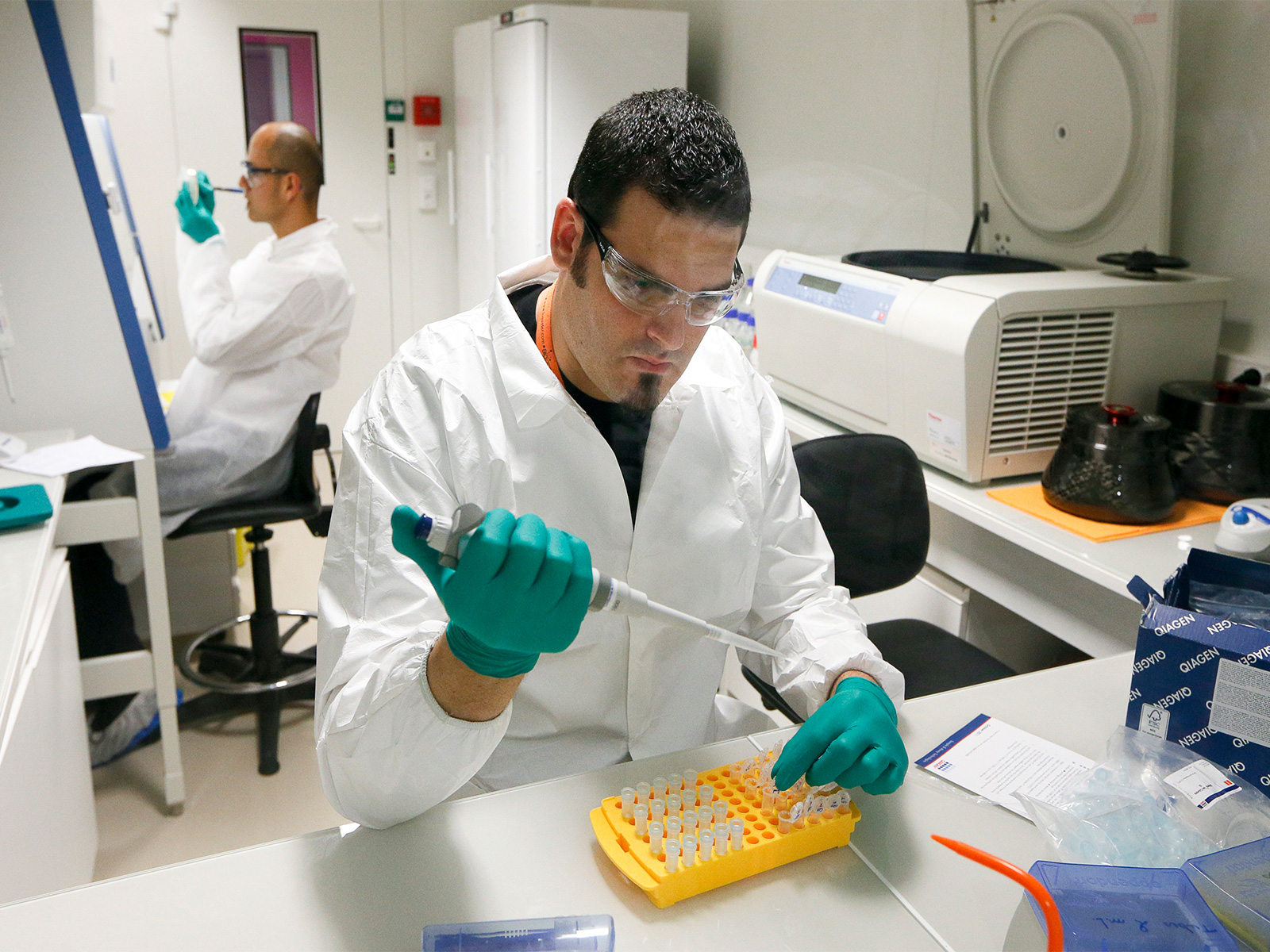
Using advanced genetic tools and live tracking in fruit fly tissue, the researchers discovered a small population of cells that activate the early stages of the cellular self-destruct program, known as apoptosis, but then stop short of dying. These cells survive radiation, multiply rapidly, and drive the rebuilding of the damaged tissue.
"They became visible about 24 hours after radiation, and within the following 24 hours the entire tissue is rebuilt," Arama explained.
Rate this article
Login to rate this article
Comments
Please login to comment
No comments yet. Be the first to comment!