
Politics
12 min read
Why Terrorism Response Should Stay With Police, Not Military
Tempo.co English
January 21, 2026•1 day ago
AI-Generated SummaryAuto-generated
Indonesia's proposed plan to involve the military in counterterrorism risks shifting focus from law enforcement to military logic, potentially enabling state violence. Critics argue terrorism is a criminal act for police, and military intervention blurs civil-military boundaries. A counter-draft suggests limited military roles in severe cases, but concerns remain about reinterpretation. The core issue is maintaining civilian control and the rule of law.
TEMPO.CO, Jakarta - The involvement of the military in responding to terrorism will shift the rule of law towards military logic. It opens up opportunities for state violence.
TERRORISM is a criminal act. Therefore, the response to it falls under the authority of the police, the law enforcement agency tasked with matters of public safety.
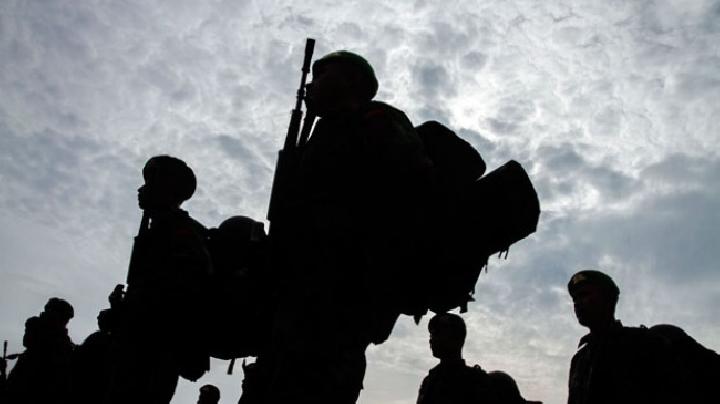
The plan by the administration of Prabowo Subianto to involve the military in the prevention, response, and prosecution of terrorism suspects threatens to violate the principles of a state based on the rule of law. If this goes ahead, military personnel will act using the logic of warfare when dealing with civil offenses.
President Prabowo Subianto has already prepared a draft for military involvement in counterterrorism. Beyond mere prevention through intelligence operations, the military could eventually be empowered to arrest terror suspects in the same way the police can. The boundary between internal security and national defense would become blurred.
If the military is directly involved in handling terrorism, the approach shifts from law enforcement to security operations. In principle, such involvement also shifts accountability from civil accountability to military discipline. Transparent civil justice will turn into secretive intelligence work. This shift is not simply a technical matter, but a fundamental change in the way the state treats its citizens.
The Prabowo administration believes there is a legal vacuum concerning the involvement of the Indonesian Military (TNI) in matters of terrorism. The Defense Ministry has taken the initiative to define the handling of terrorism as a form of non-combat military operation, or military operation other than war. The government also bases this regulation on the TNI Law, which uses the same category for responding to terrorism.
The police have taken a stand against the plan. Through the National Counterterrorism Agency (BNPT), the police are designing a “counter-draft” that establishes various levels of terrorism.
Under this draft, the door remains open for TNI involvement in the most serious levels of terrorism, while the National Police would handle lower-tier cases. This counter-draft is no less problematic. Terrorism categories could be altered, expanded, and reinterpreted to suit political interests.
The Palace blames the National Police for being late. The absence of police representatives in a number of meetings to discuss the regulation is also considered a serious issue. However, discussions on substance should not be reduced to technical matters of inter-agency coordination. The key is limiting power. Once terrorism is defined as a military concern, military units will be directly involved in the surveillance, prosecution, and even the detention of civilians.
Military involvement in terrorism should remain within a framework of assistance, as previously happened in handling conflicts in Poso, Central Sulawesi. The TNI assisted the police under civilian control, rather than taking over. The main authority must remain in the hands of law enforcement.
The overall authority still remains in the hands of law enforcement authorities. The BNPT, as an institution under the President, should focus on coordinating policies and prevention, not providing a way for the military to become involved in prosecutions.
The government should also facilitate dialogue. The involvement of the military in civil affairs is not a problem of different interpretations of legal articles or inter-institutional egos. It is a fundamental principle of the rule of law. Every loophole that allows for the possibility of state-sponsored violence against its citizens must be closed as tightly as possible.
Rate this article
Login to rate this article
Comments
Please login to comment
No comments yet. Be the first to comment!