
Technology
29 min read
TCL C8L / QM8L Review: A Detailed Hands-On Look at TCL's 2026 TV
What Hi-Fi?
January 20, 2026•2 days ago
AI-Generated SummaryAuto-generated
TCL's new C8L (QM8L) TV uses Super Quantum Dot technology instead of RGB Mini LED. It features a WHVA 2.0 panel and a new Super QLED system, promising improved contrast, brightness, and color volume over its predecessor. The design is similar to the C8K, but the C8L aims for a strong performance-per-pound offering with expected aggressive pricing.
As we’ve covered in our two other CES 2026-based TCL TV hands-on reviews, TCL isn’t following the industry script with its 2026 TV range.
While pretty much every other brand is going all-in on RGB Mini LED technology (or Micro RGB as some brands are confusingly choosing to call it), TCL is sticking with its familiar Quantum Dot technology. Well, kind of.
For while its flagship X11L TV for 2026 and the ‘premium mainstream’ C8L (QM8L in the US) model we’re looking at here both stick with Quantum Dots, those Quantum Dots now boast a new ‘Super’ designation.
Is this just clever marketing, though, or does TCL’s new claimed strata of Quantum Dot quality really deliver the goods?
Price
Like every other TV brand at the recent CES in Las Vegas, TCL isn’t yet prepared to go on record with its TV prices for 2026.
However, even though the new C8L series features new Super QLED technology, it seems we can expect prices to at least be in the same ballpark as 2025’s popular C8K series, the 65-inch version of which launched with a UK price tag of £1599. If the C8L is priced similarly, it will look very aggressive indeed for a model offering a combination of premium features and, hopefully, performance.
It’s important to note here, too, that while TCL only released a limited number of screen sizes of the TCL C8K model in the UK, we understand that a much fuller TCL C8L range will reach these shores.
Design
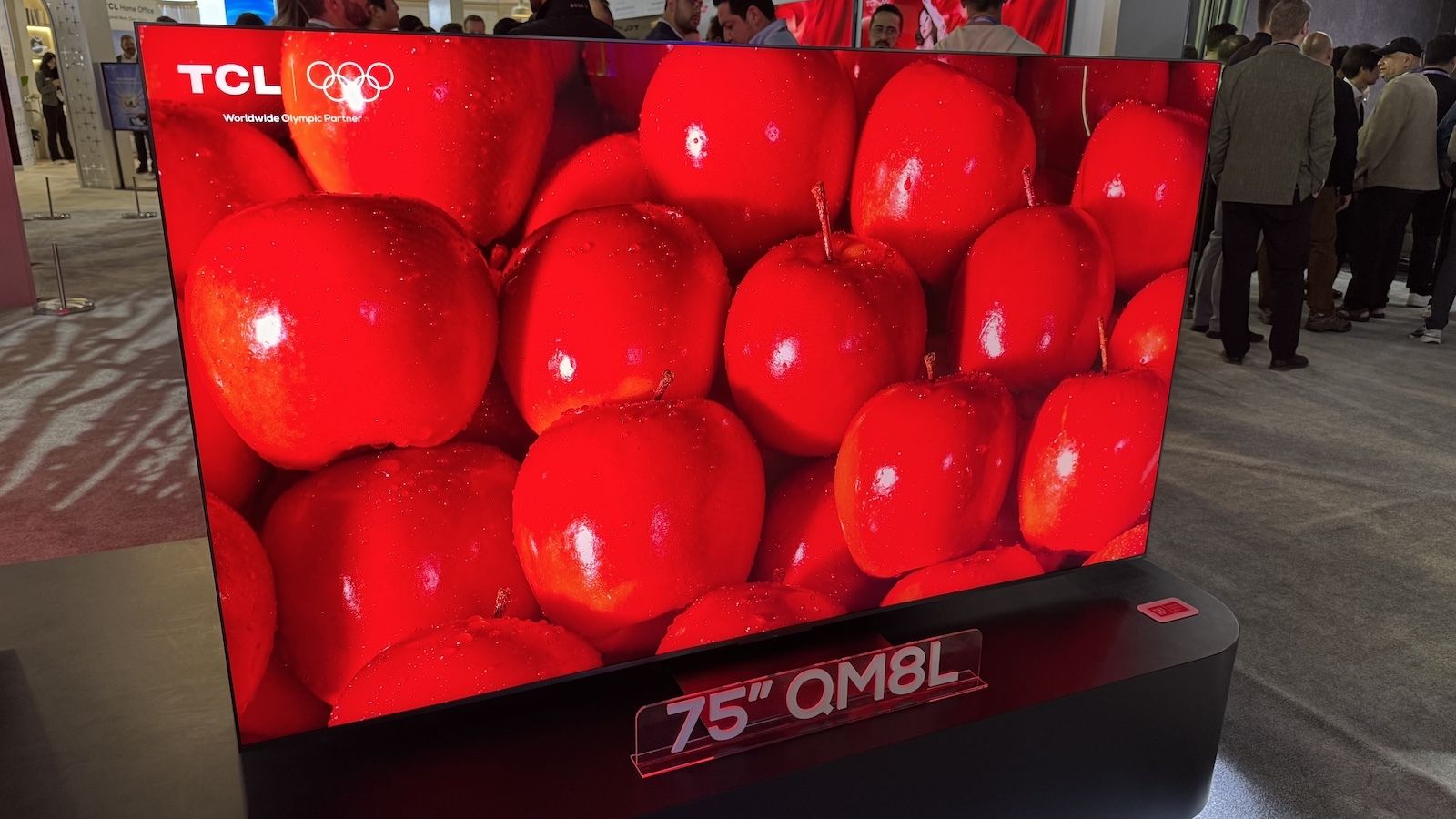
We can’t help but think the C8L look rather familiar. As if we’ve seen it somewhere before… Ah, yes, that’s it – it looks almost identical to its C8K predecessor!
We’re not the sort of shallow people who expect a total design revamp every time a new model hits shop shelves, though, and the C8L’s look works well enough. The screen is a little deeper around the back than most premium TVs these days, perhaps, but the depth is slimmer at the screen’s outside edges, filling out gradually towards the centre of the rear where it’s less likely to be noticed – especially if you’re putting the TV on its central rectangular plinth stand (a design choice that means you don’t need a wide bit of furniture to place the TV on).
The central stand features cable channelling under a detachable cover, and the silvery metallic finish of its front support section gives it a nicely premium look.
The side panels are opulently finished too, while the top edge features a distinctive grilled finish that’s designed that way because underneath it can be found a set of up-firing speakers as part of an integrated Bang & Olufsen Dolby Atmos speaker system.
Features
While TCL had numerous C8L/QM8L screen sizes on show at its CES 2026 booth and had plenty to say about its new flagship TCL X11L and step-down TCL RM9L TVs, information on the more mainstream model’s features and specifications was actually quite limited.
The QM part of its US model name, though, together with the words Premium QD-LED down its side, reveals that the C8L are built around Quantum Dot technology, like the X11L, rather than returning to the RGB Mini LED technology of the RM9L.
In fact, it’s going to be built on the same new ‘SQD-MiniLED’ technology – where the S stands for ‘Super’ – introduced by the X11L, rather than dropping back to conventional QLED technology. So it gets the new, higher colour volume Quantum Dot design and condensed colour filter for a wider colour spectrum, as well as TCL’s second-generation WHVA Ultra panel.
We can also look at the five advantages TCL openly claims for its new Super QLED technology, including up to 100 per cent coverage of the BT.2020 colour gamut, freedom from the colour ‘crosstalk’ that can be an issue with RGB MiniLED technology, the potential for as many as three times as many local dimming zones as you can get in the same screen area with RGB Mini LED, more brightness than you can get with RGB Mini LED, and thinner design architecture than you can get with RGB Mini LED.
All this from a brand, let’s not forget, that will also be selling multiple series of RGB Mini LED TVs in 2026.
The C8L will be direct lit (where the LEDs sit directly behind the screen rather than around its edges), with the LEDs controlled by a local dimming system.
This local dimming system, previous TCL experience suggests, will operate across far fewer zones than the 20,000-plus boasted by the brand’s upcoming flagship X11L SQD Mini LED model, but will also be up on the zone count of TCL’s C8K from 2025. An assumption we’re making both from this being a specification area where TCL always tries to introduce an improvement year on year, and from the first impressions of the C8L’s picture quality described in the Picture Quality section.
The C8L will also get the premium Pro version of TCL’s latest AiPQ processing system, it seems, while smart features will be provided by the Google TV platform.
TCL’s X11L and RM9L announcements make it almost certain the C8Ls will support 4K gaming at up to 165Hz (and HD gaming right the way up to 288Hz), too, and we can also expect TCL to continue its support for both the HDR10+ and Dolby Vision premium high dynamic range formats.
Picture Quality
It’s clear right away that the C8L is significantly less bright than the X11L, and is likely using far fewer dimming zones, too. We’d put brightness at somewhere around half that of the X11L (maybe a touch higher), while the extent to which a little backlight clouding can leach away from very bright objects that appear against dark backdrops during off-axis viewing definitely suggests a downgrade in dimming zones to well under half the 20,000-plus found on the X11L.
At which point, we need to quickly say that none of this should in any way be considered a disappointment. In fact, if we’re even close with our estimations of the C8L’s brightness and dimming zone count, both will actually be significantly higher than the figures delivered in these areas by the excellent C8K.
Certainly, we’d still describe the C8L’s pictures as radiant, even when judged in a venue as large and light-polluted as CES, and while a little blooming is apparent off-axis, viewed straight on, this blooming pretty much completely disappears. That’s even though bright highlights retain plenty of intensity when appearing against dark backdrops, and even though black levels appear to be at least as impressively rich and deep as those of last year’s C8K.
If we had a problem with the C8K, it was that its extra brightness over TCL’s awesome C7K seemed to cause a little colour fade to creep in with the brightest HDR pictures. The time we spent with a range of C8L screen sizes, though, suggests that the new Super QLED/WHVA 2.0 panel design has fixed this in no uncertain terms.
Now, the brightness, despite appearing to be another jump up from the C8K, simply seems to be unlocking more colour volume rather than thinning it out. Maybe those 100 per cent of BT.2020 claims TCL is making for its SQD Mini LED screens this year really are more than mere ‘the TV can do it but only if you choose this particular secret option in the menus and play this particular bit of demo content while wearing yellow Marigolds and singing Wonder Wall’ hype.
While much of the demo content available to us while looking at the C8L was fairly stark or artificial-looking, shots of night-time cityscapes and a close-up sequence of a crazily richly coloured and heavily patterned rug both showed the C8L to be capable of delivering seemingly outstanding levels of sharpness and detail, with even the 98-inch model managing to still look crisp and clear.
With motion also looking a little more natural and crisp on the C8L, too (though we didn’t get to see any 24p footage), the potential for it to achieve a really wholesale performance improvement over the already impressive C8K seems high. As does the likelihood that it will deliver a more all-round convincing picture quality step-up from whatever the next series down in TCL’s 2026 TV range turns out to be.
Sound quality
Given the circumstances of our CES hands-on, we don’t feel able at this point to say with any confidence whether we think the C8L will improve on the sound quality of the C8K.
From what we can judge from the grilled top edge and two rear bass woofers, the essential speaker configuration in the two TVs is the same, though, and a Bang & Olufsen logo on the screen’s front edge confirms that TCL has worked with the Danish brand again for the C8L’s audio system.
The rear woofers appear to have a slightly more refined and premium finish to them, too, raising hopes that they might improve on the slightly over-polite bass handling that was our only real issue with the C8K’s sound quality.
Early Verdict
While the C8L’s exterior might not look very different to its predecessor, its WHVA 2.0 panel and new Super QLED technology appear to have unlocked substantial contrast, brightness and, especially, colour improvements over last year’s C8Ks, raising the distinct possibility that the C8L will get back to making the 8 series the all-round performance-per-pound sweet spot in TCL’s 2026 range.
We will, of course, have to wait until we can get a full production sample into our test room for a comprehensive and comparative review before we can pass final judgement, but the early C8L omens are looking very promising indeed, particularly if TCL retains its trademark aggression regarding pricing.
MORE:
These are the best TVs we've reviewed
Our experts rank the best Mini LED TVs
Rate this article
Login to rate this article
Comments
Please login to comment
No comments yet. Be the first to comment!