
Economy & Markets
16 min read
Stratolaunch Secures Major Investment for Hypersonic Flight Testing Scale-Up
Aerospace Global News
January 20, 2026•2 days ago
AI-Generated SummaryAuto-generated
Stratolaunch secured significant investment from Elliott Investment Management and Cerberus Capital Management to scale hypersonic flight testing. The funding will increase vehicle production, flight cadence, and carrier aircraft, aiming to address the US defense bottleneck in hypersonic testing. This positions Stratolaunch as a key provider of sustained, high-tempo hypersonic test infrastructure.
Sign up for our newsletter and get our latest content in your inbox.
Subscribe
Stratolaunch has completed a significant new capital raise, bringing Elliott Investment Management on board as a strategic investor alongside existing backer Cerberus Capital Management. The funding will support plans to expand hypersonic testing at scale.
The company did not disclose the size of the investment, although reporting from the Wall Street Journal suggests it is in the magnitude of several hundred million dollars.
The new capital is earmarked to increase hypersonic vehicle production, raise flight cadence, and pursue additional carrier aircraft, signalling a shift from limited demonstration activity toward sustained, high-tempo operations.
Why hypersonic testing capacity has become a US defence bottleneck
Across the US defence ecosystem, hypersonics are no longer constrained by basic aerodynamics or propulsion theory. Instead, the limiting factor is how often systems can be flown, instrumented, recovered, modified and flown again.
Flight-test throughput has emerged as one of the most critical choke points in fielding operational capability.
Stratolaunch is positioning itself directly against that problem. By focusing on reusable vehicles and air-launch operations, the company aims to offer frequent, predictable access to hypersonic flight environments, something government programmes have struggled to achieve using traditional expendable test articles and range infrastructure.
Stratolaunch: From giant aircraft to hypersonic infrastructure provider
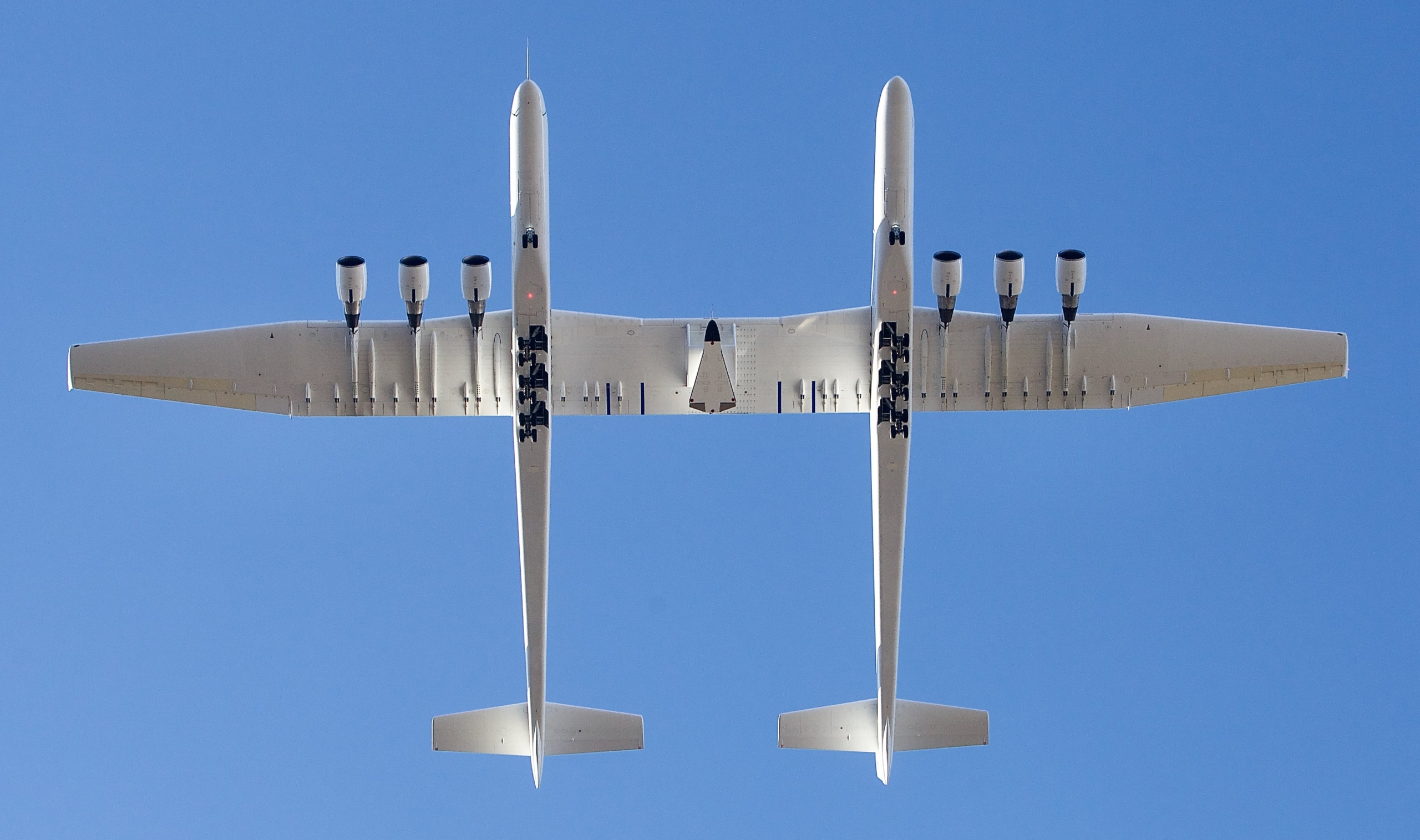
Originally conceived around the world’s largest aircraft by wingspan, Stratolaunch has spent the past several years reshaping its identity.
Rather than simply operating a unique carrier platform, the company has become a vertically integrated hypersonics testing provider, combining vehicle design, manufacturing, flight testing, digital modelling and operations under one roof.
That strategy has already produced tangible results. Stratolaunch has completed multiple Mach-5-plus flights with its autonomous, reusable Talon-A hypersonic vehicles, followed by conventional runway landings.
This capability, combining hypersonic speed with aircraft-style recovery, has not been demonstrated by the United States since the X-15 programme ended in the 1960s.
How Stratolaunch intends to use the funding to accelerate hypersonic flight testing
The investment from Elliott and Cerberus is explicitly tied to scaling that capability. Increasing vehicle production capacity suggests a move beyond small numbers of bespoke test articles.
Raising flight cadence addresses the Pentagon’s push for faster design–test–learn cycles. Exploring additional carrier aircraft reduces reliance on a single launch platform and opens the door to parallel operations across multiple test ranges.
This all points toward Stratolaunch becoming persistent infrastructure rather than a niche test programme. The emphasis on “capability at scale” mirrors broader shifts in US defence policy, where industrial capacity, execution speed and operational relevance increasingly outweigh isolated performance milestones.
The choice of investors is significant. Elliott and Cerberus are not venture capital firms chasing speculative aerospace bets. Both have extensive experience backing defence-aligned industrial assets with long-term government demand profiles. Their involvement suggests confidence that hypersonic testing will remain a durable requirement, not a short-lived research priority.
Stratolaunch already supports US government customers, including work associated with the Pentagon’s MACH-TB hypersonic testbed efforts and contracts with agencies such as the Missile Defense Agency.
Its growing fleet, which includes both the Roc carrier aircraft and the modified Boeing 747 “Spirit of Mojave”, provides flexibility in mission design, launch geometry and range access.
Stratolaunch benefits from strong confidence in hypersonics
The investment reflects growing confidence that hypersonics are no longer a speculative technology area but a sustained strategic priority. US defence budgets, allied cooperation frameworks and industrial base planning all increasingly assume hypersonic systems will be central to future deterrence, driving long-term demand for credible testing infrastructure.
China and Russia continue to expand hypersonic testing and deployment, with Beijing pursuing frequent flight trials across boost-glide and cruise concepts, and Moscow already fielding operational systems. That sustained testing tempo has sharpened US concerns about relative pace, placing pressure on American programmes to accelerate development cycles.
US defence officials and lawmakers have repeatedly argued that hypersonic programmes must move faster and test more often. At Pentagon-linked forums, leaders have called for expanded access to flight testing and a shift toward iterative development.
In that environment, companies able to offer frequent, operationally relevant hypersonic flights have outsized strategic value. Reusability, rapid turnaround and predictable access to flight regimes reduce programme risk and shorten development timelines, aligning closely with the Pentagon’s push to move from prototypes to fielded capability faster.
Featured image: Stratolaunch
Rate this article
Login to rate this article
Comments
Please login to comment
No comments yet. Be the first to comment!