
Politics
13 min read
State Budget Heads to First Knesset Vote Amid Election Fears
The Jerusalem Post
January 18, 2026•4 days ago
AI-Generated SummaryAuto-generated
The Israeli government faces a critical deadline for the 2026 state budget's first Knesset vote next week. Failure to pass the budget by March could trigger early elections. The vote is complicated by the ongoing political dispute over the haredi draft bill, with ultra-Orthodox parties threatening to block the budget unless agreements are reached on conscription.
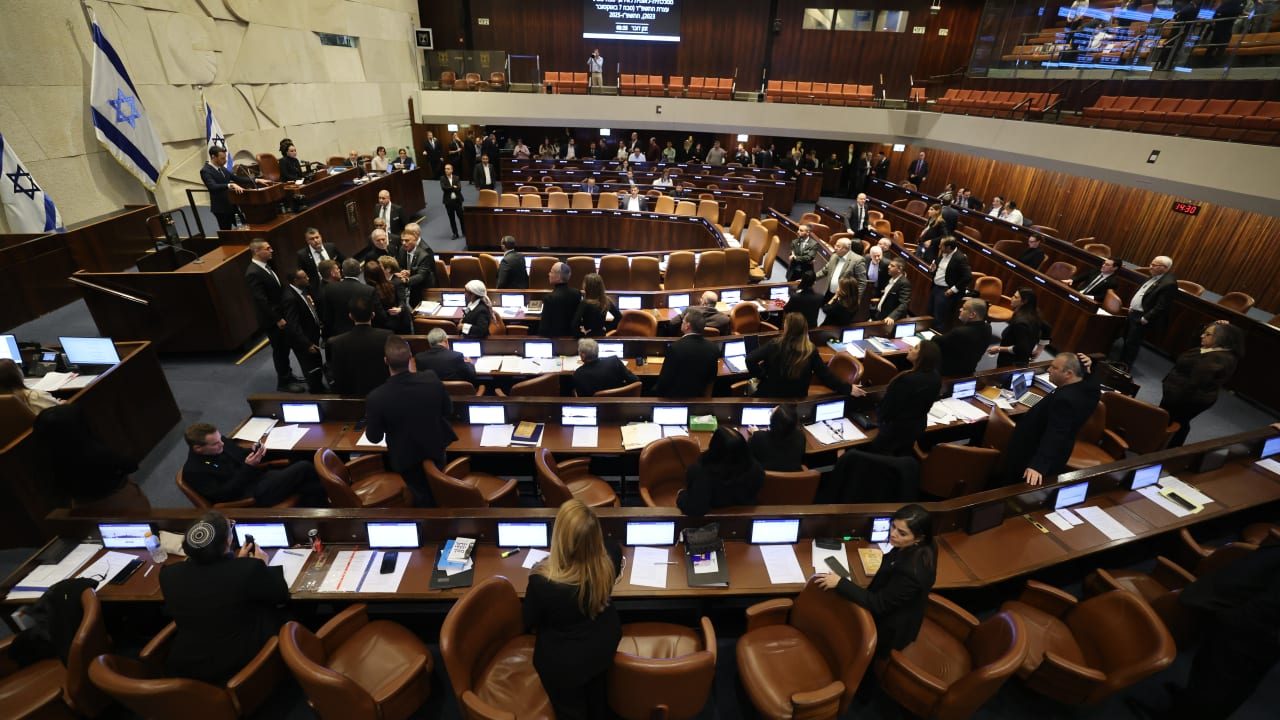
The government has until next week to pass the 2026 state budget in its first reading – a deadline that comes as part of a high-stakes process that could trigger early elections.
If the state budget is not approved in all three readings by the end of March, when the fiscal year closes, the Knesset will automatically dissolve, and elections will be called.
Under the law, at least 60 days must pass between the approval of the state budget’s first reading and its subsequent second and third readings.
This means the bill must clear its first reading by next week to make it before the March deadline, the Knesset Legal Department confirmed to The Jerusalem Post on Sunday.
The deadline comes amid the ongoing political collision between the government and the haredi (ultra-Orthodox) parties over the controversial haredi draft bill.
Prime Minister Benjamin Netanyahu has been left without a stable coalition majority since July following the collapse of negotiations over the conscription bill, which had led to the haredi parties’ – Shas and United Torah Judaism – departure from the government.
Both these parties have threatened not to support the state budget unless agreements were reached regarding the draft legislation, voicing strong objection to the conscription of haredim and to the sanctions to be placed on those who fail to enlist.
Shas threatened to block the state budget unless the conscription bill is passed beforehand.
However, the draft bill is still undergoing marathon discussions this week in the Knesset Foreign Affairs and Defense Committee. Though it is being fast-tracked, it is not expected to be ready for a plenary vote before next week.
With the haredi draft bill not finished in time for the state budget’s first reading, it is unclear how the ultra-Orthodox parties will position themselves.
If the haredi parties vote in favor of the budget’s first reading, contradicting their earlier threats, it would grant the government additional time to finalize the haredi draft legislation before the budget’s final readings in March.
Elections currently slated for October 2026
Alternatively, the parties may follow through on their threats and vote down the state budget at the first hurdle. This could bring down Netanyahu’s government months ahead of schedule, as elections are currently slated for October 2026.
However, according to reports, the government is expected to persuade the haredi parties to vote in favor of the state budget in its first reading, with assurances that the draft bill will soon be passed.
Critics of the draft bill argue that the current outline, led by MK Boaz Bismuth (Likud), fails to enforce haredi conscription and serves primarily as a political measure to appease haredi parties.
Meanwhile, the IDF has warned of a severe workforce shortage and has called for additional combat recruits urgently after more than two years of war.
Legislation enforcing conscription has been widely viewed as critical to Israel’s security needs.
Haredi political figures have pushed for a framework that would continue to exempt yeshiva students from mandatory IDF service.
United Torah Judaism’s Meir Porush on Sunday visited haredim who were jailed for failing to serve in the IDF. He described the situation as “heartbreaking.”
“We need to try to come here more often,” Porush said regarding the visit to the prisons. “But I am also busy with discussions in the Foreign Affairs and Defense Committee, and I shared with them what is happening there. We are praying that God will help us and deliver us from this trouble,” he said after the visit.
United Torah Judaism chair Yitzhak Goldknopf also joined the visit. He penned a letter to Defense Minister Israel Katz and IDF Chief of Staff Lt.-Gen. Eyal Zamir, asking that haredim receive special conditions while in prison.
Goldknopf requested that the haredi draft evaders’ visitation quota be expanded, that they be allowed to give Torah lessons in prison, and that they be provided with special food on Shabbat that “matches their lifestyle and the Shabbat tradition.”
On Thursday, Netanyahu appointed Yisrael Eichler of United Torah Judaism as deputy communications minister as part of political arrangements aimed at advancing the draft bill.
Rate this article
Login to rate this article
Comments
Please login to comment
No comments yet. Be the first to comment!