
Geopolitics
17 min read
39 Dead: Worst Spanish Train Collision in a Decade Occurs Near Cordoba
RTE.ie
January 19, 2026•3 days ago
AI-Generated SummaryAuto-generated
A high-speed train collision in southern Spain killed 39 people and injured 122. The accident occurred when a train derailed and struck an oncoming one. Rescue operations were complicated by the remote location. The cause remains under investigation, with infrastructure issues previously reported on this line. The nation declared three days of mourning for the deadliest rail accident since 2013.
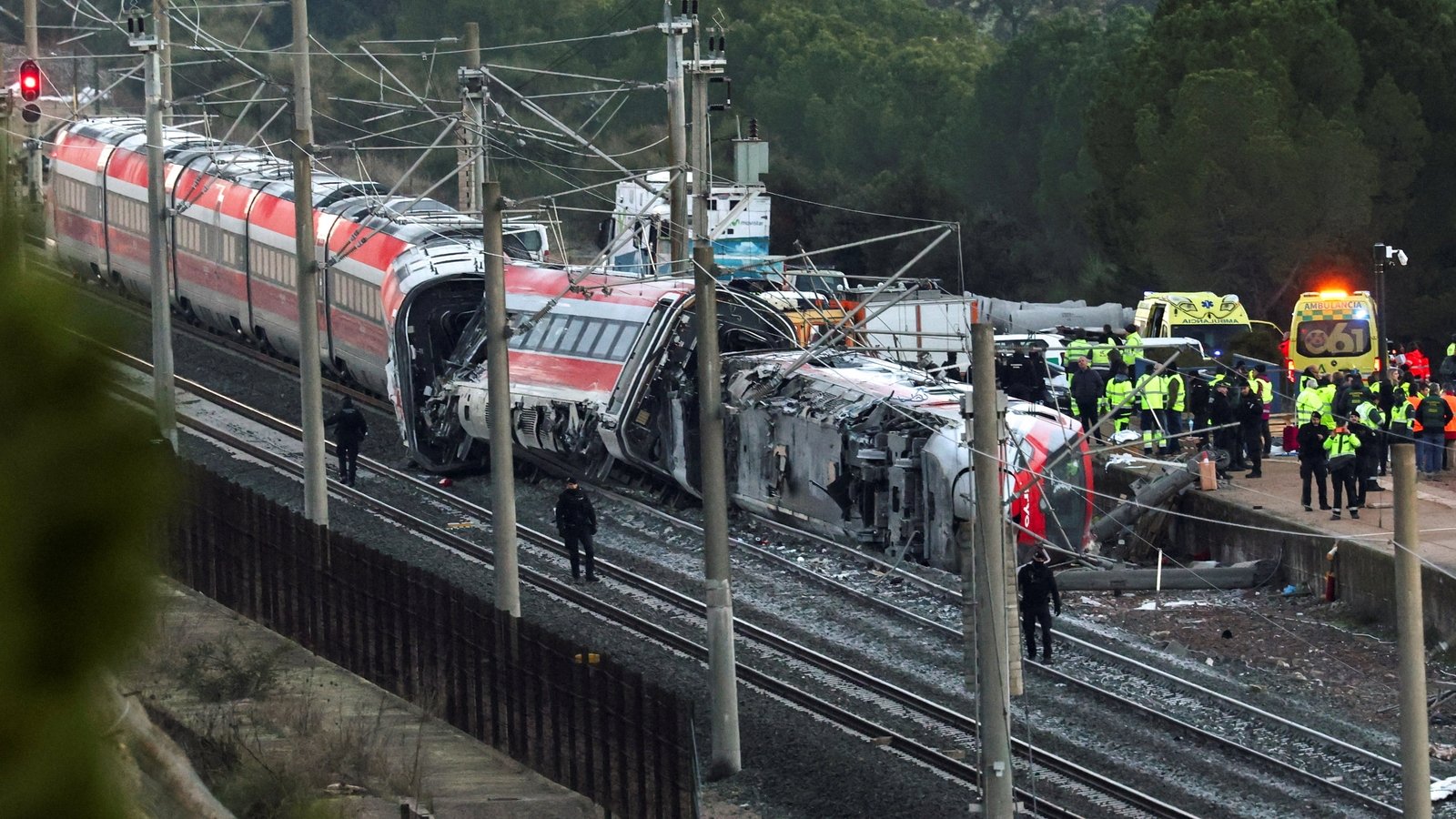
At least 39 people were killed after a high-speed train derailed and collided with an oncoming one in southern Spain last night, marking the worst railway accident in the country since 2013.
The collision occurred at 7.45pm (5.45pm Irish time) near Adamuz in the province of Cordoba, about 360km south of the capital Madrid.
It left 122 people injured, with 48 still in hospital and 12 in intensive care, according to emergency services.
Drone footage shot by Reuters at the scene showed twisted carriages lying on their side under the glare of floodlights.
Some passengers had climbed out of smashed windows, while others were wheeled away on stretchers, according to video footage shared on social media.
Transport Minister Oscar Puente said he was on his way to Cordoba.
"The death toll has risen to 39 and is not yet definitive. I want to express my enormous gratitude for the work of the rescue teams overnight, in very difficult circumstances, and my condolences to the victims and their families at this terrible time."
There were around 400 passengers on the two trains, operated by Iryo and Alvia, according to a statement from state-owned rail operator Renfe.
Most of them were Spaniards travelling to and from Madrid after the weekend.
It was unclear how many tourists were on board during a low-season period in Spain.
The Iryo train was en route from Malaga to Madrid. The second train was heading towards Huelva at the moment of impact, newspaper El Pais reported.
Watch: Emergency services attend scene of train collision in Spain
The death toll is the highest from a train crash since 2013, when a train derailed in the north western city of Santiago de Compostela and burst into flames, killing 80 people and injuring 145.
Over 200 trains between Madrid and the southern Andalusia region - including major cities Cordoba, Seville and Granada - were cancelled today, according to RTVE.
Prime Minister Pedro Sanchez has declared three days of mourning.
He cancelled his trip to the World Economic Forum in Switzerland and will visit the crash site today to get "first-hand information" on what happened, his office said in a statement.
The cause of the crash is not yet known, Mr Puente told reporters at a press conference at Atocha station in Madrid yesterday.
Watch: Ana, who was injured in the crash, recalls what happened
"The train tipped to one side... then everything went dark, and all I heard was screams," said Ana, a young woman who was travelling back to Madrid and was being treated at a Red Cross centre in Adamuz.
Limping and wrapped in a blanket, her face covered with plasters, she described how she was dragged out of the train covered in blood through a window by other passengers who had escaped. Firefighters rescued her sister from the wreckage and an ambulance took them both to hospital.
"There were people who were fine and others who were very, very badly injured. You had them right in front of you and you knew they were going to die, and you couldn't do anything," she said.
The rescue operation was complicated by the remote location of the crash, which could only be accessed by a single-track road, making it difficult for ambulances to enter and exit, the national emergency director at the Spanish Red Cross, said.
The Iryo train, which was travelling at 110km/h, was en route from Malaga to Madrid, while the second train was heading towards Huelva at 200km/h.
It was too early to talk about the cause, but it happened in "strange conditions", Renfe President Álvaro Fernandez Heredia said on local radio station Cadena Ser, adding that "human error is practically ruled out."
The Alvia train either collided with the final two carriages of the Iryo train that derailed, or with debris on the line, Mr Heredia said. The Iryo train had lost a wheel that has not yet been located.
The collision happened about 20 seconds after the derailment, so there was no time to activate an emergency brake, he said.
Problems with infrastructure at Adamuz, from signalling failures to issues with overhead power lines, have caused delays to high-speed trains between Madrid and Andalusia 10 times since 2022, according to a Reuters review of state-owned rail infrastructure administrator Adif's X account.
Mr Puente said that the Iryo train was less than four year sold and that the railway track had been completely renovated last May with an investment of €700 million. Iryo said the train was last inspected on 15 January.
Spain's high-speed railway network, with 3,622 km of tracks, is the largest in Europe and the second-biggest in the world after China, according to state-owned rail infrastructure administrator Adif.
The government was criticised last year for a series of delays on the network, caused by power outages and the theft of copper cables from the lines.
The network is vulnerable to cable thefts as it crosses large swathes of empty countryside.
Spain opened up its high-speed rail network to private competition in 2020 in a bid to offer low-cost alternatives to Renfe's Ave trains.
Iryo is a joint venture between Italian state railway operator Ferrovie dello Stato, airline Air Nostrum and Spanish infrastructure investment fund Globalvia. It began operating in November 2022, starting with the Madrid-Barcelona route and expanding to other major cities. Alvia is operated by Renfe.
Rate this article
Login to rate this article
Comments
Please login to comment
No comments yet. Be the first to comment!