
Technology
20 min read
SpaDeX Mission: India Masters Space Docking & Joins Elite Global Space Powers
Earth.com
January 20, 2026•2 days ago
AI-Generated SummaryAuto-generated
India successfully executed the SpaDeX space docking test, joining two satellites in orbit. This achievement makes India the fourth nation to master space docking, a critical capability for future space stations, satellite servicing, and extended missions. The mission demonstrated autonomous rendezvous, capture, and power transfer, establishing a domestic toolkit for complex in-space assembly.
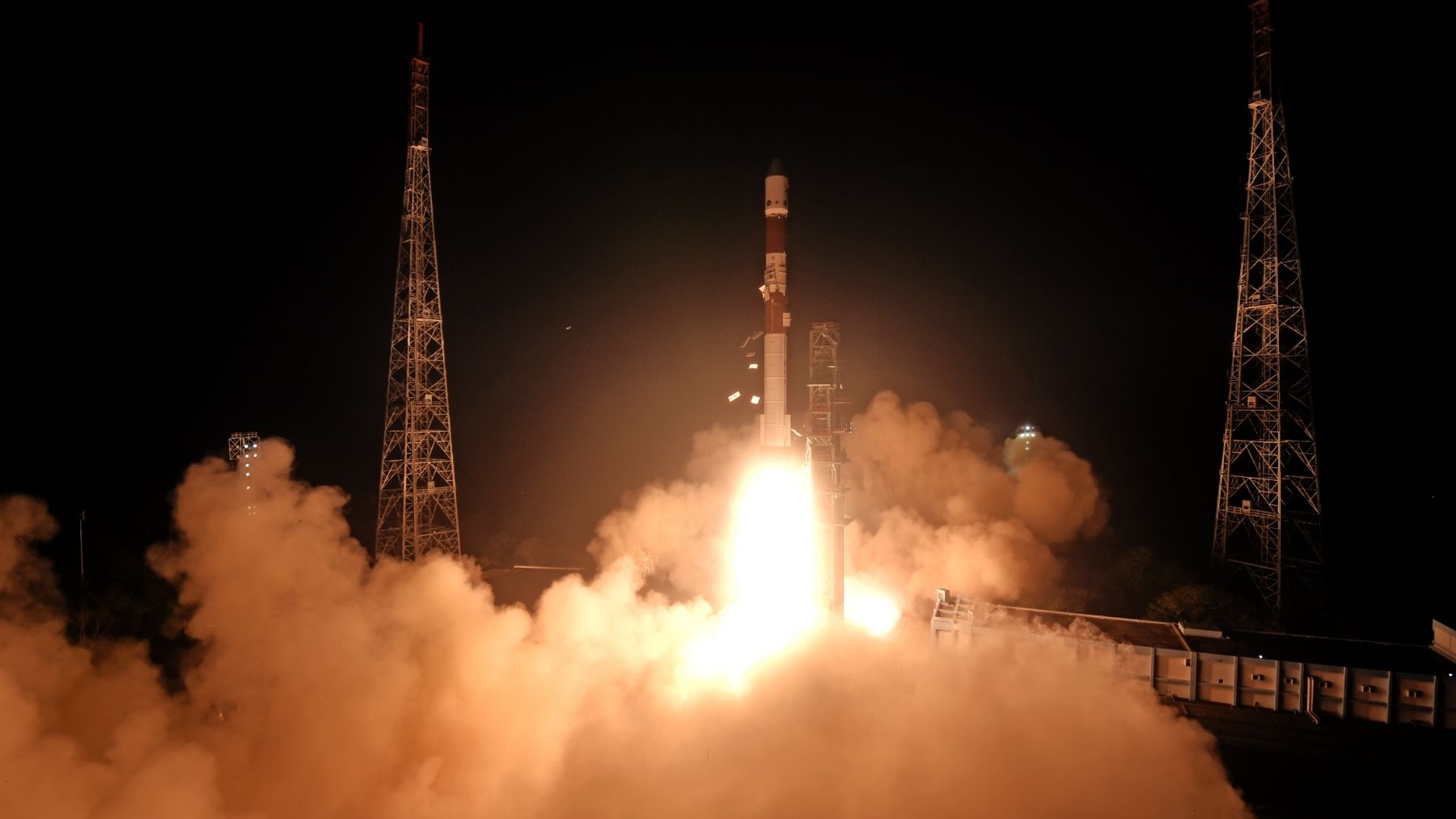
SpaDeX, a government-led space test on January 16, 2025 joined two Indian satellites in orbit and made India the fourth nation to master space docking.
Space docking, joining spacecraft so they move and work together, matters for space stations, servicing satellites, and longer missions.
A test built for orbit
Engineers at the Indian Space Research Organisation (ISRO) built SpaDeX to test rendezvous, bringing spacecraft into the same orbit.
Teams at its UR Rao Satellite Centre in Bengaluru designed guidance software that manages approach speeds and stops the craft at planned distances.
Success in orbit gives India a domestic docking toolkit that future missions can reuse, but repeat tests still matter.
From separation to approach
Launch crews released two 485-pound (220-kilogram) satellites into slightly different orbits on December 30, 2024, and started a slow approach sequence.
Small thruster firings changed velocity, and that change altered the orbit, letting the Chaser line up behind the Target.
ISRO teams postponed docking twice to validate simulations and reduce excess drift, showing how timing depends on tiny errors.
SpaDeX uses orbital physics for docking
Orbital mechanics makes close approaches risky because a tiny push changes a path, and the timing changes too.
At around 17,000 miles per hour (27,000 kilometers per hour), onboard computers must match speed within inches per second while tracking relative motion.
Missed timing can leave vehicles separated by miles after one orbit, which limits how quickly crews can try again.
Sensors that see closure
Relative navigation starts with sensors that can see another spacecraft from miles away and still work near contact.
A laser range finder, a tool measuring distance using reflected laser light, worked from about 3.7 miles (6 km) away.
Closer in, cameras and short-range sensors took over, but glare and shadows can still complicate automated tracking.
SpaDeX used navigation without constant radio
Autonomous guidance relies on each satellite knowing where the other sits, even when ground stations cannot see them.
A global navigation satellite system, navigation satellites that provide location and time signals, fed a processor that computed relative position by sharing measurements.
Brief communication gaps can worsen uncertainty, so the design uses multiple sensors before allowing the final approach sequence.
The final low-impact latch
Contact begins only after the Chaser slows to about 0.4 inches per second (10 millimeters per second) near the Target.
An androgynous, identical interface on both spacecraft, let either side align and capture using a compact 18-inch (46 centimeter) mechanism.
After capture, motors retract and rigidize the joint, but small misalignments still threaten power connectors and structural loads.
Power transfer proves teamwork
Electrical links matter because docked vehicles can share energy, turning two small craft into a more capable system.
ISRO engineers will check power transfer, moving electricity across the docking interface, before separating the pair for later payload work.
If the link works reliably, future servicing vehicles could top up batteries or run tools without carrying oversized power systems.
SpaDeX Science begins after separation
After undocking, each spacecraft switches to its own payload, including imaging and radiation monitoring equipment.
A high-resolution camera can capture 5.7-mile (9.2-kilometer) wide snapshots, while a multispectral sensor that records light in several color bands will track vegetation.
A radiation monitor records dose levels for electronics and people, but its limited time aloft cannot capture rare extreme events.
A rocket stage laboratory
The Polar Satellite Launch Vehicle’s spent upper stage also carried 24 experiments, keeping them powered and pointed after satellite deployment.
A plant payload carried seeds to study germination in microgravity, near-weightless conditions created by freefall, during the orbital experiment.
Data from these side experiments can guide life-support planning, but growing food for months would still require careful water control.
Docking enables assembly missions
A space station cannot grow without docking that lets incoming modules lock together and share control systems.
For plans that need several launches, crews must join vehicles in orbit, then move propellant, power, or people safely.
SpaDeX showed that basic joining is possible, yet longer missions demand tighter safety rules and docking at different angles.
Servicing satellites for longer
Commercial operators want to refuel or repair satellites instead of replacing them, and docking makes that physical connection possible.
A 2007 study described in-orbit servicing, repairing or refueling spacecraft after launch, as a main driver for autonomous docking.
Many Targets do not cooperate, so future missions must also handle tumbling objects and damaged hardware without clear docking points.
Money pushes new capabilities
American analysts projected the global space economy will exceed $1 trillion by 2030, drawing more competition for services.
India’s space regulator estimated the space economy at $8.4 billion in 2022 and set a $44 billion target for 2033.
Docking capability can support new products, yet investors will watch whether India can repeat the maneuver and scale it safely.
Lessons from the SpaDeX mission
Repeated simulations and hardware tests matter because docking software must handle sensor noise, delays, and unexpected motion.
Operational confidence grows with repetition, but leaders must fund follow-on flights and train teams for round-the-clock monitoring.
“It is a significant stepping stone for India’s ambitious space missions in the years to come,” said Prime Minister Narendra Modi.
SpaDeX combined autonomous approach, gentle capture, and power checks, giving India a working path toward complex, in-space assembly.
Future attempts must repeat the maneuver under varied conditions and prove long-term reliability before crews depend on the hardware.
Information from a report by the Indian Space Research Organization.
—–
Like what you read? Subscribe to our newsletter for engaging articles, exclusive content, and the latest updates.
Check us out on EarthSnap, a free app brought to you by Eric Ralls and Earth.com.
—–
Rate this article
Login to rate this article
Comments
Please login to comment
No comments yet. Be the first to comment!