
Space & Astronomy
12 min read
Future Spacecraft Power: Harnessing Motion & Dust with TENGs
Interesting Engineering
January 21, 2026•1 day ago
AI-Generated SummaryAuto-generated
A new study proposes Triboelectric Nanogenerators (TENGs) as a solution for space power. These lightweight devices convert motion and dust into electricity, offering an alternative to heavy batteries. TENGs are radiation-hardened and can even be enhanced by solar radiation, making them suitable for harsh space environments. They have diverse applications, from powering small satellites to providing energy and sensing for astronauts.
A new study led by an international team of researchers has proposed Triboelectric Nanogenerators (TENGs) as a transformative solution for space exploration.
TENGs are lightweight generators that convert mechanical motion — such as vibrations or friction — into usable electrical power.
Researchers from Luleå University of Technology in Sweden, Khalifa University in the UAE, and the University of Cambridge in the UK say that TENGs could reduce reliance on heavy batteries.
The team particularly did a panoramic review of this “self-powered energy and sensing solutions for next-generation space systems.”
It could be used to convert ambient mechanical energy — such as launch vibrations, planetary winds, and astronaut movements — into usable electricity.
Printable, foldable, and ultra-compact, these power patches can be tucked inside a CubeSat or built directly into an astronaut’s glove to harvest energy from every movement.
Extreme space conditions
Deep-space exploration subjects hardware to extreme operational constraints, specifically massive thermal swings, near-zero gravity, and high-dose radiation that cripples conventional power electronics.
Solar panels need sun, batteries freeze or weigh too much, and nuclear power is far too bulky.
This power gap has forced researchers toward TENGs, which bypass these hurdles by harvesting mechanical energy from launch vibrations, planetary winds, and even astronaut movement.
The study says TENGs offer a lightweight, radiation-hardened solution that thrives where typical electronics could fail.
Designed with space-grade materials such as PTFE and graphene, these devices can withstand Martian pressures and high radiation (10 kGy).
Furthermore, the harsh solar radiation of deep space acts as a performance enhancer rather than a deterrent.
Interestingly, intense UV exposure can actually increase the device’s charge density by a factor of 157, turning a primary environmental threat into a massive power boost.
Various applications of the TENGs
As TENGs both power themselves and sense their environment, the tech can cut heavy cabling by 30% — a massive weight saving for deep-space missions.
The researchers tested “space-grade stacks” that survived 10 kGy of radiation with almost no performance drift. It was built using fluorinated polymers, graphene, and self-healing elastomers.
Notably, these devices proved to be resilient, maintaining stability at temperatures exceeding 260°C and showing less than 5% performance loss even after a massive 10 kGy radiation dose.
As per the press release, these devices are compact and versatile.
A patch about the size of a large postage stamp can produce a 98 V from just a tiny bit of movement.
In practical missions, TENGs have already demonstrated remarkable versatility.
In one such experiment, the tech-powered parachute sensors withstood 100 Martian dust impacts in a special chamber.
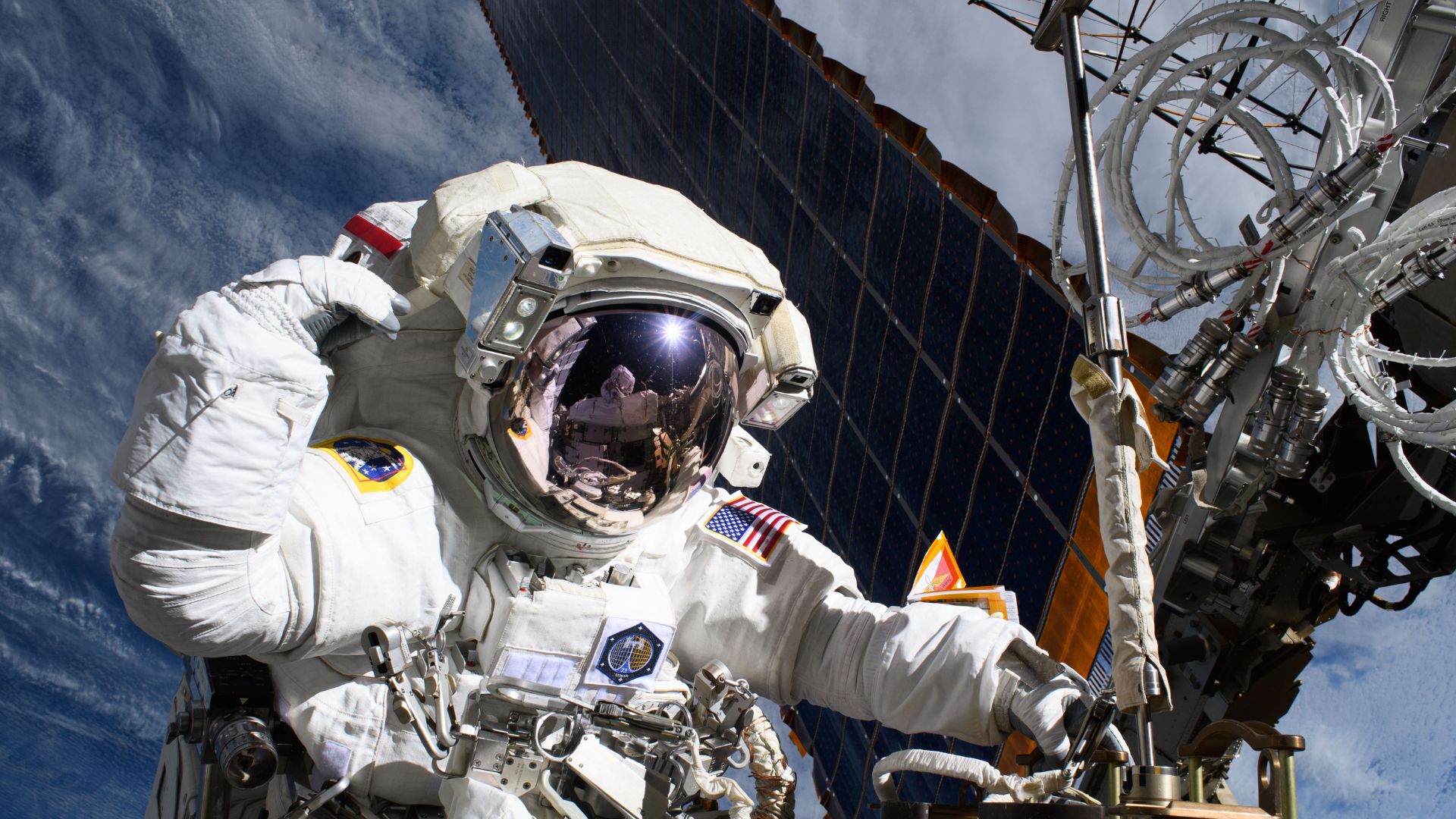
For manned missions, aerogel-based versions woven into suits can generate 135V output from an astronaut’s stride across a wide temperature range, and wirelessly feed biometric data back to base.
The applications extend far beyond power. The team highlighted 3D-printed “collision pods” and cat-paw-inspired “tribo-skins” for robots. These allow autonomous crawlers to “feel” their way across space station trusses, identifying debris strikes as small as 0.2g.
Beyond orbit, Arctic-tested TENG buoys have even successfully harvested wave energy to drive emergency beacons.
While highly promising, the transition to deep-space utility requires further development in radiation-hardened composites and AI-assisted digital twins.
The future of space power likely lies in hybrid architectures that combine TENGs with solar and thermoelectric generators to ensure a continuous power supply for the Artemis habitats and beyond.
The technology review study was published in the journal Nano-Micro Letters.
Rate this article
Login to rate this article
Comments
Please login to comment
No comments yet. Be the first to comment!