
Space & Astronomy
9 min read
Viruses in Space: Scientists Witness Surprising Evolutionary Changes
ScienceDaily
January 18, 2026•4 days ago
AI-Generated SummaryAuto-generated
Viruses infecting bacteria, known as phages, were sent to the International Space Station. In microgravity, these phages and their host bacteria, E. coli, evolved unique genetic mutations. Space-station phages showed increased infectivity, while E. coli developed resistance. These adaptations led to engineered phages with enhanced activity against drug-resistant pathogens on Earth, offering insights into microbial evolution and human health.
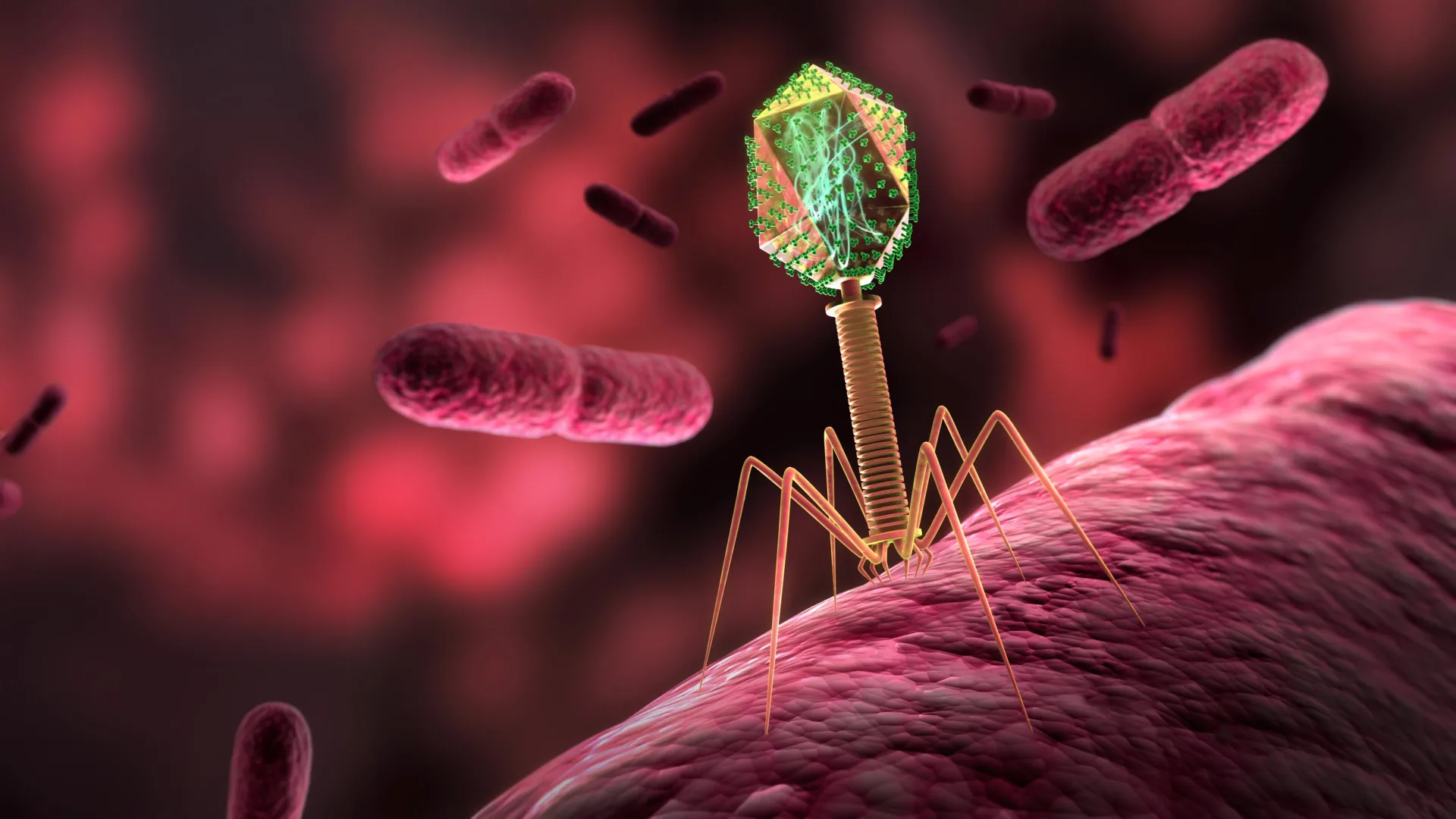
Interactions between phages -- viruses that infect bacteria -- and their hosts play an integral role in microbial ecosystems. Often described as being in an evolutionary "arms race," bacteria can evolve defenses against phages, while phages develop new ways to thwart defenses. While virus-bacteria interactions have been studied extensively on Earth, microgravity conditions alter bacterial physiology and the physics of virus-bacteria collisions, disrupting typical interactions.
However, few studies have explored the specifics of how phage-bacteria dynamics differ in microgravity. To address that gap, Huss and colleagues compared two sets of bacterial E. coli samples infected with a phage known as T7 -- one set incubated on Earth and the other aboard the International Space Station.
Analysis of the space-station samples showed that, after an initial delay, the T7 phage successfully infected the E. coli. However, whole-genome sequencing revealed marked differences in both bacterial and viral genetic mutations between the Earth samples versus the microgravity samples.
The space-station phages gradually accumulated specific mutations that could boost phage infectivity or their ability to bind receptors on bacterial cells. Meanwhile, the space-station E. coli accumulated mutations that could protect against phages and enhance survival success in near-weightless conditions.
The researchers then applied a high-throughput technique known as deep mutational scanning to more closely examine changes in the T7 receptor binding protein, which plays a key role in infection, revealing further significant differences between microgravity versus Earth conditions. Additional experiments on Earth linked these microgravity-associated changes in the receptor binding protein to increased activity against E. coli strains that cause urinary tract infections in humans and are normally resistant to T7.
Overall, this study highlights the potential for phage research aboard the ISS to reveal new insights into microbial adaption, with potential relevance to both space exploration and human health.
The authors add, "Space fundamentally changes how phages and bacteria interact: infection is slowed, and both organisms evolve along a different trajectory than they do on Earth. By studying those space-driven adaptations, we identified new biological insights that allowed us to engineer phages with far superior activity against drug-resistant pathogens back on Earth."
In your coverage, please use this URL to provide access to the freely available paper in PLOS Biology: https://plos.io/4q4S9AO
Citation: Huss P, Chitboonthavisuk C, Meger A, Nishikawa K, Oates RP, Mills H, et al. (2026) Microgravity reshapes bacteriophage-host coevolution aboard the International Space Station. PLoS Biol 24(1): e3003568. https://doi.org/10.1371/journal.pbio.3003568
Rate this article
Login to rate this article
Comments
Please login to comment
No comments yet. Be the first to comment!