
Geopolitics
18 min read
South Korea's Global Reputation Hits New High, Fueled by Cultural Content
Asia News Network
January 21, 2026•1 day ago
AI-Generated SummaryAuto-generated
South Korea's national image has reached a historic high, driven primarily by cultural content like K-pop and dramas. A survey found 82.3% of respondents viewed Korea favorably. While cultural influence is strong, particularly among younger demographics, perceptions of social inclusiveness and diversity remain areas for improvement.
January 21, 2026
SEOUL – South Korea’s national image abroad has reached its highest level since the government began tracking the metric in 2018, with cultural content emerging as the single biggest driver of rising favorability, according to a new survey released by the Ministry of Culture, Sports and Tourism Tuesday.
The “2025 Korea National Image Survey” revealed that 82.3 percent of respondents held a favorable view of Korea. This marks a 3.3 percentage point increase from 2024 and is also the highest figure recorded in the survey’s history. The poll was conducted throughout October 2025, surveying 13,000 people across 26 countries, the ministry said.
By country, the United Arab Emirates posted the highest favorability toward Korea at 94.8 percent, followed by Egypt at 94 percent, the Philippines at 91.4 percent, Turkey at 90.2 percent, India at 89 percent and South Africa at 88.8 percent.
The ministry said the strong results from the Middle East and Africa may reflect a positive environment for cooperation, shaped by increasingly active exchanges between Korea and countries in those regions.
Thailand and the United Kingdom recorded some of the largest year-on-year gains. Favorability in Thailand rose 9.4 percentage points, from 76.8 percent to 86.2 percent, rebounding after a sharp dip the previous year. The UK’s score climbed 9.2 percentage points to 87.4 percent, marking the first time it has exceeded the overall average and making it the only European country to do so, the ministry said.
China and Japan posted comparatively low favorability ratings at 62.8 percent and 42.2 percent, respectively, but both improved from a year earlier, up 3.6 percentage points for China and 5.4 points for Japan. Japan’s figure was the highest recorded since the survey began.
Although Koreans’ favorability toward their own country rose by 8.2 percentage points to 60.4 percent from the previous year, it still lagged well behind the global average, highlighting a continuing gap between how Koreans view their country and how it is perceived abroad.
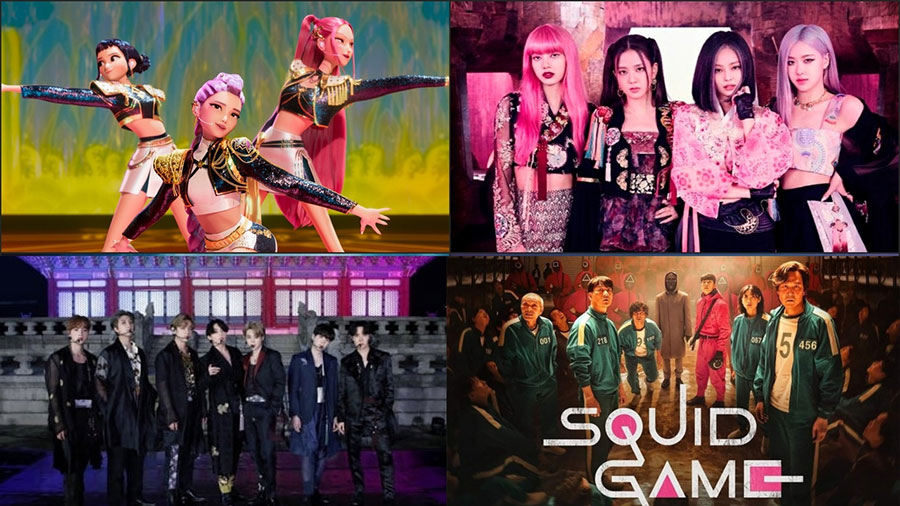
Asked what most positively shaped their overall perception of Korea, respondents most frequently cited cultural content, including K-pop, dramas and films, with 45.2 percent selecting it as the top factor. Cultural content resonated most strongly among respondents in their 20s and younger, while those aged 50 and above were more likely to mention Korean products and brands.
This influence was particularly strong in the Asia-Pacific region, with 69.3 percent of respondents from the Philippines citing cultural content as a major reason for their favorable view of Korea, followed by Japan (64.4 percent), Indonesia (59.5 percent) and Vietnam (58.4 percent).
Other factors that contributed positively to Korea’s image included modern lifestyle and culture (31.9 percent), products and brands (28.7 percent), and economic development (21.2 percent). In the Middle East and Africa, economic factors such as Korean brands and perceptions of Korea’s economic level played a larger role alongside cultural appeal, the ministry said.
The survey found that people most commonly encountered Korea through video platforms (64.4 percent), followed by social media (56.6 percent), websites (46.7 percent) and broadcast media (32.8 percent).
When asked which Korean figure had the most positive impact on Korea’s image, respondents most frequently named BTS. Other top answers included football star Son Heung-min, girl group Blackpink and actor Lee Min-ho, followed by Jungkook of BTS and President Lee Jae Myung.
In addition to the quantitative survey, the ministry said it conducted in-depth interviews with around 70 highly engaged Korea observers, including international students in Korea, foreign correspondents and foreign nationals living overseas.
While Korea was previously associated largely with security tension on the peninsula and K-pop idols, respondents said their interest has broadened to include the country’s culture, economy, society and politics. Interviewees evaluated Korea’s democracy positively, citing what the ministry described as strong “resilience,” the ability of Korean society to overcome political turmoil through civic engagement.
At the same time, the report noted that global audiences increasingly see Korea through a dual lens: a dynamic cultural powerhouse, but also a society shaped by intense competition and underlying tensions. Korea received its highest score for being perceived as an “innovative country with advanced technology,” at 80.3 points, but ranked near the bottom for “caring for the socially vulnerable” (66.6) and “embracing cultural diversity” (67.7). Social inclusiveness was also identified as a major negative factor affecting favorability.
While Korea’s convenient infrastructure and public safety perception drew strong responses, foreign observers pointed to signs of social fatigue beneath the surface. International students, in particular, were described as arriving with high expectations shaped by K-content, but later reporting “invisible barriers” in everyday life — reinforcing the perception that Korea is “a great place to visit, but a difficult place to live.”
Based on findings from the in-depth interviews, the report suggested that aligning more closely with global standards on labor, human rights, the environment and gender equality — while strengthening social inclusiveness and reducing barriers faced by outsiders — will be increasingly important for Korea’s long-term credibility. It also noted that more balanced communication, acknowledging both Korea’s strengths and its challenges, could help sustain international trust and engagement.
Rate this article
Login to rate this article
Comments
Please login to comment
No comments yet. Be the first to comment!