
Politics
11 min read
Indonesia's Push for Smoke-Free Communities: Challenges and Progress
World Health Organization (WHO)
January 19, 2026•3 days ago
AI-Generated SummaryAuto-generated
Despite widespread smoke-free regulations in Indonesia, weak enforcement leads to significant public exposure to second-hand smoke. Workshops trained over 200 officials to improve policy implementation and monitoring, addressing challenges like resource shortages and lack of political will. Action plans were developed to strengthen enforcement and ensure compliance, aiming to protect millions from harmful smoke.
More than 90% of districts in Indonesia have adopted subnational smoke-free regulations, yet enforcement remains weak.
The Global Adult Tobacco Survey (GATS) 2021 shows that many adults are still exposed to second-hand smoke in public places. The survey found that 74.2% of people are exposed to second-hand smoke in restaurants. In government buildings the rate is 41.4%, in workplaces 44.8%, on public transportation 40.5%, and even in healthcare facilities 14.2%. These figures highlight the urgent need for robust support to help cities and districts effectively enforce and monitor smoke-free regulations.
From 2023 to 2025, World Health Organization (WHO) Indonesia and the Ministry of Health organised workshops on implementing smoke-free policies in Lampung, Banten, West Nusa Tenggara, South Kalimantan and East Kalimantan. More than 200 government officials from 56 districts were trained to strengthen local enforcement of smoke-free regulations. The sessions focused on the principles of smoke-free policy design and highlighted successful practices from districts with strong compliance such as Bogor, Depok, Bandung and Klungkung. Participants also learned to use an online smoke-free dashboard and mobile app for monitoring and field inspections, and field visits allowed them to apply these tools while checking compliance.
The workshops helped cities identify key challenges in implementing smoke-free regulations. These include the absence of an established or functional smoke-free task force, inspections that focus only on health and education facilities while ignoring other public places, insufficient human resources especially civil servant investigators, lack of financial resources and inadequate political commitment from heads of subnational government.
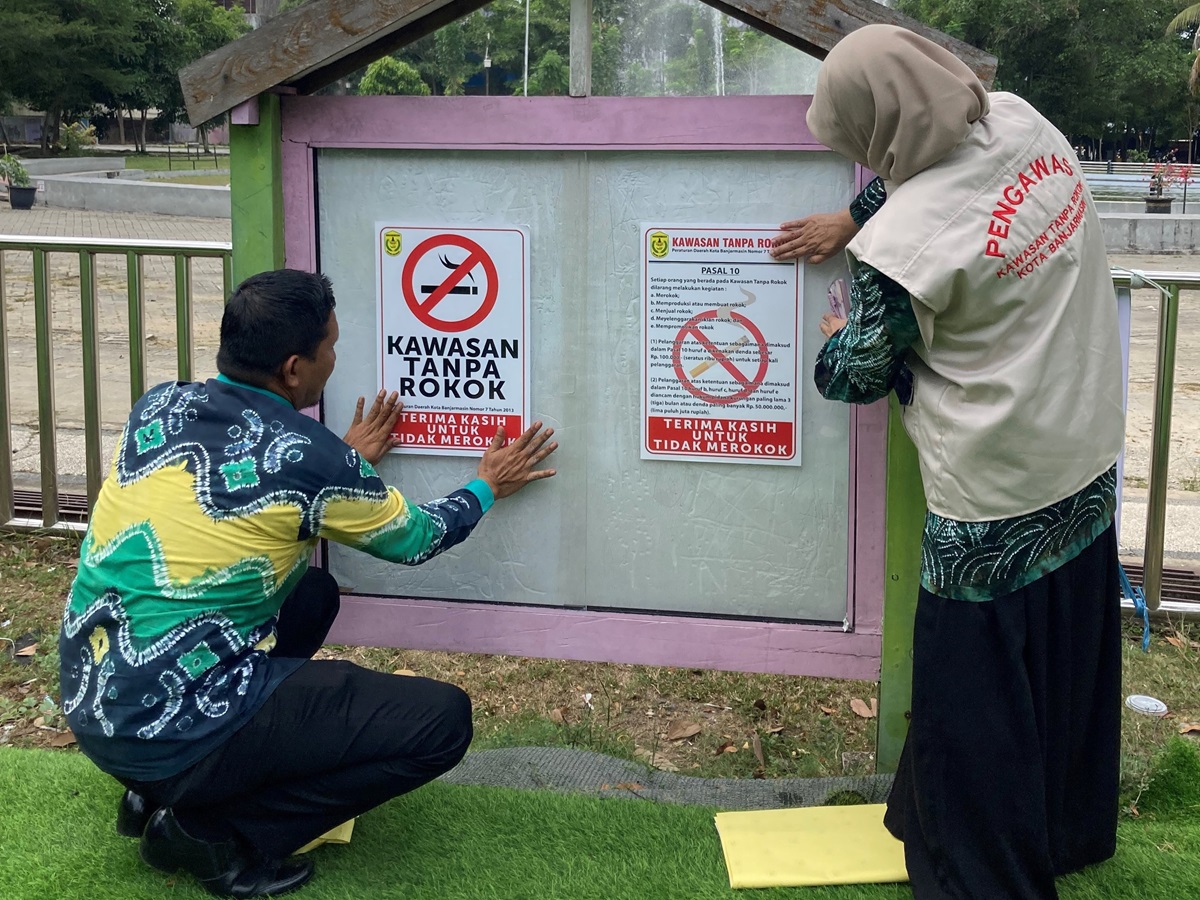
One of the participants reminded a violator of the smoke-free policy during a field exercise. Credit: WHO/Dina Kania
To address these issues, each city developed an action plan to enhance the implementation and enforcement of smoke-free regulations within their jurisdictions. Plans included forming dedicated task forces, formulating standard operating procedures, organizing regular multi-sectoral coordination meetings, and strengthening monitoring and evaluation mechanisms to ensure sustained compliance.
"West Nusa Tenggara is one of the few provinces in Indonesia where all cities and districts have adopted smoke-free regulations," Dr. L. Hamzi Fikri, Head of the Health Office of West Nusa Tenggara Province, stated during the training session in Mataram City. “However, the lack of enforcement has led to high exposure to second-hand smoke. As government officials, we must ensure that our citizens have the right to live in a healthy environment, free from second-hand smoke exposure. This training motivates us and enhances our skills to effectively implement smoke-free policies.”
The Indonesia Health Survey 2023 (SKI) reports tobacco use rates of 29.2% in Lampung, 29.4% in Banten, 31.3% in West Nusa Tenggara, 20.4% in South Kalimantan and 22.1% in East Kalimantan. Protecting more than 34 million people in these provinces from second-hand smoke requires consistent enforcement of smoke-free regulations.
WHO Indonesia is expanding smoke-free enforcement training to more cities with a high burden of tobacco use. The initiative includes regular follow-up visits to track progress, provide ongoing technical support and ensure smoke-free efforts remain sustainable and effective.
Written by Ridhwan Fauzi, NPO Tobacco-Free Initiative, and Dina Kania, NPO Policy and Legislation, WHO Indonesia
Rate this article
Login to rate this article
Comments
Please login to comment
No comments yet. Be the first to comment!