
Economy & Markets
9 min read
Škoda 1101 'Tudor' Marks 80 Years: A Special Museum Exhibition
Škoda Storyboard
January 19, 2026•3 days ago
AI-Generated SummaryAuto-generated
The Škoda 1101 ‘Tudor’ is celebrating its 80th anniversary with a special exhibition. Launched in 1946, this robust and economical car was crucial for Škoda's post-war production restart and global exports, reaching markets worldwide. It came in various body styles and even saw success in motorsport, demonstrating its versatility and reliability. The exhibition showcases its storied history.
The very first production Škoda 1101 rolled off the assembly line at the Mladá Boleslav factory on Monday, 6 May 1946. It followed the successful Rapid and Popular models, which drove Škoda’s production and sales boom in the late 1930s. In the difficult post war period, the 1101 offered robust construction, reliability, low running costs and a comfortable ride even on poor quality roads, attracting customers in Europe, Australia, Asia and Africa.
Modern design and many versions
The Škoda 1101, a four seater two door saloon just over four metres long, used a backbone chassis with independent suspension on all wheels. It was powered by a 1,089 cm³ OHV four cylinder engine producing 32 hp (23.6 kW). It reached 100 km/h and averaged 8.0 l/100 km – very economical for its time.
From 1948 onwards, the modernised 1102 was produced. In addition to a different radiator grille and bumpers, it offered an optional column-shift four speed gear lever in place of the floor-mounted lever. By 1952, when production of the Škoda 1101/1102 ended, a total of 66,904 civilian cars had been built. Beyond the most common two-door body style, other versions included a four-door saloon, an elegant roadster and the Tudor convertible with a retractable fabric roof. The universal design also enabled practical delivery vans, ambulances and estate models. In addition, more than four thousand derivatives were created for security forces, designated Škoda 1101 VO (military open) and Škoda 1101 P (emergency).
Success on global markets and in motorsport
More than 65 per cent of Škoda 1101/1102 cars were exported. By 1951, they were sold in 76 countries, with Poland, the Netherlands, Belgium and West Germany among the most significant markets. The Tudor also reached further afield, including Australia, Canada, India, Morocco, Kenya and South Africa.
The Škoda 1101/1102 range also made its mark in motorsport. In Europe and South America, the cars excelled in demanding rallies and circuit races thanks to their reliability and efficiency. In the 24 hour race at Spa (Belgium) in July 1948, three Tudors entered by a local importer won their class, crossing the line in close succession after completing 1,972 km in difficult, rainy conditions and securing a 1–2–3 class finish. In the 1950s, success continued with the Škoda Sport and Supersport factory specials, which shared the same technical underpinnings.
Exhibition provides comprehensive insight into the model’s storied history
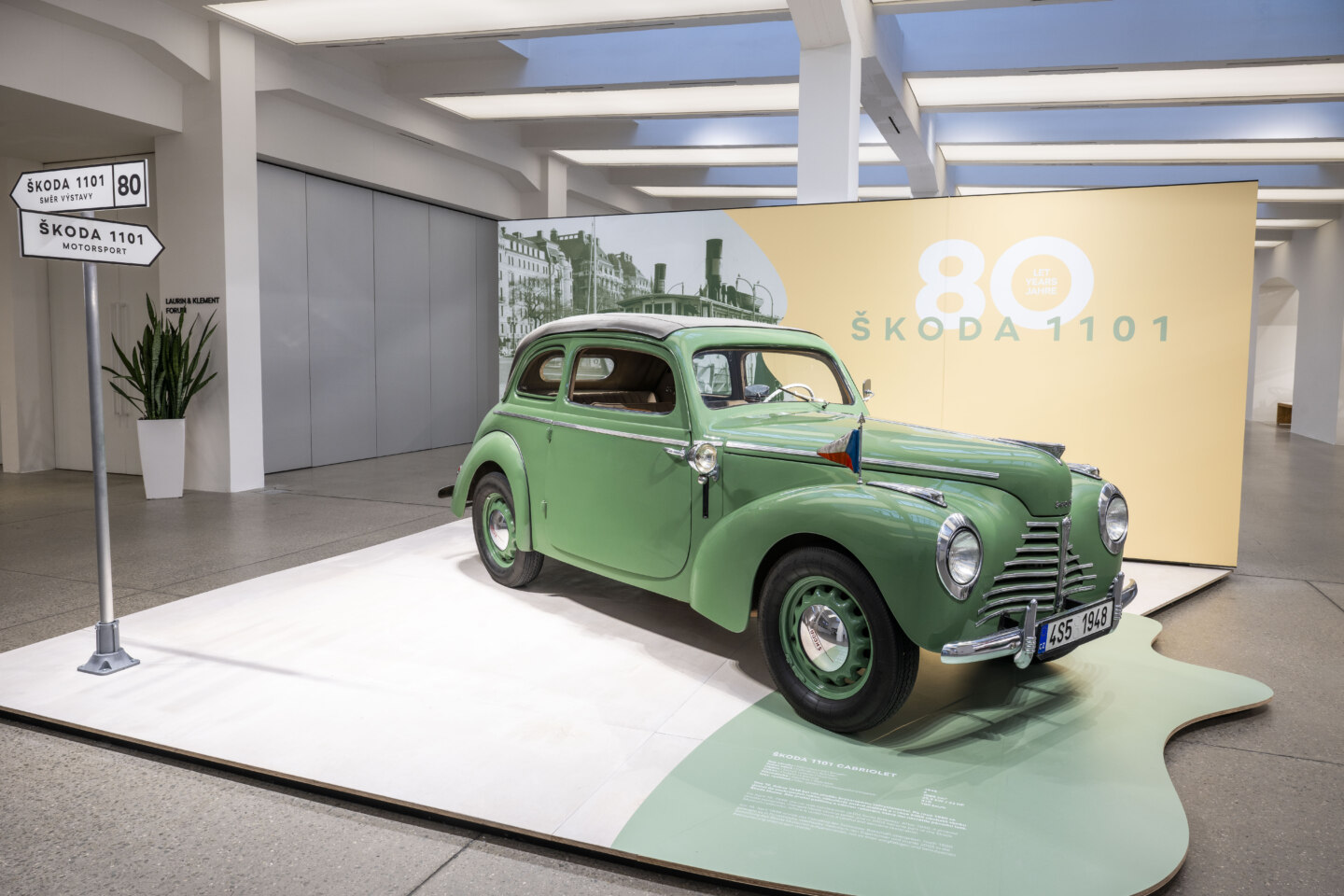
The story of the car that helped Škoda restart production and resume exports worldwide after the Second World War features in the Škoda Museum’s themed exhibition 80 Years of the Škoda 1101 ‘Tudor’. The exhibition presents typical and rare versions of the model, with their stories told through large-format photo panels. With period film footage and unique artefacts, enthusiasts and families alike will find plenty to enjoy.
Rate this article
Login to rate this article
Comments
Please login to comment
No comments yet. Be the first to comment!