
Entertainment
29 min read
9 Essential Ski Tools for Beginners: Instructor Approved
skimag.com
January 20, 2026•1 day ago
AI-Generated SummaryAuto-generated
Ski instructors recommend several tools to help beginners learn. These include harnesses, edgie wedgies, hula hoops, dry slopes, snowballs, cones, and vests. While useful, these aids should be used sparingly and temporarily to foster independent skiing skills and proper technique, with formal lessons being the most effective option.
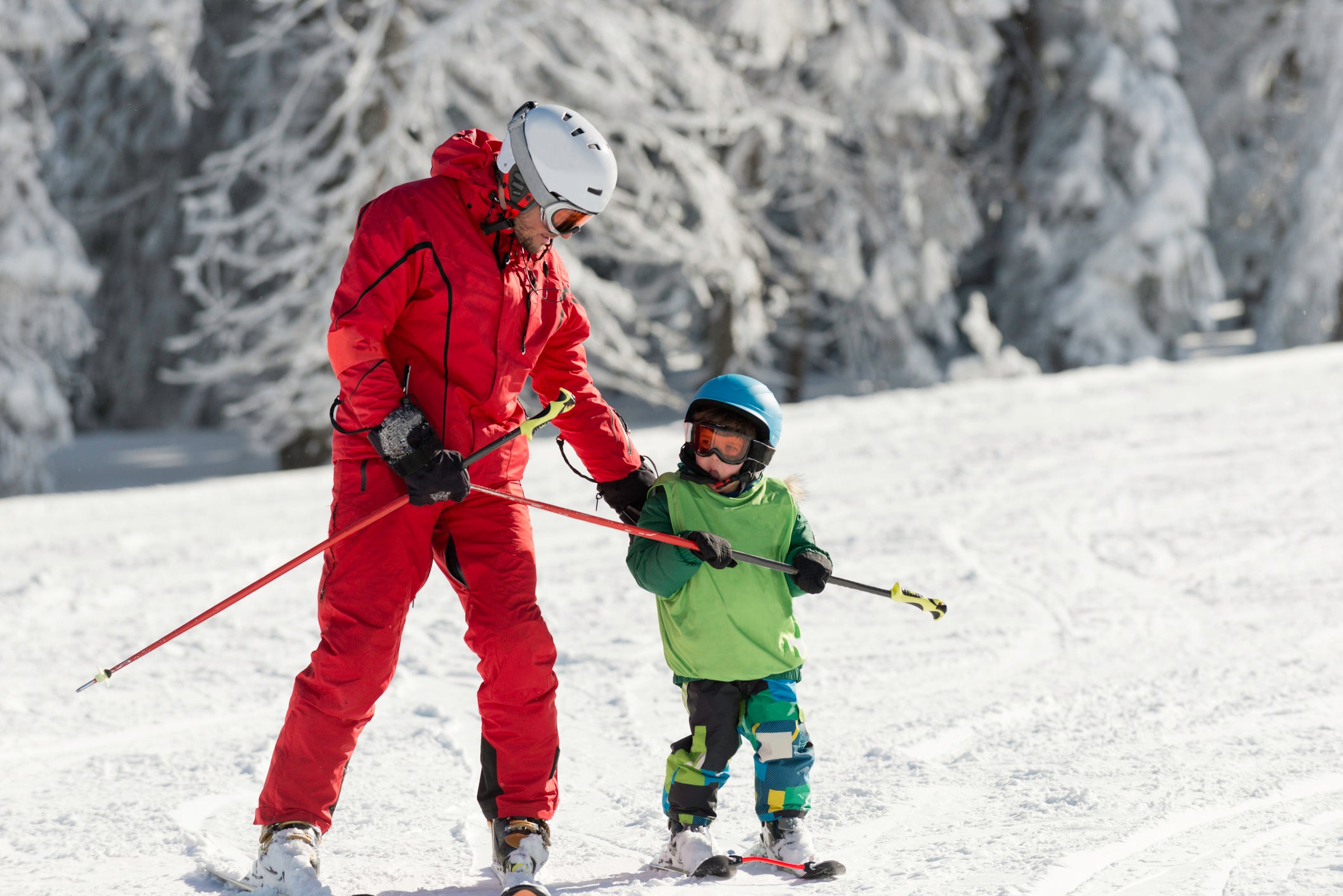
Whether you’re a PSIA-certified instructor, or if you’re simply a parent putting your kid on skis, teaching a first-timer isn’t easy. Fortunately, there are a handful of tools you can use to make the experience smoother. When used properly harnesses, hula hoops, and even snowballs can help beginners. But which ones are truly useful for long-term improvement?
We spoke to ski school experts to determine which ski instructor tools are worth trying, and how to use them correctly. Here’s what they said:
The Tool: Harnesses
Incorrect uses: Overuse, and attaching them to the beginner’s torso
Correct uses: Using sparingly, attach to the skier’s base, or swap for another tool
We’ve all seen children physically “attached” to their parents on the slopes, wearing what looks like a harness and leash. These harnesses effectively allow the child to “ski,” while remaining within arm’s reach of their guardian.
Harnesses can help acclimate young children to the snow. However, they pull the child into a “backseat” position rather than the correct athletic stance, Jenni Hogan, Manager of Windham Mountain Club’s Windham Mountain Kids program, explains. Also, adding that wearing a harness doesn’t allow for independent skiing.
“The two biggest drawbacks of harnesses are that it can be challenging to create an independent skier who wants to go back and learn how to stop and turn without the harness,” she explains. “They also create a body position where they are not in balance but levered over the tail of the skis.”
Instead of connecting a harness to the child’s midsection, Hogan recommends connecting them to the boots or ankle. This enables beginners to stand up and stop independently. She also suggests using a hookease (a plastic ski connector) instead.
“[A hookease] controls the skis and encourages muscle development rather than just taking the child for a ride,” Hogan adds.
Kirsten Henson, manager of Vail Mountain Children’s Ski and Snowboard School, also suggests transitioning to easier terrain and gradually phasing out the harness as the child becomes increasingly more comfortable skiing independently.
“Once your child is able to control their speed, stop on command, and navigate their surroundings safely, it’s advisable to transition to easier terrain and phase out the harness,” she explains. “This will encourage more independent skiing skills.”
The Tool: Edgie Wedgies
Incorrect uses: Long-term use
Correct uses: Initial introductions to skiing
If you’ve spent time waiting in long lift lines, you’ve likely noticed some children sporting Edgie Wedgies. Although there are many varieties, Henson says the most common type consists of two clamps that attach to the tips of a child’s skis, and connect with a piece of rubber. They can be useful, she explains, but it doesn’t help with leg rotation.
“Edgie Wedgies help the child maintain a wedge shape, allowing them to ski with a gliding wedge (for movement) and a breaking wedge (for stopping),” Henson says. “However, the Edgie Wedgie can sometimes encourage a “push-out” movement rather than the more ideal leg rotation.”
Children can become far too reliant on Edgie Wedgies, which is why Hogan emphasizes that new skiers should use them sparingly. Phasing them out is crucial for the child to develop skills like making full turns.
“It’s important to get children turning quickly when they have an Edgie Wedgie on so they can learn to turn their legs,” she says. “Frequently take [the edgie wedgie] off to teach independence — oftentimes, I’ll put one side on very loosely so it falls off as the child is skiing. That way, they will continue to create the same movement patterns without it.”
The Tool: Hula Hoops
Incorrect uses: Using long-term or in lieu of a harness
Correct uses: Instructor skies backward in front using the hoop to teach spacing
Instructors will want to avoid using a hula hoop like a harness (instructor in the back, child in the front). Instead, Hogan recommends the instructor (safely) skiing backward in front of the child, with a hula hoop in between them.
“For a child that is a bit nervous, ski backward in front of them while both of you hold on to the hula hoop,” she says. “This can create a sense of security while keeping the child a safe distance from you. That way, if one of you were to fall, you won’t be entangled.”
Henson even recommends popping off your skis, for safety purposes. “Because the hula hoop reduces the distance between the adult and child, I recommend using it only on very shallow terrain with the adult off skis,” she explains. “If you’re planning to move beyond the carpet or would prefer to remain on skis, while still working on speed control and spatial awareness, transitioning to a harness may be a better option.”
The Tool: Dry Slopes
Incorrect Uses: Hard to acclimate to the weather when you’re inside
Correct Uses: Getting beginners accustomed to snow and sliding
Many resorts have an indoor ski ramp that allows younger kids to experience the feel of sliding with their skis on. It’s a very temporary tool, but it helps get little ones acclimated. Hogan says the one used in her program is extremely useful, whether the kids are apprehensive or during poor weather conditions.
“We use it frequently with our beginners because it gives them the opportunity to get the feel of sliding and learning to stop without some of the overstimulation of being outside,” Hogan says. “They also think it’s fantastic to ski inside and will lap it and work on learning to stop while they feel like they are playing. “
The Tool: Integrating Ski Gear Into Your Child’s Toy Box
Correct uses: Having children get used to their gear in a comfortable play setting
Similarly, when introducing young children to skiing, Hogan recommends adding ski gear to their toy box inside. Putting their ski boots, skis, helmets, and goggles in with their other toys allows them to play with them indoors, and get used to wearing them.
“When children are comfortable in their gear they are far more willing to participate in a lesson and enjoy the on-snow experience,” Hogan tells us. “Skis slide great on the carpet (the edges won’t ruin it!). And it’s a great opportunity to get them to get used to the weight of boots and skis somewhere they are comfortable.”
The Tool: Snowballs
Incorrect Use: Throwing at fellow students
Correct uses: Improve form with a free tool
Henson emphasizes that one of the best teaching tools happens to be free: snowballs. Not only do kids love them, but they challenge kids to fix their posture — and the form of their wedge — all in one.
“Asking a younger student to hold a snowball [while skiing] encourages them to form the proper wedge shape because developmentally their feet often follow the movement of their hands,” she explains. “It also helps bring their hands forward, which naturally shifts their center of mass in the right direction. Additionally, holding the snowball can help calm their upper body if they’re prone to flailing, promoting a more controlled and balanced posture.”
The Tool: Cones
Correct Uses: Create obstacle courses to teach wedge/parallel turns
Cones used for recreational sports training are not only inexpensive but are portable. They help teach children to make nice even turns, instead of bombing down the bunny slope (and possibly taking out the teacher).
“Cones are great in beginner areas because they are movable,” Hogan tells us. “You can create a hundred different obstacles with them for every ability.”
The Tool: Vests
Correct uses: having young students wear them for safety
Many ski and ride schools across the U.S. put younger skiers in vests — and there’s a reason for that. They not only help identify the children on the slopes, in the cafeteria, and in the lift line, but they’re also safety tools.
“High-quality vests, like from Kinderlift, have a handle on the back,” Hogan explains. “They can help with loading the chairlift or safely lifting them when they fall down, without creating any dependence on outside equipment.”
The Tool: An Instructor
Correct uses: Lessons can help anyone, but especially beginners
Hogan maintains prioritizing putting your child in formal lessons over implementing these tools yourself. They are more likely to listen more patiently under another adult’s watch.
“The best teaching tool is a great instructor — they’re going to get your child to fall in love with the sport while creating solid movement patterns,” she explains. “After a lesson, let your child show you what they learned on the terrain they learned it on, and celebrate that you have a future passionate skier!”
Reminder: Physical tools shouldn’t leave beginner runs, and should only be temporary
“The first thing people should know about teaching tools is that they shouldn’t leave the bunny hill”, Hogan says. “They are not going to help a new skier learn new skills, especially if they are simply trying to make their way down without falling”.
But also, educational tools should only be used temporarily. Henson maintains that these kinds of instructional instruments are only useful when utilized as tools — not as crutches.
“It’s important to understand the purpose of each teaching tool and recognize when it’s time to move on,” Henson tells us. “All of these tools are valuable when used correctly and for the appropriate amount of time. However, if overused, they can inadvertently reinforce poor mechanics. The key is using them in a way that supports the ultimate goal of developing skills for independent skiing.”
Rate this article
Login to rate this article
Comments
Please login to comment
No comments yet. Be the first to comment!