
Space & Astronomy
7 min read
Shenzhou-21 Crew Advances Cutting-Edge Science Experiments in Orbit
news.cgtn.com
January 18, 2026•4 days ago
AI-Generated SummaryAuto-generated
China's Shenzhou-21 astronauts are conducting advanced scientific experiments on the space station. Over the past week, they interacted with an intelligent robot, analyzed urine for metabolic components, and collected saliva samples to study microbial impacts. The crew also worked on genetic code research, lithium-ion battery experiments, and replaced components in science cabinets. Emergency drills and medical examinations were also completed.
China's Shenzhou-21 astronauts have steadily advanced scientific experiments in several fields aboard China's space station over the past week.
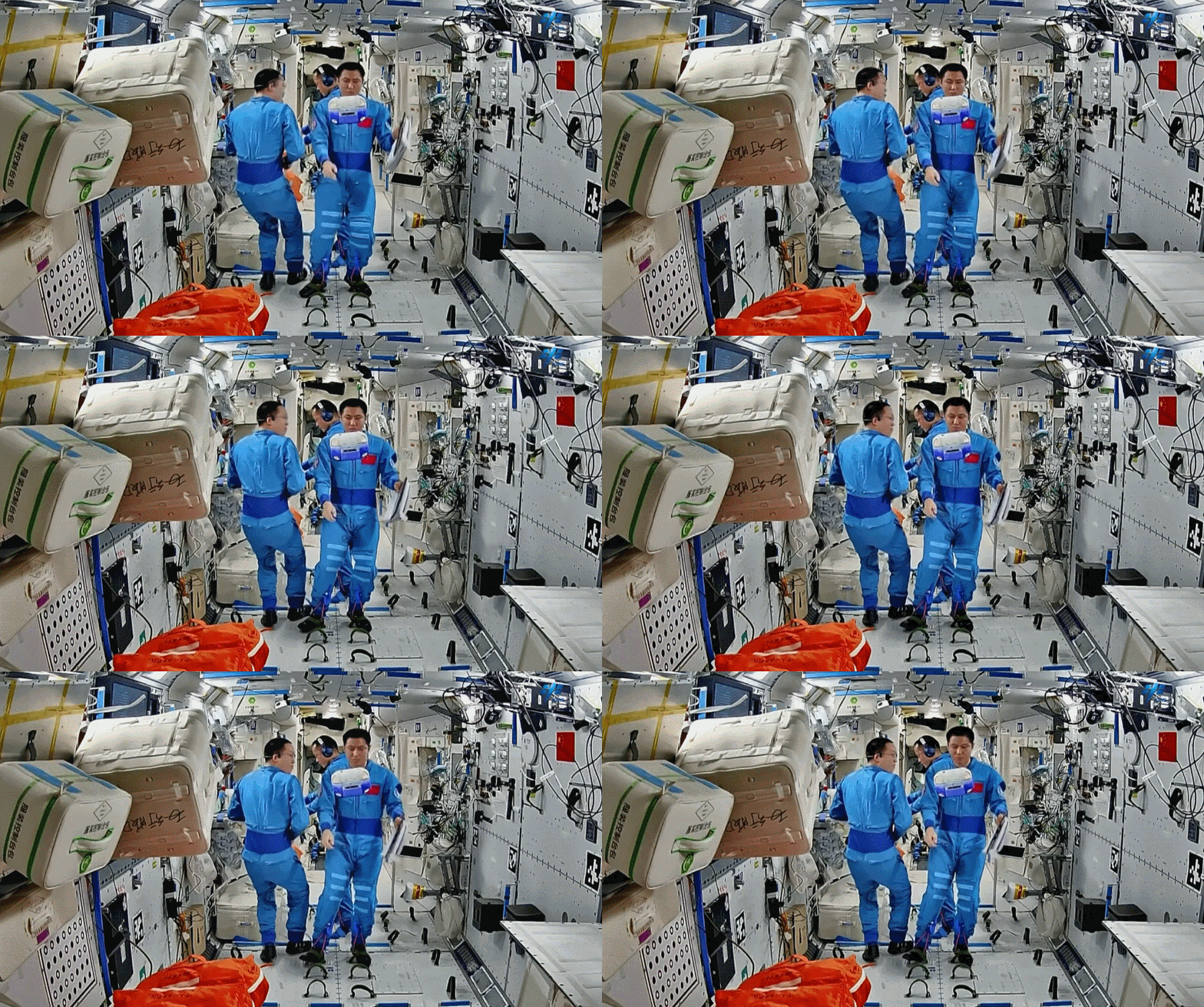
The crew consists of mission commander Zhang Lu and astronauts Wu Fei and Zhang Hongzhang. They have been in orbit for nearly 80 days, and are all in good conditions.
Over the past week, the astronauts engaged in close interaction with their old friend aboard the space station, the intelligent robot "Xiaohang." They conducted multiple tests, including touch interaction and autonomous flight and collected data for future optimization of the robot's orbital motion behaviors.
For space medical experiments, the crew used a space-based Raman spectrometer to analyze metabolic components in urine samples. The collected data will be used to further refine and improve the indicator system and evaluation criteria of the relevant metabolite.
The crew collected saliva samples for studies on astronauts' impact on microbial populations within the space station environment. The samples will be tested after the crew returns to Earth.
They completed sample collection and storage for a research project investigating the relationship between the origin of the genetic code and chirality in space environments. The project aims to explore the patterns of chiral combinations between amino acids and nucleosides.
In the field of microgravity physics, the astronauts continued in situ electrochemical optical experiments on lithium-ion batteries for space applications.
Additionally, the crew completed the replacement of the sampling cover in the combustion science experiment cabinet, the disassembly and reassembly of experimental modules and the replacement of experimental samples in the fluid physics experiment cabinet.
The system-wide pressure emergency drill was conducted as scheduled. The exercise simulated the entire emergency response process when the space station faced an internal depressurization scenario, consolidating and further enhancing the astronauts' emergency response capabilities and ground-space coordination skills.
Medical examinations, such as hearing tests, were conducted as scheduled, and physical activities, such as running, were carried out regularly.
Rate this article
Login to rate this article
Comments
Please login to comment
No comments yet. Be the first to comment!