
Geopolitics
24 min read
IDF Reports 27% Surge in Settler Violence in 2025
The Times of Israel
January 19, 2026•3 days ago
AI-Generated SummaryAuto-generated
Attacks by extremist Jewish settlers against Palestinians and security forces in the West Bank rose 27% in 2025, with severe incidents increasing over 50%. The Israel Defense Forces and Shin Bet recorded 867 incidents, including shootings and arson. This surge occurred despite efforts to mitigate violence. Conversely, Palestinian terror attacks significantly decreased.
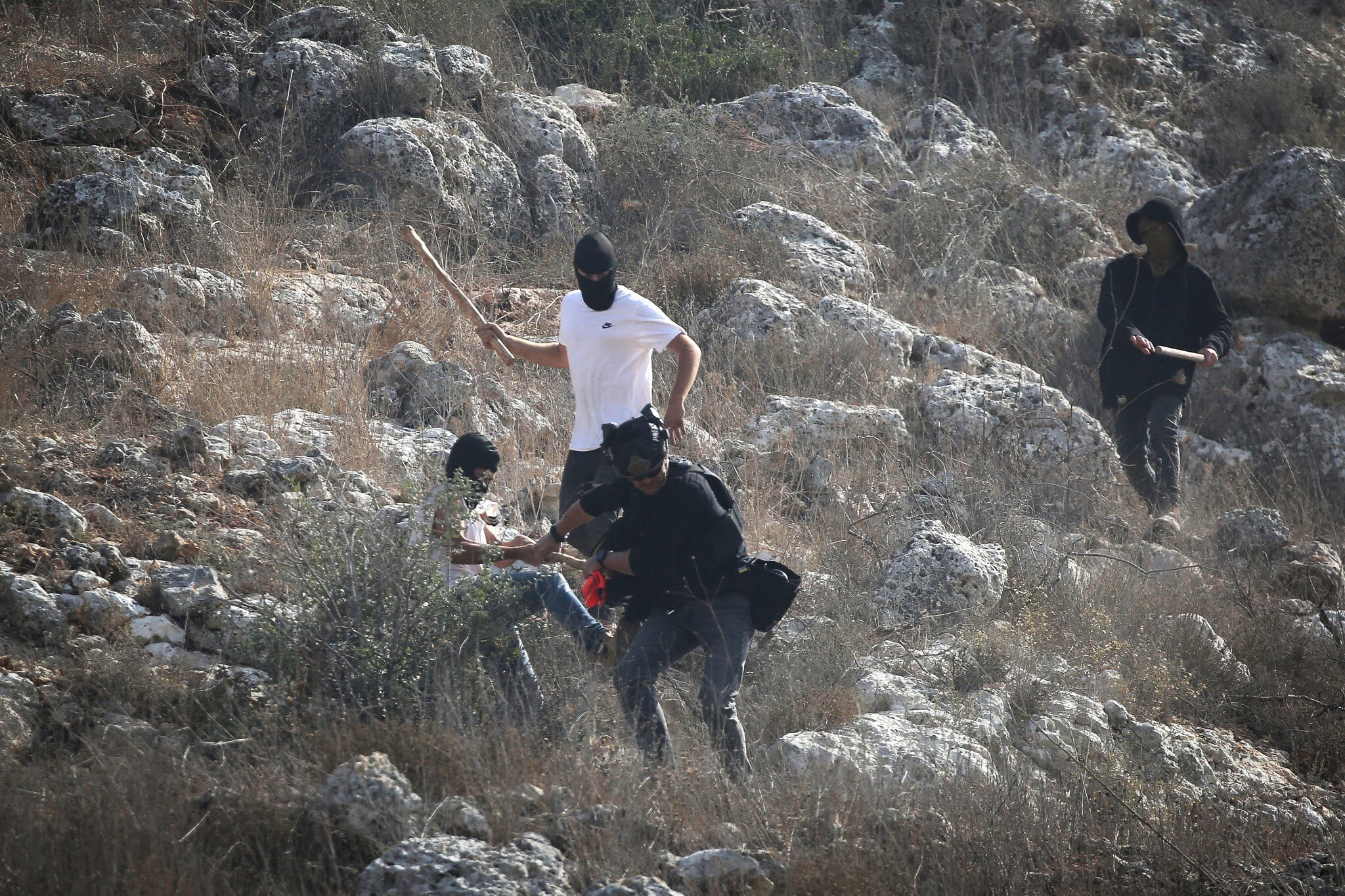
The number of attacks by extremist Jewish settlers against Palestinians and Israeli security forces in the West Bank rose by 27 percent in 2025 compared to the previous year, according to data recorded by the Israel Defense Forces and Shin Bet security agency.
The number of severe incidents of “nationalistic crime” by settler extremists, classified by Israeli security bodies as terrorism, also rose by over 50%, according to the data, which was shown to reporters on Monday.
The attacks, which occur on a near-daily basis, largely go unchecked. Prosecutions of Jewish extremists are rare, and convictions are even rarer. Critics have accused the government, described as the most hardline in Israel’s history, of shrugging off the attacks.
Officials at the IDF’s Central Command, responsible for the West Bank and Jordan Valley, said they felt a sense of failure for their inability to mitigate the increasing violence.
Throughout 2025, the IDF and Shin Bet recorded 867 incidents of “nationalistic crime,” compared to 682 last year, representing an increase of 27%. In 2023, the year of Hamas’s October 7 terror onslaught, the military recorded 1,045 incidents.
In addition to the overall rise in settler attacks, in 2025 there was also an increase in the number of severe incidents, including shootings, arson, and other violent crimes: 128 in the past year, compared with 83 in 2024 and 54 in 2023, according to the data.
The military and Shin Bet believe there are some 300 Jewish extremists involved in the violent attacks, 70 of whom are considered the “hardcore” fanatics behind the more severe attacks.
The 300 extremists largely live in 42 illegal outposts across the West Bank, according to Israeli defense officials, and as many as half of them are technically registered as living in various towns and cities in Israel proper.
Of the 70 “hardcore” extremists, 39 are under restraining orders signed by Central Command chief Maj. Gen. Avi Bluth, preventing them from entering the West Bank, or alternatively, putting them under house arrest if they are registered as living in settlements. Bluth also recently okayed the use of electronic monitoring bracelets for the extremist settlers under house arrest, though only two bracelets have been issued, and as of Monday, only one suspect had agreed to wear it.
Officials at the Central Command said they were frustrated by the fact that they needed to resort to “draconian” restraining orders in an attempt to quell the settler violence, instead of more traditional law enforcement. Officers also said that Bluth’s orders are oftentimes not respected by the courts, leading to sanctioned settlers violating their restraining orders and house arrests without being punished.
In addition, the military said that dozens of soldiers of the IDF’s so-called area defense force, known by its Hebrew acronym Hagmar — made up of local settlers in reserve duty — have been dismissed in the past year for various violations, including attacks on Palestinians.
Decrease in Palestinian terrorism
According to the military, 2025 saw a continued downward trend in the number of Palestinian terror attacks against Israelis in the West Bank and in Israel, including knifings, shootings, and car-rammings.
The army attributed the trend to “sustained offensive activity” in areas considered to be hotspots of terrorism in the West Bank, especially the refugee camps in the north of the territory, where the army has remained deployed since the beginning of 2025 and, as of now, has no plans to leave.
In 2025, 57 Palestinian terror attacks were recorded by the IDF, leading to the deaths of 20 people. (In addition, two soldiers were killed in an attack carried out by a Jordanian at the Allenby Bridge Crossing in September.)
In 2024, the military counted 258 Palestinian terror attacks with 35 deaths, and in 2023, 847 attacks with 41 deaths.
There has also been a slight decrease in the number of stone-throwing and Molotov cocktail attacks by Palestinians, with the IDF recording 1,015 such incidents this year compared to 1,230 last year. In 2023, the army recorded 3,256 stone-throwing and firebomb attacks, 3,799 in 2022, and 8,633 in 2021.
The Central Command attributed the decrease in stone-throwing and Molotov cocktail attacks to the limited number of large-scale violent riots in the West Bank during the past two years, against the background of the war in the Gaza Strip.
Also in the past year, the IDF said it killed 240 Palestinians in the West Bank, down from 500 in 2024 and 504 in 2023.
Fewer than 4% of Palestinians killed by the army in the West Bank in the past three years were uninvolved civilians who were not gunmen or rioters who clashed with troops, or terrorists carrying out attacks, the IDF said.
During 2023 and 2024, some 70% of Palestinians killed by the IDF in the West Bank were armed with a gun or an explosive, according to the military, while in 2025 that percentage dropped to 40% — with the remainder composed of stone-throwers and other suspects.
The IDF also said it detained 3,486 wanted Palestinians in the West Bank last year, up from 2,694 in 2024.
Additionally, the military said it razed 37 homes belonging to Palestinian terrorists in the West Bank in 2025, mostly those behind deadly attacks, which is a matter of Israeli policy. In several unusual cases, the army destroyed the houses of terrorists behind attacks that had the potential to cause mass casualties, but ultimately did not.
In Jenin, Tulkarem, and Nur Shams, the IDF also razed dozens of buildings in the past year, as part of a broader strategy aimed at easing access for military vehicles within the densely built refugee camps, which were considered terror hotspots.
The IDF said it had also captured some 1,373 weapons in the West Bank in the past year, including some smuggled into the territory from the border with Jordan, up from 1,095 in 2024.
Military officials said 2026 was expected to present “significant security challenges” in the West Bank, with a potential for escalation, in light of the decreased tensions on other fronts.
West Bank barrier infiltrations
According to the IDF’s data, before a string of terror attacks in Israel in 2022 carried out by Palestinians who infiltrated from the West Bank, some 40,000 Palestinians crossed into Israel without work permits each week.
Today, the army believes illegal crossings from the West Bank have fallen to 800-1,500 a week — sometimes by the same Palestinians going back and forth — though between 50,000 and 70,000 Palestinians now reside in Israel illegally on a long-term basis.
In all of 2025, the military said it arrested 6,807 Palestinians attempting to infiltrate into Israel from the West Bank, while another 8,636 managed to cross without being caught. The IDF is not responsible for the barrier in the Jerusalem area — which is under police jurisdiction — and therefore, the actual number of infiltrations is believed to be at least double that, as around half of the total illegal crossings are thought to take place in that region.
The military also supports a potential increase in permits for West Bank Palestinians to work in settlements, which were nearly all revoked following the October 7, 2023, onslaught, officials said.
Before October 7, Israel issued about 140,000 permits for Palestinians – both for work inside Israel proper, and in Israeli settlements or industrial zones in the West Bank.
Currently, only some 12,000 West Bank Palestinians have valid permits for work inside Israel, and another 14,000 are authorized to work inside settlements or industrial zones in the West Bank.
The military sees the work permits as a significant method of easing the pressure on the economically depressed territory. Unemployment in the West Bank has skyrocketed, reaching some 30%, from around 12% before the war, according to the Palestinian Central Bureau of Statistics.
Rate this article
Login to rate this article
Comments
Please login to comment
No comments yet. Be the first to comment!