
Geopolitics
16 min read
Navigating Europe's New Schengen EES: An Australian's Experience
The Age
January 19, 2026•3 days ago
AI-Generated SummaryAuto-generated
Australians entering the Schengen Area now face the new Entry/Exit System (EES). This system collects biometric data like fingerprints and facial scans. While initially chaotic and not fully mandatory, it aims to streamline border crossings. Once fully implemented, it allows eligible travelers to use faster biometric passport lanes, similar to those available in some other countries.
Advertisement
Opinion
Europe’s new entry system was a nightmare, but I learnt its value later
Lee TullochTravel columnist
January 20, 2026 — 5:00am
January 20, 2026 — 5:00am
You have reached your maximum number of saved items.
Remove items from your saved list to add more.
Save this article for later
Add articles to your saved list and come back to them anytime.
In December, I had my first experience with the new automated Entry/ Exit system (EES) for non-Europeans entering and leaving the Schengen Area of Europe.
The system doesn’t apply when entering European countries outside the Schengen zone, such as Britain, Ireland, Turkey and Cyprus.
And it’s different from the European Travel Information and Authorisation System, which is due to come into operation at the end of 2026. Confusingly, some of the non-Schengen countries will require visitors to have an ETIAS.
The acronyms are also confusing, but they are different parts of the one scheme. The first is about collecting biometric data such as fingerprints and facial records and the second is about applying this to a more sophisticated system of gatekeeping, similar to the US’s Electronic System for Travel Authorisation (ESTA) visa-waiver.
Advertisement
Australians still will be able to stay up to only 90 days out of a 180 period in Schengen countries.
We can relax about the ETIAS for now, but the EES began last October and is affecting those on Australian, British, US passports and those who enter Europe on the “other” line at the Schengen borders.
Sort of.
I travelled to France at the end of November, and before I left, I read up as much as I could about what was required for the EES. Through the Australian government’s Smart Traveller page, I discovered that I didn’t need to do anything before arriving at the French border and that there was no fee for the service.
Advertisement
What worried me was not the process but what kind of chaos might greet me at my airport of entry. I hadn’t forgotten the two hours I stood in line at Haneda Airport in Tokyo in 2024, after Japan had introduced a new entry system that also involved collecting my biometric data.
If the Japanese were inefficient, the Europeans might be much worse.
Most of my encounters with French bureaucracy haven’t been great, but I thought I had one advantage: I was not entering the country through the busy Charles de Gaulle Airport in Paris but the smaller Nice Cote d’Azur Airport.
I’d also read that I could choose to provide my information at a self-serve kiosk, which might be more efficient than waiting for an immigration official to process me.
Staggering off the Emirates A380, I was greeted by rows of new kiosks – which was great, except that all were taped up and not yet operating.
Advertisement
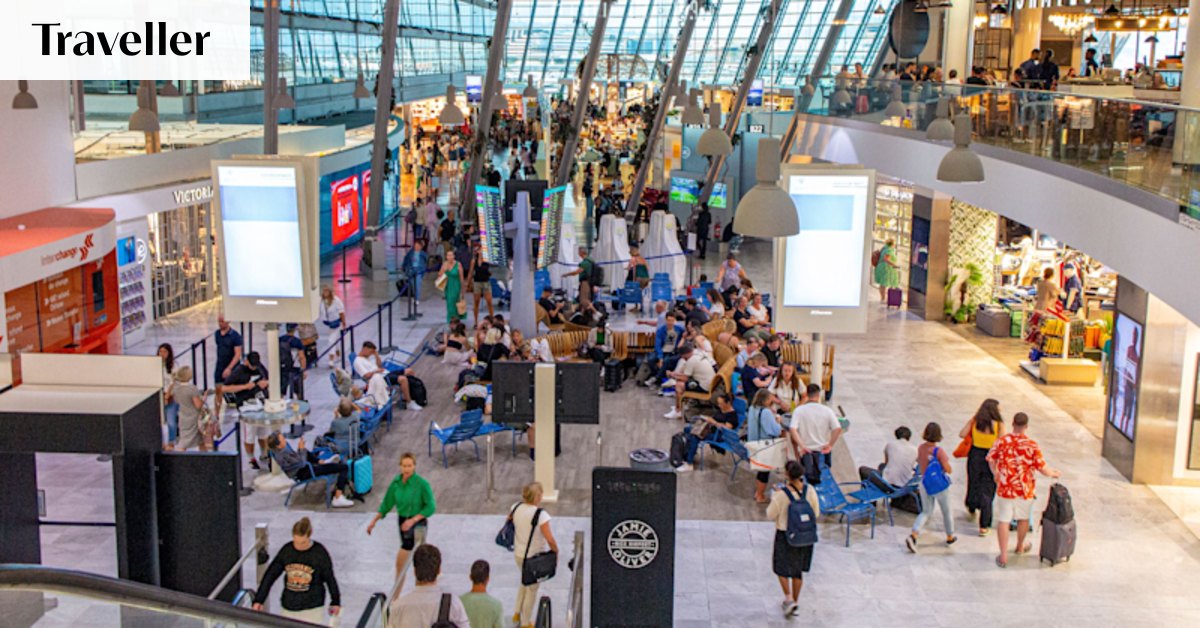
And as I entered the crowded immigration hall, I remembered too late that Nice airport is its own kind of nightmare. From experience, the airport rarely has enough officers on duty to deal with the crowds.
In this case, there were only three officials at their posts for hundreds of passengers. There was a VIP line to the left, another to the right, which seemed to be dealing with special cases, and all the rest of us in a scrum in the middle, waiting for one guy.
By the time my line was inching closer to the border, I noticed that people on the line to the left were being directed to an official who was taking photographs and collecting fingerprints. At other desks, arrivals were going straight through without any questioning.
I asked the official who was directing traffic how this could be. Surely everyone who hadn’t done so needed to have their details taken before they could enter the zone?
Not everyone, she shrugged. They were collecting the information gradually.
Advertisement
So, it wasn’t mandatory. Yet. It will be fully implemented by April 10.
I was at the top of the line by then. I asked her, could I have my fingerprints taken? Having got that far, I wanted to have it done. After all, my next point of entry to a Schengen area might be at an airport that was even more chaotic.
She looked at me as if I were a madwoman. “As you wish.”
The man behind the desk took one look at my passport and exclaimed “Ah, a kangaroo!”
Advertisement
The fingerprinting and photographing took about four minutes. I’ll have to do it again in three years’ time.
But the advantage became immediately obvious as I was flying from Charles de Gaulle two weeks later. I could use the biometric passport lane, just as I can in Sydney.
Instead of watching all the Europeans breeze by in their special lanes, I could join them.
At that moment, I felt just a little bit European.
You have reached your maximum number of saved items.
Remove items from your saved list to add more.
More:
Travel tips
Opinion
For subscribers
France
Europe
Lee Tulloch – Lee is a best-selling novelist, columnist, editor and writer. Her distinguished career stretches back more than three decades, and includes 12 years based between New York and Paris. Lee specialises in sustainable and thoughtful travel.Connect via email.
Rate this article
Login to rate this article
Comments
Please login to comment
No comments yet. Be the first to comment!