
Entertainment
13 min read
The Unforgettable Photo: Rod Morris's Story of a Police Beating
The Guardian
January 21, 2026•1 day ago
AI-Generated SummaryAuto-generated
Photographer Rod Morris captured a tense scene in La Paz, Bolivia, showing people queuing with documents amidst political apprehension. His photograph led to his detention and physical assault by police who attempted to confiscate his film. The image, part of his "Still Films" series, is noted for its cinematic quality and ambiguity.
In 1993, a photograph I’d taken of a bus driver in Luxor, Egypt, won a competition. The prize was some money, a camera and a return ticket to anywhere in the world. I chose Chile. The camera was an all-bells-and-whistles model: I sold it to a taxi driver at 3am. I’ve always preferred working with light 35mm cameras.
After three months in Chile, I caught a train that rose up to the high Bolivian Altiplano plateau, leaving me with a splitting headache only relieved by some coca tea. I had an open-ended commission with the Financial Times to provide photographs from financial areas of the South American cities I went to, so while my main aim was to wander around photographing exciting things I came across, I also made sure to head to the financial district and government quarters in the city of La Paz, which is where this was taken.
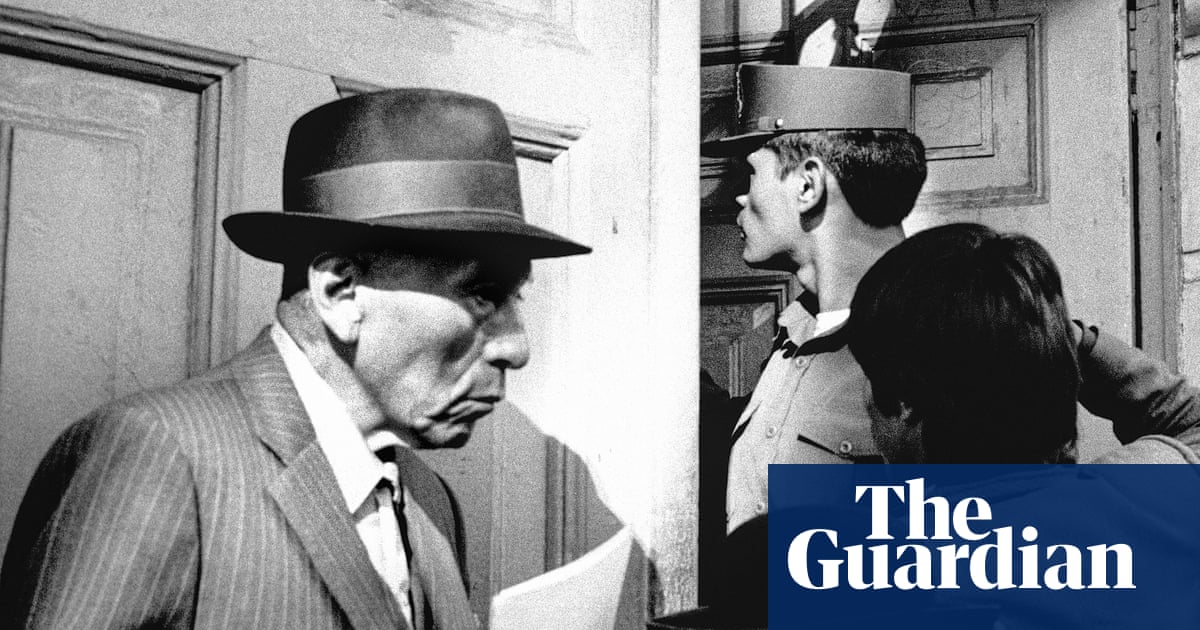
This was the year Gonzalo Sánchez de Lozada was elected president of Bolivia, and my visit coincided with his campaign. As the election loomed, there was a real sense of apprehension in the city. There were loads of soldiers and police around; there were rumours that any unregistered land would be sequestered by the new government, and I think that’s why the people in this picture were queueing with their papers.
There was no way to be discreet when I took it. My camera was quite loud and you can see one of the people looking right at me. People’s bemusement at being photographed while they’re just going about their lives is something I’ve encountered a lot. This wasn’t a wedding picture or a happy occasion: I gather that the claims had to be filed before a deadline which was probably quite close. But I wasn’t entirely sure when I took the picture what was happening, only that it was important to these people and there was a very tense atmosphere. That’s the sense I wanted to capture.
Then I was approached by some plainclothes police officers who bundled me into the back of a car and drove me to the local station, where I was questioned for a long time about why I was there and what I was doing. I told them I was a tourist taking photographs for myself but they still tried to take my film. Happily, I managed to fob them off with some unexposed rolls. On the way out, I had to walk down a line of police who took turns to punch and kick me all the way to the door. That was my warning, but they also told me I’d be followed and watched. I didn’t hang around.
This image is one of many that weren’t published at the time but now form part of a series I call Still Films, which draws on my background in both photojournalism and film-making. I’ve always been drawn to black and white, filmic images, and scenes I stumble upon that look as if they’ve been set up. The series delves into the interplay between cinema and photography: still images that evoke a narrative that transcends the frame.
There are loads of pictures I took in La Paz that I love, but as soon as I saw this one on the contact sheet I recognised that filmlike quality. There’s tension in the composition, as the figures create a chain leading towards the open doorway guarded by a soldier, but also a degree of ambiguity. I think that’s something all my favourite pictures have in common, my own and those by others. I don’t like my photographs to be too rigid or immediate, I want them to be imbued with the same sense of excitement and wonder I felt when I pressed the shutter.
Photography is subjective, and I’ve always been reluctant to go somewhere and try to tell a story as an outsider. I arrived in Bolivia without foreknowledge or judgment, and what was going on at the time is really kind of irrelevant to the image. I think the best photographs provide more questions than answers.
Rod Morris’s CV
Born: Southampton, 1963
High point: Winning the Time Out/STA travel photographer of the year and using the prize money to travel to South America to take photographs in Chile on environmental projects for three months before travelling on to Peru and Bolivia.
Top tip: Adopt the mindset of photographing on film: take less, think more. Try to think of your work in series, not just individual images. Photographing is a way of collecting and communicating stories.
Rate this article
Login to rate this article
Comments
Please login to comment
No comments yet. Be the first to comment!