
Entertainment
22 min read
Why We Need to Rethink Colonial Travel Metaphors Like 'Venice of the East'
BBC
January 21, 2026•1 day ago
AI-Generated SummaryAuto-generated
Colonial-era travel metaphors, like "Venice of the East," reduce non-Western places to European benchmarks. These outdated labels, persisting in marketing and travel expectations, flatten local specificity and prioritize Western aesthetics. Experts advocate for using original place names and broadening imagination to see destinations on their own terms, dismantling stereotypes for more accurate understanding.
From "Venice of the East" to "lost civilisations", colonial-era travel metaphors still shape how some see non-Western places. But that language deserves a rethink.
"This doesn't look like India at all!"
The number of times I've heard that in response to photos from my travels around the country is frankly dispiriting. The comment usually appears when a place looks greener, cleaner or more orderly than people expect. Intended as praise, it rests on an assumption that beauty or "modernity" must somehow be un-Indian – or more broadly, un-South Asian, un-"Global South", a term that itself squashes wildly different locations into one blurry, monolithic label.
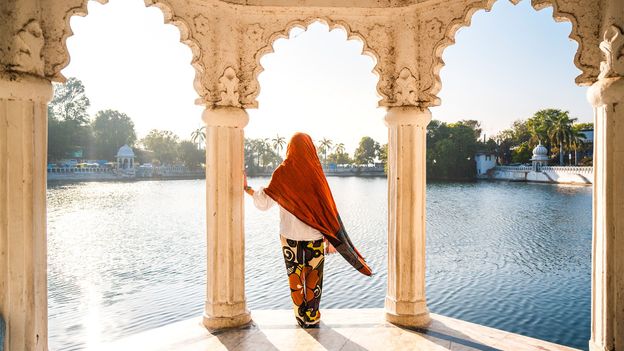
This reflex isn't new. Colonial-era nicknames such as "Venice of the East" have been applied to numerous cities across Asia, from Hanoi in Vietnam to Alleppey in India. Many of these labels emerged during European colonial expansion and 19th-Century travel writing when explorers, merchants and missionaries tried to describe "exotic" places for Western audiences who lacked any independent frame of reference.
In European imagination, Venice was a symbol of beauty, civilisation and commerce. And so calling somewhere "a Venice" was essentially shorthand for saying: this place is beautiful – and more importantly, comprehensible to us.
But more than a century later, these metaphors persist. Blog posts still dissect how destinations "earned" the title of Venice, usually for their canals or waterways, while Instagram has more than 25,000 posts tagged #VeniceOfTheEast. At best, such comparisons are outdated; at worst, they remain quietly reductive.
"Language doesn't just name places; it shapes how we relate to them and treat them," says Paul Meighan, a sociolinguist and researcher. "These metaphors, albeit used unintentionally at times, centre Europe as the benchmark for 'civilisation', framing everywhere else as derivative. They flatten specificity… a place isn't allowed to be itself; it must be an echo or copy of somewhere else, many times decided by and reflective of a colonial power."
Such framing, he adds, arbitrates what counts as "worth seeing", sidelining local histories and understandings.
None of this is, of course, unique to Asia. Across continents, similar language shapes how entire regions are imagined long before travellers arrive. Hedder Quispe Puente de la Vega, founder of Machu Travel Peru, sees this play out regularly in his home country. "Phrases like 'lost civilisation' or 'untouched land' make Peru and the Andes seem frozen in time, more connected to mystery than to everyday life," he says. "These words spark curiosity, but they also simplify reality. Many [travellers] arrive expecting only ancient ruins, llamas or rituals, without realising that Andean culture is alive, modern and constantly evolving."
Although the manifestations differ – canals in Asia, ancient ruins in the Andes – the underlying pattern is the same. Western frames still shape what is noticed, valued and celebrated. But why do these narratives endure?
In travel marketing, part of the answer lies in convenience. Marketers reuse familiar metaphors because they're easy, recognisable shortcuts. Beneath that, however, sits a deeper colonial hangover: the impulse to flatten entire continents into neat soundbites.
A British traveller I met in the Himalayas captured the imbalance succinctly. "Ask a Westerner to summarise all of Europe from Scotland to Bulgaria in one sentence," he said. "They'd never manage it. But they'll still try it with Asia, Africa or South America without blinking."
Urban designer Geeta Mehta, a professor at Columbia University, links the desire to see non-Western cities through a Western lens directly to colonial-era thinking. "There's this belief that whatever is happening in Europe or the US is better or more beautiful," she says. "As a result, there's a lot of aspirational aesthetic."
That aspiration materialises physically in architecture. Across Asia, there are entire towns (many of them real estate projects) built as European replicas, from Phu Quoc's pastel Mediterranean "village" to Thames Town's English cottages near Shanghai. European aesthetics have become visual shorthand for "world-class", "premium" or "progressive" living, and a lure for travellers seeking the European experience without needing a Schengen visa.
Many of these projects later struggled or emptied out, largely because they prioritised facades over function. "Imported urbanism" – designing cities as aesthetic replicas rather than lived places – might photograph well, but it rarely works long-term. Remote locations, weak public transport, speculative financing and a lack of everyday infrastructure meant the "city" never fully arrived for the people meant to inhabit it.
More like this:
• Is it time to ditch the bucket list?
• The case for taking the same holiday again and again
• Why 'best time to visit' no longer applies
Just as some cities are shaped by borrowed ideals, travellers often arrive with borrowed expectations. Pooja Naik, a Mumbai-based travel journalist and walking-tour guide, sees this often. "Many Westerners come expecting a version of India that's loud, colourful, chaotic," she says. "Films like Slumdog Millionaire make Dharavi [slum] seem like the face of Mumbai, when it's just one part of the city. When they finally encounter Mumbai's layers – its colonial architecture, bustling markets, high-rises, fine dining, street stalls and extraordinary diversity – they're genuinely surprised to see how multifaceted the city really is."
Even Dharavi itself is more layered than outsiders imagine. Frequently reduced to clichés of squalor, corruption and shanty homes, it is, Mehta argues, something else entirely. A co-founder of urban research and design collective urbz, she has worked in Dharavi for more than 15 years. "These aren't 'slums'," she says. "They are working villages, craft villages, with so much talent and innovation." Many leather goods sold in high-end New York showrooms, she notes, are made in Dharavi's workshops. But you can't understand Dharavi if you're busy looking for the India you expect – or worse, fetishise.
There's this belief that whatever is happening in Europe or the US is better or more beautiful - Geeta Mehta
All of this raises a broader question: if the metaphors are outdated, the expectations unhelpful and the comparisons inaccurate, how should we describe places more honestly and accurately?
Meighan suggests starting with the basics: the names themselves. "The original names for places hold deep meaning," he says. "They tell us so much more."
The solution, ultimately, lies in broadening our imagination. As Naik puts it, "Travel, at its best, should dismantle stereotypes. So do your homework, take local tours, eat at neighbourhood restaurants and, most importantly, come with an open mind."
Places don't need to resemble Venice, Paris or Rome to be beautiful. They only need the chance to be seen – and valued – on their own terms.
--
If you liked this story, sign up for The Essential List newsletter – a handpicked selection of features, videos and can't-miss news, delivered to your inbox twice a week.
For more Travel stories from the BBC, follow us on Facebook and Instagram.
Rate this article
Login to rate this article
Comments
Please login to comment
No comments yet. Be the first to comment!