
Geopolitics
12 min read
Reform UK Candidate Sparks Outrage with Burqa Stop-and-Search Proposal
Times of India
January 18, 2026•4 days ago
AI-Generated SummaryAuto-generated
Reform UK's London mayoral candidate, Laila Cunningham, proposed burqa-clad women face stop-and-search checks, arguing against face coverings in public. She described some London areas as feeling like a "Muslim city" with foreign language signs and burqas sold in markets, advocating for a singular "British" civic culture. Her remarks drew criticism from Muslim groups and politicians, who warned of increased social division and danger to Muslim women.
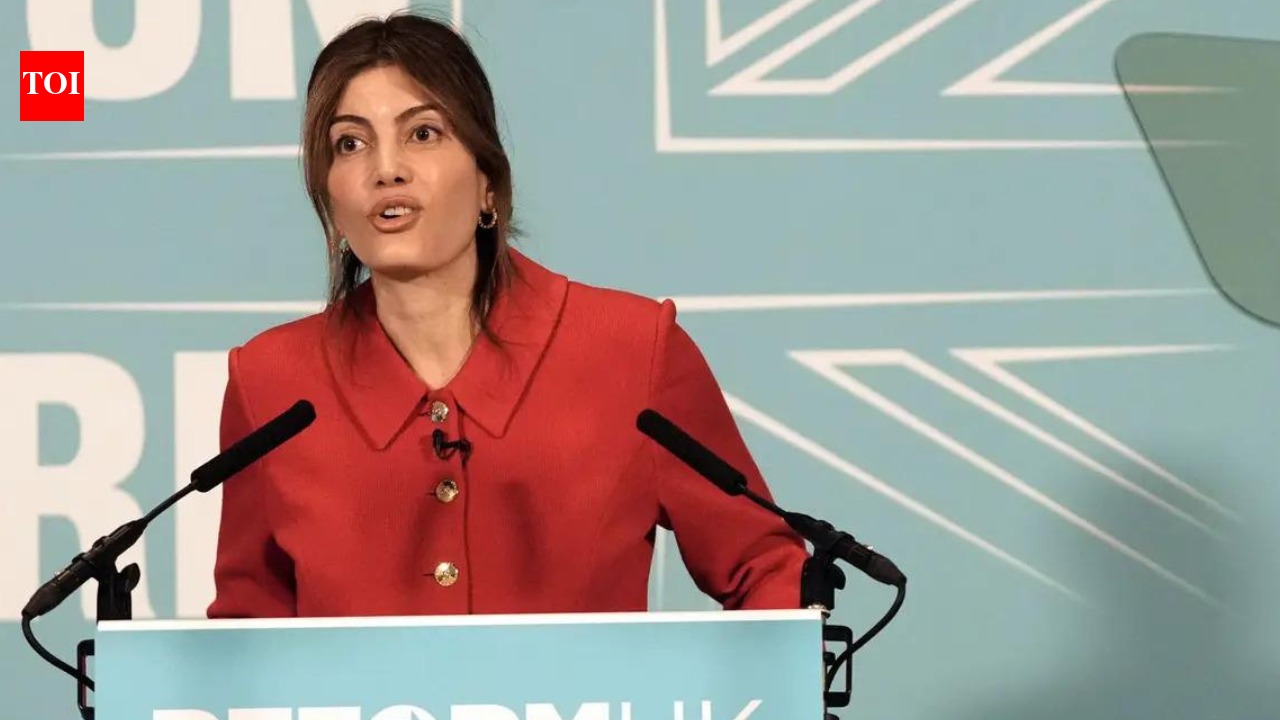
Laila Cunningham (AP image)
Reform UK’s newly announced London mayoral candidate, Laila Cunningham, has sparked controversy after suggesting that women wearing the burqa should be subject to stop-and-search checks. Critics have warned that the remarks could endanger Muslim women and deepen social divisions in the capital. Cunningham, who was named Reform UK’s candidate for the 2028 London mayoral election last week, made the comments during an interview on the Standard podcast, as reported by the Guardian. Arguing against face coverings in public, she said, “No one should cover their face in an open society. It has to be assumed that if you’re hiding your face, you’re hiding it for a criminal reason.” She also described parts of the capital as feeling culturally unfamiliar, saying: “If you go to parts of London, it does feel like a Muslim city. The signs are written in a different language. You’ve got burqas being sold in markets.” Cunningham said London should have “one civic culture” and that it “should be British.” The remarks have triggered a strong backlash, particularly from Muslim groups and political leaders. Cunningham, a former Crown Prosecution Service prosecutor and a British-born Muslim of Egyptian descent, has also faced Islamophobic abuse since her candidacy was announced. Shaista Gohir, a crossbench peer and chief executive of the Muslim Women’s Network UK, described Cunningham’s comments as “dangerous” and a “dog whistle” to racists. She said the statements would further alienate Muslim women, including the small minority who choose to wear a burqa. Gohir said her organisation had been forced to remove signage and staff photographs from its offices after a rise in abusive and threatening correspondence. “We’ve had letters sent about grooming gangs saying all Muslims are scum, Muslims are filth,” she said. “It is hateful stuff, so obviously people are fearful.” Despite Cunningham’s background, Gohir said the comments risked reinforcing exclusion. She said Cunningham was “sending a message to Muslims that they do not belong” and was “emboldening people who already abuse Muslims and influencing those people who are reading this misinformation”. Questioning the political focus of the remarks, Gohir added: “The number of Muslim women who wear the burqa in this country is tiny, and yet [Cunningham] has chosen to focus on that instead of the NHS, schools or the cost of living. Is she going to get the police to arrest wealthy burqa-wearing visitors in Harrods, or is it just women in Whitechapel?” London Mayor Sadiq Khan also weighed in on the controversy while speaking to LBC radio, saying attempts to divide communities were not new but should be resisted. “Almost without argument, our city is the greatest city in the world because of our diversity,” he said. “I mean, how far back do you want to go in terms of freedom of religion, freedom of expression and so forth? These are quintessentially British rights that we’re so proud of.” Labour MP Afzal Khan, who represents Manchester Rusholme, described Cunningham’s comments as a “deliberate and cynical ploy”, accusing politicians of using divisive rhetoric for electoral gain. “This is all about divisive ideas being pumped into the society deliberately for electoral benefits,” he said. Khan also pointed to past research showing that comments by former prime minister Boris Johnson comparing veiled Muslim women to letterboxes were followed by a rise in anti-Muslim abuse. “There are consequences for the word that politicians use,” he said. “What anyone wears is no business of the state or the politicians. Individuals have the freedom to choose.” The issue of the veil has previously caused tensions within Reform UK. In July last year, the party’s former chair, Zia Yusuf, criticised a call by Reform MP Sarah Pochin for a burqa ban, describing it as “dumb” and not party policy, according to the Guardian.
End of Article
Rate this article
Login to rate this article
Comments
Please login to comment
No comments yet. Be the first to comment!