
Politics
17 min read
State Targets Sh100 per Kg for Farmers' Tea Earnings by 2027
the-star.co.ke
January 20, 2026•2 days ago
AI-Generated SummaryAuto-generated
The government aims to increase farmers' greenleaf tea earnings to Sh100 per kilogram by 2027. Agriculture CS Mutahi Kagwe announced comprehensive reforms to stabilize prices, improve quality, and ensure fair returns. Interventions include mandatory quality standards, factory modernization, and a revised bonus payment model. This initiative seeks to boost farmer income and revive the tea sector.
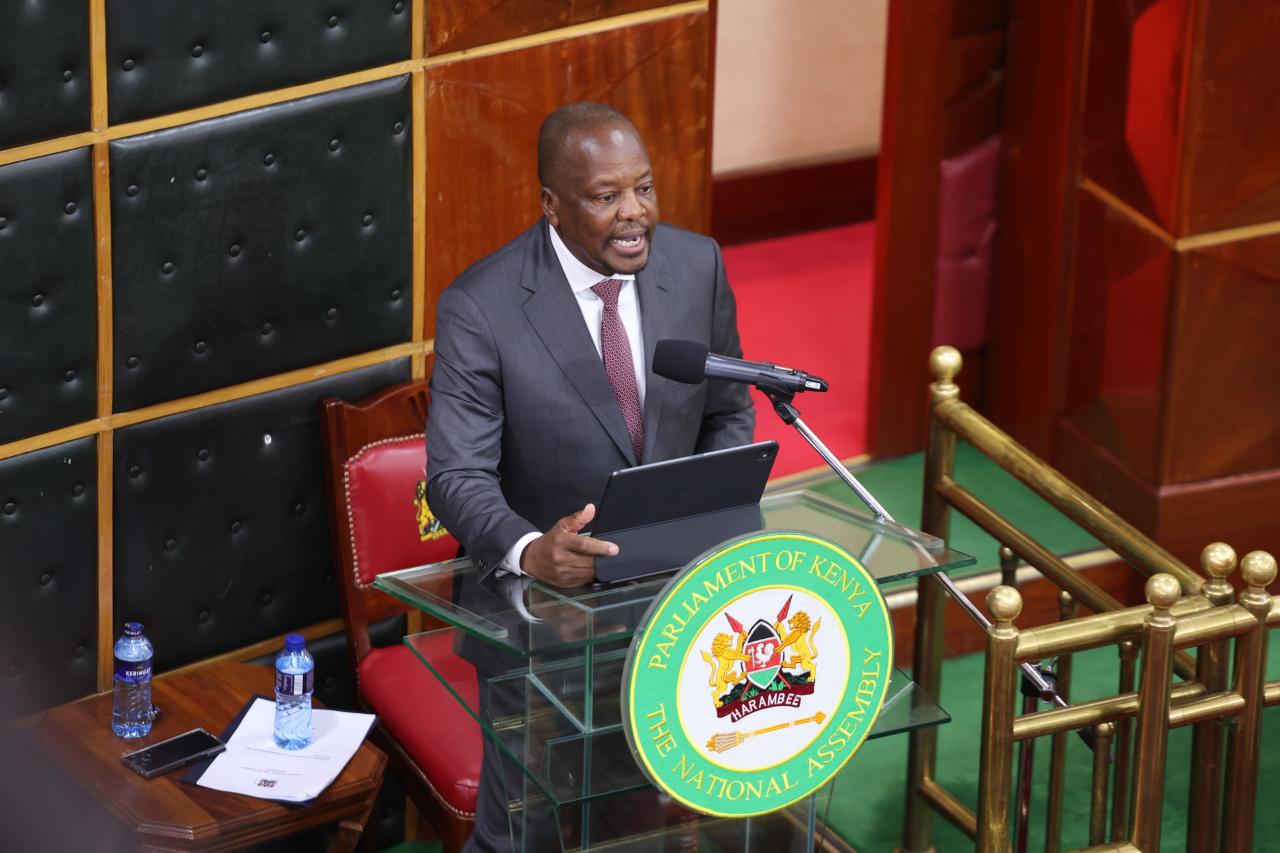
Agriculture and Livestock Development Cabinet Secretary Mutahi Kagwe when he appeared before the National Assembly to answer questions on agriculture sector reforms.
The government has set a target to raise farmers’ earnings from greenleaf tea to Sh100 per kilogram by 2027, nearly doubling the current initial payment of between Sh23 and Sh25 per kilo.
Appearing before Parliament, Agriculture and Livestock Development Cabinet Secretary Mutahi Kagwe said the sector is undergoing a comprehensive reform aimed at stabilising prices, improving tea quality and ensuring farmers earn fair, predictable returns.
“We are aligning the value chain from production to marketing, so that every farmer, whether in Kericho or Meru, gets transparent and uniform earnings,” Kagwe said.
Mary Mugambi from Imenti South has grown tea for nearly a decade, and says every season feels like a gamble. “Each year, farmers wait anxiously to see whether prices will rise or fall, making it difficult to plan or invest with confidence,” she says. “In the last payment, I received Sh41 per kilo as bonus, unlike the previous year when I got around Sh48. Costs of fertiliser and labour have gone up, yet our pay keeps fluctuating.”
In Kericho, Samwel Rono, a smallholder farmer with two acres under tea, said falling prices have pushed many farmers to contemplate uprooting bushes.
“On a bad month you are paid Sh23 per kilo, you start asking yourself whether it is worth it,” he said. “If the government can push the payment to Sh100, farmers will go back to planting.”
Responding to MPs’ questions on tea bonuses, the CS said farmers are paid through a two-tier model of a monthly initial payment and an annual second payment. He added that the bonus varies depending on auction prices, exchange rates and production costs.
According to the Tea Board of Kenya, the 2024-25 financial year was particularly difficult, and average prices at the Mombasa auction dropped from $2.54 (Sh326) to $2.41 (Sh311) per kilo of made tea.
The decline, the CS said, was driven by forex shortages in major tea markets such as Pakistan and Egypt, conflict in Sudan and market access challenges in Iran. “These are markets that account for 70 per cent of Kenya’s tea exports,” he said.
Kagwe noted that regional disparities also continue to widen, where factories east of the Rift averaged $2.95 (Sh381) per kilo at the auction, compared to $1.78 (Sh229) in the west, largely due to quality differences. “As a result, farmers in the East earned about Sh69 per kilo of greenleaf, while their counterparts in the West received only Sh38. The national average stood at Sh56,” said the CS.
“Production costs have risen sharply, hitting Sh112.96 per kilo of made tea. Governance weaknesses, bloated staffing and inefficiencies pushed production costs even higher in west of Rift factories up to Sh134.34,” he added.
To reverse the decline, Kagwe said the government has rolled out some interventions, including mandatory greenleaf quality standards, tea quality laboratory in Mombasa and factory modernisation through a Sh3.7 billion concessional loan.
Other interventions include removal of the reserve price to boost demand at the auction, crackdown on hawking and greenleaf theft, digital marketing platforms for tea, having an aggressive trade diplomacy under African Continental Free Trade Area, and implementation of the tea levy regulations, 2024 to sustainably fund sector development.
“The ministry is also reviewing the bonus payment model to allow quarterly rather than annual disbursements to improve farmers’ cash flow,” the CS said.
While also appearing before Parliament, Kagwe also gave an assurance to sugarcane farmers that all investments made by private companies leasing the four state-owned sugar mills will revert to the state after 30 years.
He said Sony, Nzoia, Chemelil and Muhoroni sugar mills were handed over to private operators on May 10, 2025 under long-term concessions meant to revive production. This, he said, is aimed at improving efficiency and attract new capital into the struggling sugar industry.
Kagwe said the leasing terms include annual lease payments of Sh40,000 per hectare in Chemelil, Muhoroni and Sony, and Sh45,000 per hectare in Nzoia.
“A concession fees of Sh4,000 per tonne of sugar and Sh3,000 per tonne of molasses, and one-off goodwill payment equivalent to the first year’s lease rent. The lease covers land, buildings, plant and machinery. Only motor vehicles and livestock are excluded,” he said.
According to the lease agreement, the private millers are required to invest in large-scale cane development, rehabilitate and modernise factories, adopt new technologies, and maintain nucleus estates and support out-grower systems.
Though cane farmers have welcomed privatisation of sugar factories, they are still insisting on more accountability and fairness.
“We just want fairness. For years we supplied cane and waited months for payment. If this new system ensures timely pay and good prices, we support it, but the government must watch these companies closely,” said Dorcas Mwachi, a cane farmer in Nyando.
Kagwe said the Sugar Act, 2024 and the Kenya Sugar Board have the oversight powers to prevent monopolies, adding that no single operator controls more than 50 per cent of the market.
The CS said the leasing model marks a major policy shift aimed at reviving production, protecting farmers and restoring profitability. “All assets and improvements will revert to the government at the end of the 30-year concession,” he said.
Rate this article
Login to rate this article
Comments
Please login to comment
No comments yet. Be the first to comment!