
Politics
12 min read
Sh65 Million Property Refund Sought Amidst Lavington Dispute
the-star.co.ke
January 19, 2026•3 days ago
AI-Generated SummaryAuto-generated
A buyer is suing for a Sh65 million refund after a Sh75.5 million property deal collapsed. The buyer claims the seller refused vacant possession for inspection, and a subsequent limited viewing revealed structural defects. A structural engineer's report allegedly confirmed compromised integrity. The seller disputes the claims, citing contractual agreements and pending civil litigation over the funds.
A prospective buyer has moved to court seeking a Sh65 million refund after a multimillion-shilling property transaction in Lavington collapsed over disagreements on vacant possession and the condition of the house.
Testifying before the court on Monday, the complainant, Eunice Musembi, told the magistrate that she and her family expressed interest in the property in July 2024 after seeing it advertised for sale on social media.
She said they later met the accused, Grace Kerubo, who presented herself as the vendor, and negotiations culminated in an agreed purchase price of Sh75.5 million, payable within 90 days from August 2024.
Eunice testified that by the time the dispute arose, she had already paid about Sh65 million, representing approximately 85 per cent of the purchase price, through bank transfers from Standard Chartered Bank to I&M Bank.
The payments, she said, were made in good faith, with the expectation that the house would be vacated to allow a proper inspection before completion.
“We were clear that we wanted to view the house when it was vacant before paying the balance,” Eunice told the court.
However, she said the transaction hit a snag after the accused declined to vacate the premises, insisting that full payment had to be made first.
This disagreement stalled the deal for several weeks, with neither side willing to concede, the court heard.
The complainant said the accused eventually vacated the house in November 2024, but access remained restricted.
According to her testimony, their advocates only allowed a one-hour supervised inspection, which she said was insufficient to fully assess the condition of the property.
“In that short time, we noticed cracks on pillars, beams, and the servants’ quarters—issues that were too obvious to ignore,” she testified.
Concerned about the safety of the house, Eunice said they engaged a structural engineer, who later prepared a report indicating that the building’s structural integrity had been compromised.
The report was allegedly shared with the vendor through advocates, alongside a request for remedial action, according to her testimony.
She told the court that no repairs were undertaken and communication broke down, even as a balance of Sh10 million remained unpaid.
Instead, she said she was issued a 21-day demand notice, requiring the buyer to clear the balance or risk rescission of the sale agreement.
Feeling exposed after paying most of the purchase price without receiving completion documents or assurances that the house was fit for habitation, Eunice said she opted to terminate the transaction and requested a refund.
“We did not feel protected. We had paid most of the money, but the house was not in a condition we could live in,” she said.
No refund was forthcoming, she claimed, and the property was subsequently put back on sale, prompting Eunice to seek assistance from the Directorate of Criminal Investigations (DCI).
During cross-examination, the defence challenged the complainant’s testimony, citing inconsistencies in the stated purchase price and the amounts allegedly paid.
The defence counsel argued that the sale agreement was entered into voluntarily and without any coercion, noting that its terms were clear on completion timelines and vacant possession.
The defence further maintained that the complainant was granted access to the house, disputing claims that inspection was denied.
He established that a good relationship between the two existed prior to the dispute.
Additionally, they argued there is no official public or government document declaring the house uninhabitable and pointed out that a related civil dispute over the same funds is pending before another court, where the money is currently held, suggesting the matter is contractual rather than criminal.
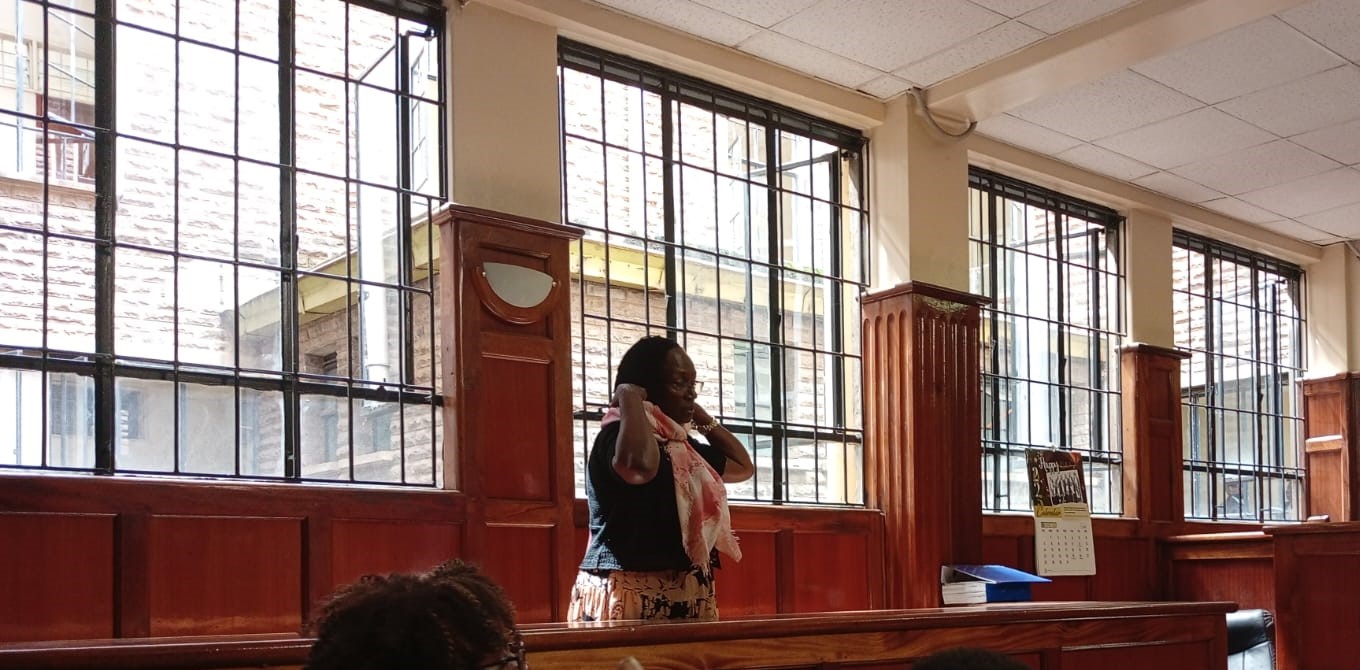
Accused person Grace Kerubo faces charges of obtaining money under false pretence/JAMES GICHIGI
Rate this article
Login to rate this article
Comments
Please login to comment
No comments yet. Be the first to comment!