
Technology
15 min read
Pixel 10 GPU Performance Enhanced with Latest Google Update
Jon Peddie Research
January 20, 2026•2 days ago
AI-Generated SummaryAuto-generated
Google's January update addresses Pixel 10 GPU performance issues, fixing bugs like Always-on Display flicker and touchscreen freezes. These improvements are part of normal post-launch tuning, balancing thermals and optimizing drivers for smooth everyday performance, rather than unlocking hidden capabilities. The update reflects careful system integration and optimization for Google's Tensor G5 chip.
Google’s January 2026 update brings much-needed relief to Pixel 10 owners who’ve struggled with GPU performance since launch. The patch improves graphics under certain conditions, while fixing annoying bugs like Always-on Display flicker and touchscreen freezes. But here’s the interesting part: These updates don’t mean Google’s been holding back the Imagination PowerVR GPU. Instead, they represent normal post-launch tuning—balancing thermals, refining drivers, and optimizing power management. Google prioritizes smooth everyday performance over benchmark scores, so these gradual improvements reflect careful optimization rather than unlocking hidden capabilities. It’s just modern smartphone development in action!
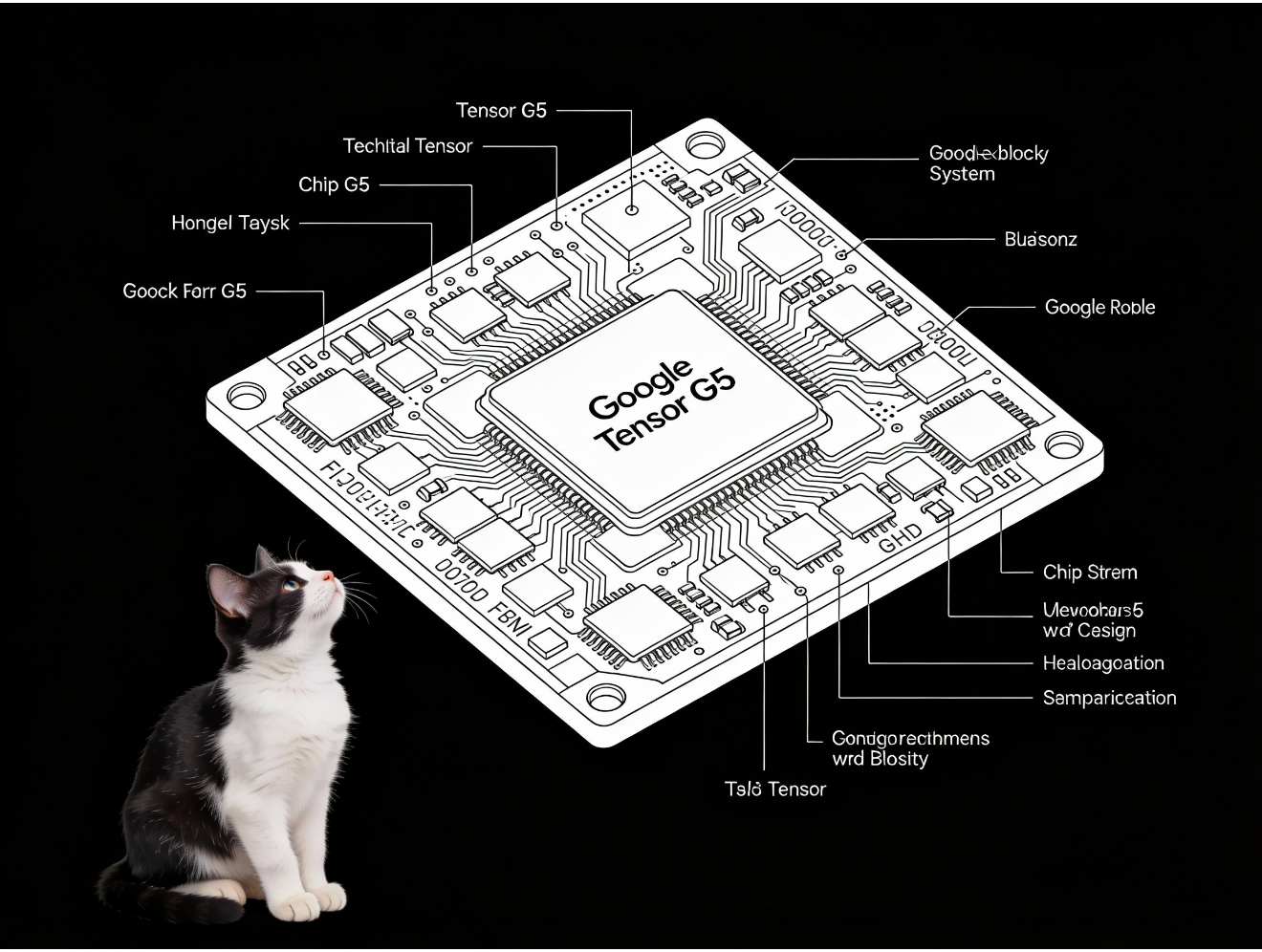
The Tensor G5 is Google’s latest custom chip for the Pixel 10 series, focusing heavily on AI, featuring a powerful new CPU (Cortex-X4, A725, A520), a PowerVR GPU, and an upgraded fourth-gen tensor processing unit, manufactured on TSMC’s 3 nm process for significant performance gains in AI tasks.
Google released the January 2026 security update for Pixel phones this week. The update runs Android 16 QPR2 and delivers what Google describes as “general improvements for GPU performance in certain conditions” to the Pixel 10, 10 Pro, 10 Pro XL, and 10 Pro Fold.
The Pixel 10 series have faced GPU issues since launch. Users have filed numerous complaints about Google’s Tensor G5 chip, prompting the company to commit to delivering improved GPU performance in future updates. This January patch is one of Google’s major attempts to address these issues.
The update also resolves an Always-on Display flicker that occurs when the clock changes or notifications arrive, as well as a touchscreen bug that causes the screen to intermittently stop responding to touch input. Some Pixel 10 users may observe improved battery life under certain conditions.
Other Pixel generations also receive fixes: Webex calls should no longer produce noisy ringback tones, and removing a Live Universe wallpaper should no longer freeze the Wallpapers app. Google distributes the January patch in phases to the Pixel 7a and all newer Pixel models. Users can check for it by going to Settings, then System, then System Update.
Figure 1. The Pixel 10-series Tensor G5 SoC uses an Imagination Technologies’ PowerVR DXT-48-1536 GPU.
The release of software patches for the Pixel 10 series does not indicate that Google is underutilizing the Imagination GPU. Software updates do not imply unused hardware capacity. Post-launch patches for flagship smartphones typically focus on scheduler adjustments between CPU and GPU resources, thermal and power management, driver corrections, camera and display pipelines, and operating system regressions. These changes reflect progress in system integration rather than unused silicon capacity.
Google’s Tensor platforms emphasize power management and sustained operation over peak GPU performance. Historically, Tensor SoCs prioritize thermal stability, battery life, and the concurrent execution of machine learning and image signal processing workloads. As a result, Google often limits GPU boost states early in a product’s life cycle. Subsequent patches adjust those limits as real-world thermal and stability data accumulate. This approach reflects controlled operation rather than constrained performance caused by architectural limitations.
GPUs based on Imagination designs depend heavily on software maturity. Performance scales with driver quality, compiler behavior, and Vulkan pipeline optimization. Early firmware often lacks full tuning for real-world workloads, leaving performance underutilized until Google and Imagination Technologies complete field-driven optimization. This pattern is common on platforms that do not use Qualcomm’s Adreno GPUs.
Google also avoids optimizing devices for synthetic benchmarks or peak gaming frame rates. Instead, the company prioritizes consistent user-interface behavior, balanced camera and GPU execution, efficient ML and GPU co-existence, and predictable thermals over time. As a result, patches tend to improve stability and consistency rather than raw graphics throughput.
What do we think?
If Google intended to unlock previously unused GPU capabilities, the patch documentation would reference graphics performance gains, rendering improvements, or Vulkan and OpenGL changes. Patch notes focused on stability, power behavior, or interface responsiveness point to system-level tuning. The evidence suggests that the Imagination GPU in the Tensor G5 operates as designed, with incremental optimization rather than withheld performance. If future updates explicitly cite graphics performance increases, the assessment could change. For now, the behavior aligns with normal post-launch tuning of Google’s Tensor platforms built around the Tensor G5.
Rate this article
Login to rate this article
Comments
Please login to comment
No comments yet. Be the first to comment!