
Entertainment
11 min read
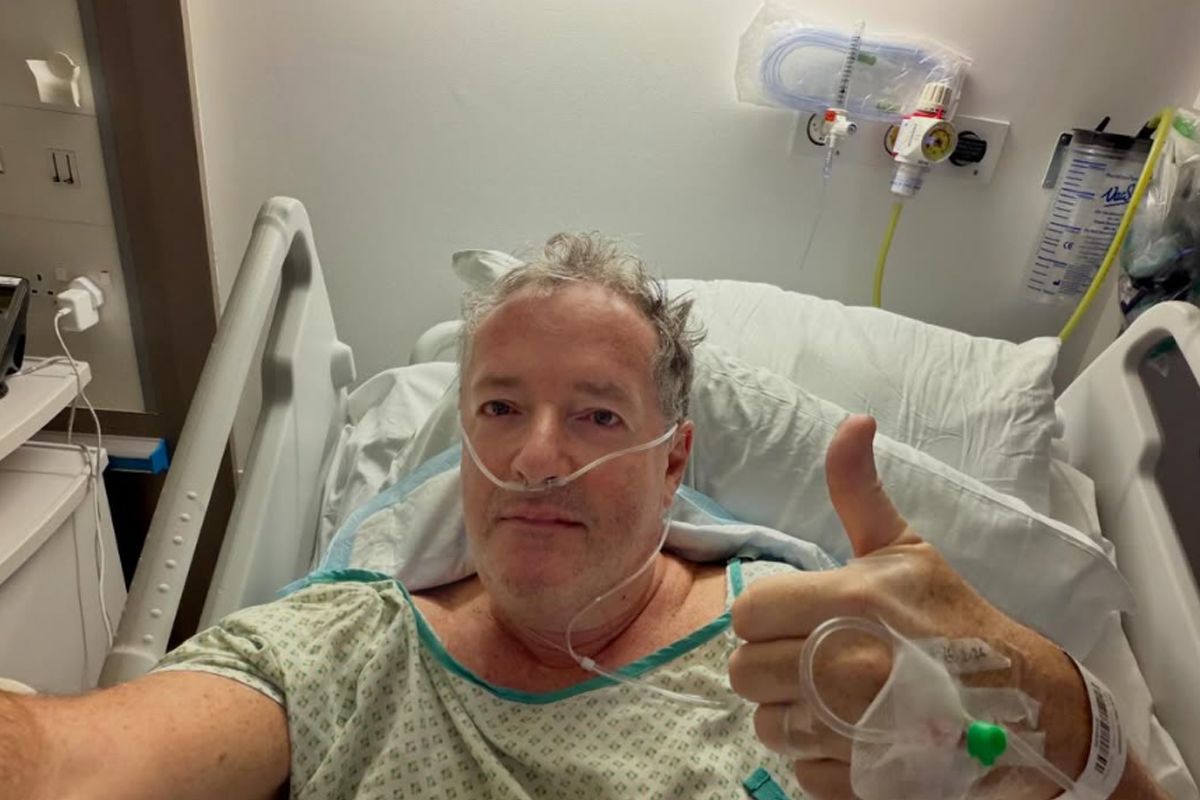
Piers Morgan's Injury: What You Need to Know About His Recovery
inkl
January 19, 2026•3 days ago
AI-Generated SummaryAuto-generated
Piers Morgan has undergone hip replacement surgery, requiring him to use crutches for six weeks and prohibiting long-haul flights for three months. This recovery period impacts his ability to host his live television show, "Piers Morgan Uncensored," which faces potential disruption or a hiatus due to his enforced grounding and the need for the implant to heal properly.
The Long Road to Recovery
The implications of this injury are immediate and altering. Medical professionals have advised Morgan that he must rely on crutches for at least six weeks to aid his mobility. Furthermore, he has been medically grounded.
There is a prohibition on long-haul flights for the next three months, or 12 weeks. This restriction is particularly impactful for Morgan. His career often involves travel between the UK and the US for various media engagements and interviews.
At 60, recovery from joint replacement surgery is generally successful. However, it requires patience and physical therapy. These traits contrast with the fast-paced nature of the 24-hour news cycle.
Humour Masking a Serious Reality
True to his character, Morgan attempted to defuse the tension of the situation with humour. In his announcement, he listed the details of his injury in a 'breaking news' format. He ended the post with the quip, 'I blame Donald Trump.'
The injury casts doubt on the immediate schedule of his flagship show, Piers Morgan Uncensored. The programme, which airs on YouTube and Channel 5, recently celebrated a contract extension through 2026. However, broadcasting live television requires high energy and stamina.
No official statement has been released regarding a guest host or a temporary hiatus. Yet, it is difficult to see how the show can continue in its current format without its central star. Fans are currently waiting for updates on whether the show will pause or if Morgan will attempt to broadcast from his home during his rehabilitation.
What's Next for Morgan
When surgeons perform a hip replacement, they often have to separate or cut through major muscles to reach the joint. These muscles are the stabilisers of the hip. Until they have fully healed, the joint is vulnerable.
If Morgan were to walk without crutches too soon, he would likely develop a significant limp. It indicates that the muscles are too weak to hold the pelvis level. Crutches act as an external scaffold. They take the weight off the healing joint and allow the 'soft tissue envelope'—the muscles and ligaments—to repair themselves without strain.
Furthermore, modern hip replacements often use 'uncemented' stems. This means the metal component is wedged into the bone, but it is not glued. The first six weeks are vital for a process called osseointegration. This is where the patient's natural bone actually grows into the rough surface of the metal implant.
Excessive twisting or impact during this window can disrupt this microscopic bonding. If that happens, the implant could loosen over time, leading to pain and further surgery.
Long-haul flights involve sitting still for hours in dry cabin air. There is also a mechanical danger on an aeroplane. Standard hip precautions advise patients not to bend their hip past 90 degrees. In a cramped aircraft seat, or even a low bucket seat in business class, the knees can easily rise above the hips.
In the first 12 weeks, the capsule of tissue surrounding the new joint is still tightening. Sitting in this deep position places the head of the thigh bone in a specific angle where it is most likely to lever out of the socket. Suffering a hip dislocation at 30,000 feet is a medical emergency that cannot be managed mid-air.
For a frequent flyer like Morgan, this grounding is the only way to guarantee the new joint stays in place.
Rate this article
Login to rate this article
Comments
Please login to comment
No comments yet. Be the first to comment!