
Breaking News
10 min read
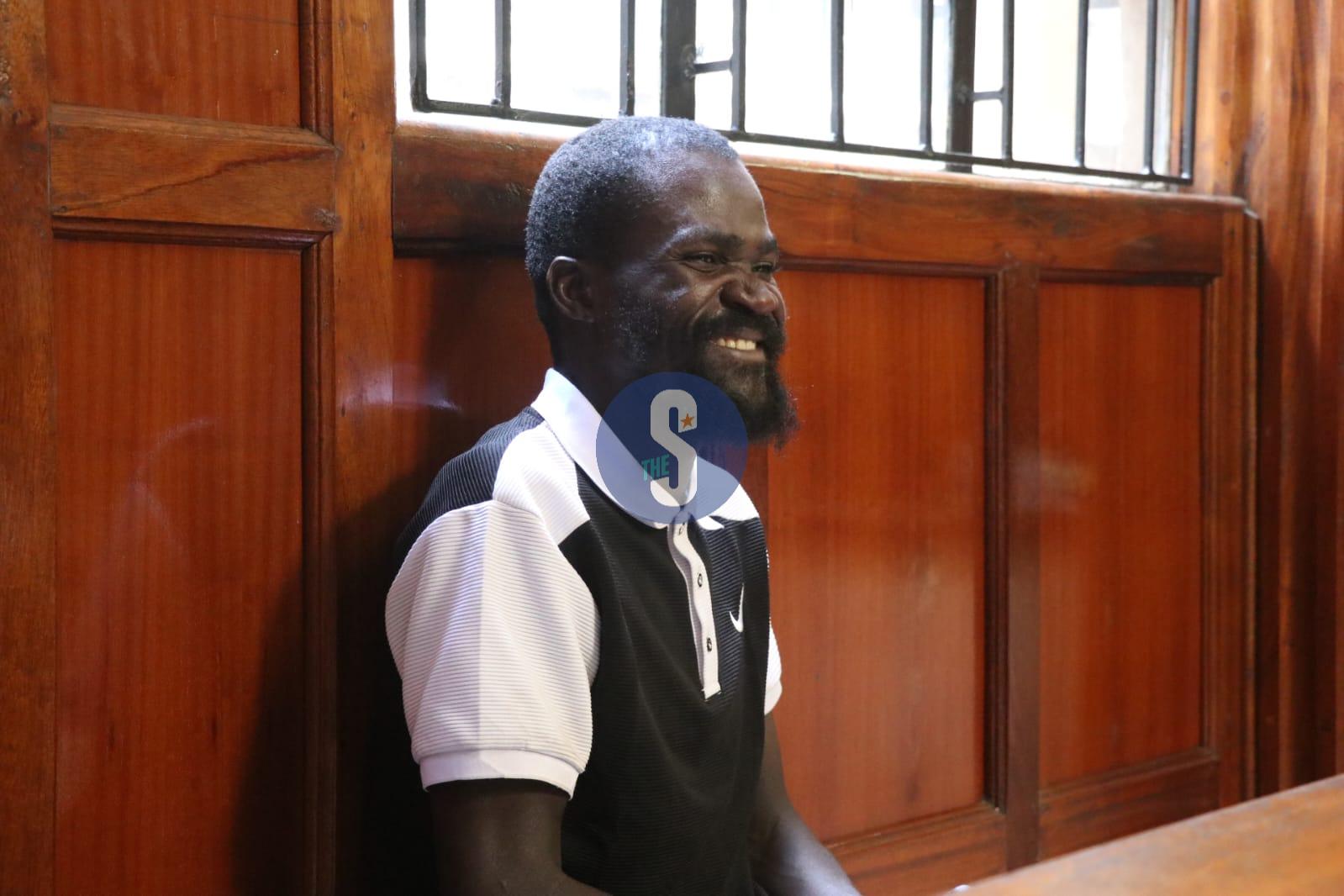
Nuru Okanga Acquitted: Cybercrime Charges Dropped by Nairobi Court
the-star.co.ke
January 20, 2026•2 days ago
AI-Generated SummaryAuto-generated
Nairobi court acquitted political activist Nuru Okanga in a cybercrime case. The court found no prima facie case against him for allegedly publishing false information online. Prosecutors failed to establish Okanga's authorship, dissemination, or the video's capacity to incite violence, leading to his acquittal on all three charges.
A Nairobi court has acquitted political activist Nuru Okanga Maloba after finding that no prima facie case had been established against him in a matter involving the alleged publication of false information online.
In a ruling delivered on Tuesday, January 20, 2026, the court held that the evidence presented by the prosecution fell short of the legal threshold required to sustain the three charges Okanga was facing under the Computer Misuse and Cybercrimes Act.
“Upon consideration of all the evidence and applicable law, this court finds that the prosecution has failed to establish a prima facie case against the accused person in respect to all the three counts,” the trial magistrate Rose Ndombi ruled.
The court noted that while the sentiments contained in the impugned video were grave in nature, investigators failed to demonstrate that Okanga authored, uploaded, or disseminated the content, or that the material was capable of inciting chaos or violence.
The magistrate observed that what emerged from the prosecution’s case was “at best suspicion and conjecture,” which could not form the basis of a criminal conviction.
“Pursuant to Section 210 of the Criminal Procedure Code, this court finds that the accused, Nuru Okanga Maloba, has no case to answer. He is hereby acquitted of all three counts forthwith unless otherwise lawfully held,” the court ruled.
Okanga had been charged with publishing false information through a video that circulated on social media platforms, allegedly using TikTok accounts known as “Riba News” and “Siasa TV KE Backup.”
Constable Milton Mwanzi, attached to the Directorate of Criminal Investigations (DCI) Serious Crime Unit, told the court that he arrested Okanga in June 2024 after being dispatched to track him down.
Mwanzi testified that Okanga was apprehended at a barbershop and escorted to DCI headquarters, where he was handed over to investigators for processing and interrogation.
However, during cross-examination, the officer conceded that he did not have a court order authorising the monitoring of Okanga’s movements or the search of his premises.
He also confirmed that he neither seized any electronic devices from the accused nor presented digital forensic evidence linking Okanga to the social media accounts from which the video was allegedly circulated.
Further weakening the prosecution’s case, Mwanzi admitted that he was not a digital forensics expert and could not authenticate the video or determine whether it had been doctored.
An investigating officer and a communications specialist who testified for the prosecution similarly acknowledged that they could not verify the authenticity of the video or establish a direct link between Okanga and its publication.
Defence lawyer Babu Owino argued that the absence of search warrants, lack of seized gadgets, and failure to authenticate the digital evidence rendered the charges legally untenable.
He submitted that under the Computer Misuse and Cybercrimes Act, the prosecution was required to prove authorship, publication, and dissemination, all of which were not demonstrated.
The court ultimately agreed, finding that the evidentiary gaps were fatal to the prosecution’s case, leading to Okanga’s acquittal.
Rate this article
Login to rate this article
Comments
Please login to comment
No comments yet. Be the first to comment!