
Health & Fitness
16 min read
Rising Non-Melanoma Skin Cancer Treatments Spark Concern
The Age
January 19, 2026•3 days ago
AI-Generated SummaryAuto-generated
Treatments for non-melanoma skin cancers in Victoria have significantly increased, with over 170,000 procedures recorded last year, a 12.3% rise in two years. This surge raises concerns about growing complacency regarding sun protection. While less deadly than melanoma, non-melanoma skin cancers are far more common and largely preventable.
January 19, 2026 — 7:30pm
You have reached your maximum number of saved items.
Remove items from your saved list to add more.
Save this article for later
Add articles to your saved list and come back to them anytime.
Thousands more Victorians are having skin cancers cut, burnt and frozen off compared with just a few years ago, prompting fears that sun-smart complacency could be on the rise.
Medicare data analysed by Cancer Council Victoria shows more than 170,000 treatments for non-melanoma skin cancers were recorded in the state last year, up from an estimated 151,355 treatments in 2022.
The figures represent a surge of 12.3 per cent in procedures in just two years. Victoria’s population grew by about 5 per cent over the same period.
While melanoma is the deadliest type of skin cancer, non-melanoma skin cancers are far more frequent. But with no central registry, Medicare data is the only way to get a picture of emerging trends.
Advertisement
The two main types of non-melanoma skin cancer are basal cell carcinoma and squamous cell carcinoma. Basal cell carcinoma, which accounts for about 70 per cent of non-melanoma skin cancers in Australia, begins in the lower layer of the epidermis and, while it can appear anywhere on the body, is common on areas including the shoulders and back.
Squamous cell carcinoma is less common, takes root in the upper layer of the epidermis, and is often found on the forearms and lower legs.
The analysis comes weeks after the latest Victorian Cancer Registry report found that regional Victorians were 51 per cent more likely to be diagnosed with melanoma compared with people living in Greater Melbourne and Geelong.
The data also showed the same group were 35 per cent more likely to die from melanoma than those living in major cities.
Advertisement
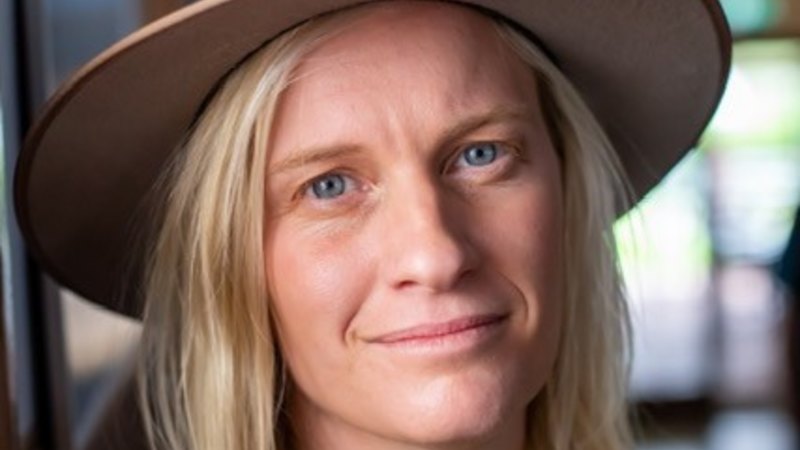
Louise Bibby grew up in rural Victoria and now works in Swan Hill. She had a basal cell carcinoma removed by her GP when she was just 22 years old, despite having worn sunscreen and rash vests as a child.
“I was working at my first job and noticed a small lump that was on my hairline,” Bibby said. “I thought it might have been a pimple or something. It wasn’t going away. One day, I was at work, and I scratched my forehead and I noticed blood coming down my face.”
The cancer later began to reform along the scar line, so her GP referred her to a dermatologist, who needed to perform a more complicated “flap procedure” – whereby skin is moved to an adjacent area to cover a larger wound once cancerous tissue is removed. The technique encourages better healing and cosmetic results than skin transferred from a different part of the body.
“From then, I started yearly checks,” Bibby said. She has since had several more surgeries on her face, scalp and chest.
“I have very fair hair, so the majority of my basal cell carcinomas are on my head. I’ve had 10 procedures just on my scalp and hairline.”
Advertisement
While some treatments can take more than a week to recover from, Bibby says early detection is worth it because it stops more complicated procedures from being needed down the line.
“Two-thirds of people will be diagnosed with [skin cancer] by the time they turn 70. My grandparents were in that category. At the end of the day, I’m very aware that melanoma runs in my family. Now that I’m turning 40, I like to educate a lot of my family and friends.”
Melanoma is prone to metastasising, which is why it is the deadliest kind of skin cancer. But Cancer Council Victoria’s head of SunSmart, Emma Glassenbury, said non-melanoma skin cancers should also be taken seriously.
“People can still die from non-melanoma skin cancers,” she said. “They can usually be managed through excision. But they’re a skin cancer that can be prevented, so we should be taking all the prevention measures that we can.”
Advertisement
Men tend to have more skin cancers on their head and neck compared with women, whereas women are more likely to have melanomas on their upper and lower limbs, which could partially be explained by different clothing and hairstyles.
Glassenbury said the main risk factors were fairer skin, a history of severe sunburn – particularly in the first two decades of life – a family history of skin cancer and having a lot of moles.
“The most important thing is for people to get to know their own skin and what looks familiar to them,” she said. “Any changes or concerns that you have, see your GP and get your skin checked. If you are at high risk of skin cancer, you should have a skin plan with your GP.”
She added that 95 per cent of melanomas and 99 per cent of non-melanoma skin cancers were largely preventable with the use of appropriate sun protection.
Advertisement
You have reached your maximum number of saved items.
Remove items from your saved list to add more.
More:
Skin cancer
Broede Carmody is a health reporter for The Age. Previously, he was a state political reporter for The Age and the national news blogger for The Age and The Sydney Morning Herald.Connect via Twitter or email.
Rate this article
Login to rate this article
Comments
Please login to comment
No comments yet. Be the first to comment!