
Technology
28 min read
Mooney Goes Wild: Unveiling the Kingfisher & More
RTE.ie
January 19, 2026•3 days ago
AI-Generated SummaryAuto-generated
The program discussed meerkats, their social behavior, and unique appearance. It also featured a documentary on kingfishers, highlighting their adaptations and role as environmental indicators. A listener's problem with a confused woodpecker was addressed, and tips for creating nature reserves were shared. Additionally, the segment covered dolphins spotted in Cork City and the importance of patient wildlife photography.
Panel: Eric Dempsey, Jim Wilson and Niall Hatch
Reporter: Terry Flanagan
In addition to listening to us on RTÉ Radio One at 22:00 every Monday night, don't forget that you can also listen back to each of our programmes any time you like at www.rte.ie/mooney. There, you will find an extensive archive of past broadcasts, conveniently split into different topics and segments.
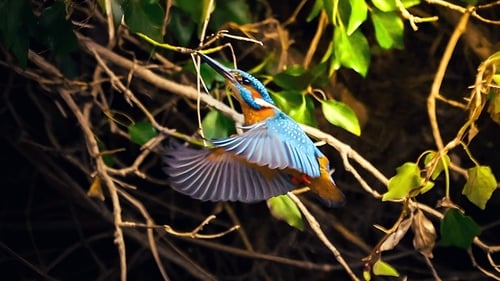
Tonight’s programme features a discussion about the Kingfisher, surely one of Ireland’s most attractive and photogenic birds, and one that is always a very welcome sight. To help you get to know these avian jewels a little better, our suggestion from the Mooney Goes Wild archives this week is a documentary called Kingfisher – King of the Fishers, which we first broadcast exactly 20 years ago, in January 2006.
In it, Richard Collins takes a closer look at these remarkable birds, including their amazing adaptations, their fascinating nesting strategies and the key role that they play as indicators of environmental health.
To listen to this programme from the Mooney Goes Wild archives, visit https://www.rte.ie/radio/doconone/646088-kingfisher.
Happy New Year . . . again!
Tonight’s programme is not our first in 2026, but in case you missed tuning in over the past couple of weeks, we would like to take the opportunity to wish you a very happy New Year. It’s not too late for that, right? It’s only mid-January, after all, and there are still a whopping 346 days to go this year.
We really appreciate you listening to our musings on nature every week and hope that you will enjoy all of the wonderful natural history content we have in store for you over the next eleven and a half months.
If you want to tell us about any interesting flora or fauna that you come across, or if you would like to put any questions to our panel of wildlife experts, don’t forget that you can email us any time you like at mooney@rte.ie.
A mob of Meerkats
Just before we began tonight’s programme, while Derek was twiddling various knobs, adjusting sliders and checking microphone levels, Eric happened to be chatting to Niall about a particular animal that he has never seen in the wild but would very much like to: the Meerkat. These small, charismatic members of the mongoose family are firm favourites with the general public, of course, so Derek thought it would be nice to start the programme by discussing them.
Meerkats are highly social and inquisitive mammals hailing from southernmost Africa that just so happen to have an endearingly human-like appearance that many of us find extremely cute. Most people will be familiar with them due to their frequent appearances in television nature documentaries, animated films and even a certain series of insurance adverts. You might think you already know a lot about them, but as Jim, Eric and Niall discuss on tonight’s programme, there is more to Meerkats than meets the eye.
For more information about Meerkats, visit https://www.dublinzoo.ie/animal/meerkat/.
Take care not to disturb wildlife
Here at Mooney Goes Wild, we receive lots of e-mails, letters, voice notes, video clips, sound recordings and other contributions from our listeners, and we are very grateful to each and every person who takes the time to contact the programme.
If you are out and about filming or photographing wildlife, however, we would ask you, please, always to put the welfare of your subjects first. It is important not to cause stress or disturbance to wild animals, never to damage plants or habitats and always to comply with the law, including licencing requirements set out by the National Parks and Wildlife Service when it comes, for example, to photographing birds during the nesting season.
For more information about NPWS wildlife photography licencing requirements, visit https://www.npws.ie/licencesandconsents/education-and-science/photograph-or-film-protected-wild-animal-or-bird.
Coping with a confused woodpecker
Listener Ger Deering from Co. Wexford got in touch with us in the hope that our esteemed panellists might be able solve a problem for him. Recently, a Great Spotted Woodpecker has taken to pecking loudly, not on wood, but rather on the PVC facia of his house. Ger has had to spend considerable money and time repairing the damage and would like to know whether there is anything he can do to deter the misguided bird.
What could be going on? When performing their "drumming" performances, aimed at proclaiming a territory and attracting a mate, woodpeckers like to be as loud as possible. They will sometimes take advantage of plastic or metal structures in order to do this, as banging hard on them with their beaks can provide a real volume boost. As Eric suggests, if this is happening, it may be worth trying to put some sort of padding behind the facia to try to muffle it, hopefully reducing the resonance enough to deter the woodpecker.
But there is a twist in the tale! Ger kindly took a video for us, and in it the woodpecker’s tapping is clearly audible. It’s not drumming, but rather seems to be pecking in the manner it would usually employ when trying to access food such as beetle larvae in dead wood. As our panellists discuss, this is pretty unusual behaviour and the purpose is not clear. It may be that the bird can hear insects moving behind the facia and it trying to get to them, but that’s just our best guess. Whatever the reason, it seems to be a very confused woodpecker indeed!
For more information about Great Spotted Woodpeckers, visit https://birdwatchireland.ie/birds/great-spotted-woodpecker/.
Making your own nature reserve
January is the month when many of us promise ourselves that we will stick to a New Year’s resolution. Maybe you want to lose weight, get more exercise, learn to play a musical instrument... or maybe do something to help wildlife. But what?
Twenty five years ago, ecologist Donna Mullen bought a farm on the Meath/Cavan border with the intention of converting it into a haven for flora and fauna, which is exactly what she did. She created Golashane Nature Reserve, which today is home to hundreds of plants, birds, mammals, insects and amphibians and has won several awards.
Our roving reporter, Terry Flanagan, recently travelled to the reserve to see for himself what Donna has achieved and to get some tips on what Mooney Goes Wild listeners can do to provide space for nature, regardless of whether the gardens, patios or balconies available to them are large or small.
Donna has also written a fantastic book on the subject, called Make Your Home A Nature Reserve, which is packed with useful hints and tips. We highly recommend it.
For more information about Golashane Nature Reserve, visit https://iwt.ie/what-we-do/reserves/golshane-farm-co-meath/.
For more information about Donna’s book Make Your Home A Nature Reserve, published by The O’Brien Press, visit https://obrien.ie/make-your-home-a-nature-reserve.
Dolphins thrill spectators in Cork City
Our RTÉ Cork colleague Rory Cobbe is, amongst other things, a producer of natural history television programme Back From The Brink, which is presented by none other than Derek himself. Rory kindly sent us a fascinating video that he filmed recently with his phone while out on a bike ride with his friend Kevin along the banks of the River Lee in Cork City Centre; at Pope’s Quay, to be precise. It shows something quite astonishing: a pod of six or seven Common Dolphins swimming along in the water, right in the heart of the city, much to the delight of passers-by walking along the quays.
It’s always wonderful to encounter wild dolphins, of course, but why had these particular ones swum inland, away from the sea, into a freshwater river? We knew exactly who to ask: our good friend Dr. Simon Berrow of the Irish Whale and Dolphin Group, who joins us on tonight’s programme to discuss Rory’s video, the reasons behind the very large increase in Common Dolphin numbers in Irish waters over the past decade and the impacts that climate change have been having on whales and dolphins generally. For more information about Common Dolphins, visit https://iwdg.ie/common-dolphin/.
To report your sightings of whales and dolphins to the Irish Whale and Dolphin Group, visit https://records.iwdg.ie/sighting.php?sid=x.
What’s the key to taking great photos of Kingfishers? Patience!
We were delighted recently to hear from Yuming Lian, a sixth-year student at Belvedere College in Dublin. Yuming is the school photographer, and very talented he is too, judging by the photos he sent us that he recently took of a Kingfisher, one of Ireland’s most photogenic birds.
In order to take his photos, Yuming tells us that he and a friend waited for five hours in the cold along a local river, ultimately to be rewarded by views of the Kingfisher that lasted less than five minutes.
This shows a wonderful degree of patience and fieldcraft by Yuming and his friend, but of course those are the hallmarks of a great nature photographer. As highlighted earlier, when photographing wildlife, it is vital to avoid disturbing the creatures that you wish to capture on camera, so hats off to Yuming for going about it in exactly the right way.
Rate this article
Login to rate this article
Comments
Please login to comment
No comments yet. Be the first to comment!