
Entertainment
21 min read
Mika Reflects on Noughties: 'Journalists' Comments on My Sexuality Wouldn't Fly Today'
The Guardian
January 18, 2026•4 days ago
AI-Generated SummaryAuto-generated
Singer Mika reflected on his career and upbringing, noting how journalistic coverage of his sexuality in the 2000s would be unacceptable today. He discussed his multicultural childhood, family struggles, and the pivotal role music played in his self-expression. Mika is releasing a new album, "Hyperlove," on January 23rd.
Born in Beirut in 1983, Michael Holbrook Penniman Jr, otherwise known as Mika, was raised in Paris and London. He attended the Royal College of Music, before his breakthrough in 2007 with debut album Life in Cartoon Motion and its No 1 single, Grace Kelly. He went on to sell 20m records, and worked as a presenter and judge on TV shows such as Eurovision and The Piano. Mika now lives in Italy and in Hastings, East Sussex, with his partner. His first English-language album in six years, Hyperlove, is out on 23 January.
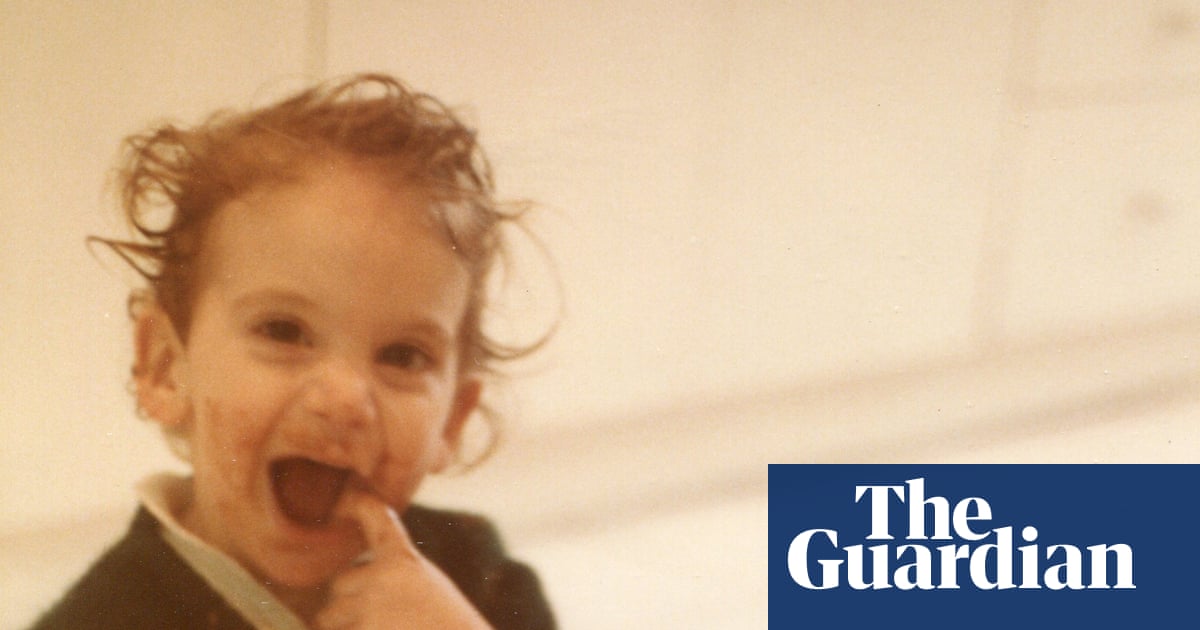
This was taken in our kitchen in Paris. It doesn’t surprise me that I am covered in chocolate. My earliest memories are of being on the floor surrounded by delicious food.
I don’t remember who I was at that age, but I know I had a strong sense of when I wanted to go to sleep. I would often eat a lot, then when I’d had enough, tap the person next to me, and stroll off to bed. After finishing that entire bowl of chocolate mousse, it’s likely I would have taken myself off for a rest. Dad used to call me the 90-year-old baby.
When I was one, we were evacuated from Beirut because of the civil war. My mum’s father was Syrian and her mother was Lebanese, and she wanted to give her children a better multicultural balance than she’d had growing up in America. Which is why we ended up in Paris, with our sprawling transplanted community. Our apartment was filled with Lebanese aunties with big puffed-up hair, smelling of cigarettes and hairspray. There was always music: a mixture of Nirvana in my sister’s bedroom and the Lebanese singer Fairuz in the living room with the grownups.
Most evenings would be taken up with a debrief – all our Lebanese friends and family would gather together and talk about the war. There would be politics, laughter, screaming, and so many tears. But no matter how bad the argument was, there was always music and food.
The Gulf war had no effect on our daily lives until my dad got caught up in it – he was there for work and ended up being taken hostage for eight months in the US embassy in Kuwait. Our life turned upside down. Mum kept us going, making sure we were at school and always had food on the table. When Dad came back, it had clearly had an impact on him, whether he would admit it or not. He had a breakdown, lost his job, and we lost everything. That’s why we moved to London. There’s destabilisation that happens when you are moved around a lot as a child. But whether it’s the clothes you wear or the music you make, there’s a cultural fearlessness that comes with being transplanted.
I was about eight when I was thrown out of my school in London; I was dyslexic and didn’t get along with one of the teachers. I had shut down from the world around me – I didn’t go to school for a year. Mum decided to instil in me another type of value system: “Forget school; things go up, things go down. Make something. You’ll be fine.” In my case, I had to figure out how to express myself with music. Songs became my refuge.
For five hours every day, I had lessons with music teachers and my mum. She was really tough on me, right from the beginning. It’s not as if she was a “show mom”, but she trained me in the same way you would train a sportsperson.
In my teens, music became even more of an obsession. I would get £5 tickets to the Royal Festival Hall, or the Barbican. I immersed myself in nightlife. I was fascinated by the darkly beautiful and found as much depth in some rave in a vault as I did in the sensual poetry of a Berg opera. I wouldn’t have found any of that in the classroom. I was consumed by the idea that it was my job to write songs. I wasn’t going out getting wasted. Instead, I would sit until 1am at Bar Italia off Old Compton Street, talking to people, sharing stories.
I wrote Grace Kelly in a moment of anger. I had been brutally rejected by a management company after a few months of writing a collection of songs for them. I wasn’t annoyed with any individuals, but with my situation in general. I thought: “There must be a way of turning this frustration into something that empowers me as opposed to just moaning.” I knew I couldn’t do rage like Nirvana; I just wasn’t born like that, even though I wished I had been. I had to find my own thing, so I sat at the piano. The song was written in a stream of consciousness and I turned my anger into a dangerous sort of joy. I was taking control of how I felt.
The success of that song felt like a strange distraction. Not just from making music, but from the life I had lived until that moment. I was always a dreamer, writing songs about imaginary loves, fantasising. Fame took me away from that. Suddenly, I had all these people telling me I had to go out and sell the record so I would get paid. There was a level of noise, and it distorted how I felt about myself, because I was bombarded by other people’s opinions.
The press was part of that noise. Attitudes were very different in the 00s, and now you wouldn’t be able to get away with the things journalists said about my sexuality back then. Accusing me of being “brazen” was cowardly. I thought: “Don’t hide behind intellectually coded euphemisms because you think that you’ll get away with it.” At the same time, if my album had been a commercial flop, it wouldn’t have provoked that reaction, so would I rewrite that part of my life? No.
In the decades after, I did some TV presenting and I made a French-language pop album, which I thought was an amazing idea, but my label said, “Really? After doing so much TV work in the UK? Could you be more daft?” But I didn’t want to repeat myself.
I am now in an unbelievable time of creative fun and mess-making – there are no plans to get softer or smoother with age. While making my new album, I asked myself the question, “What if Hunter S Thompson was to vomit a pop album?” Not that I would want to get messed up like him, but I loved his rebellion, and I wanted something that had a sense of burning and yearning. I have also recently worked on a symphonic film soundtrack that involved 260 musicians. Being back in a community was so enriching after being a solo artist for so long.
Mum worked with me right up until a few months before she died, in 2020. It remained a very brutally honest relationship, not a sycophantic or gentle one. But she gave me so much. Grief, in all of its beauty and violence, has different chapters, and the secret is to allow it to change forms. What’s also helped is to associate all of that emotion with energy. All of the love and pain are just ingredients. When I think of putting my arms in that bowl of mousse, of smothering chocolate over my face, of understanding what freedom feels like without consequences – that is an energy she gave me. Something I want to relive in everything I do.
Rate this article
Login to rate this article
Comments
Please login to comment
No comments yet. Be the first to comment!