
Space & Astronomy
16 min read
Wild Mice: The High-Stakes Game of Choosing Quality Food
Earth.com
January 20, 2026•2 days ago
AI-Generated SummaryAuto-generated
Wild mice face a trade-off between food quality and safety when foraging at night. Some mice quickly grab chestnuts, while others spend extra time sniffing and inspecting them. This careful inspection increases predator exposure but leads to selecting higher-quality, undamaged nuts. Despite the risks, both strategies appear to contribute to mouse survival and ecosystem health by influencing seed dispersal.
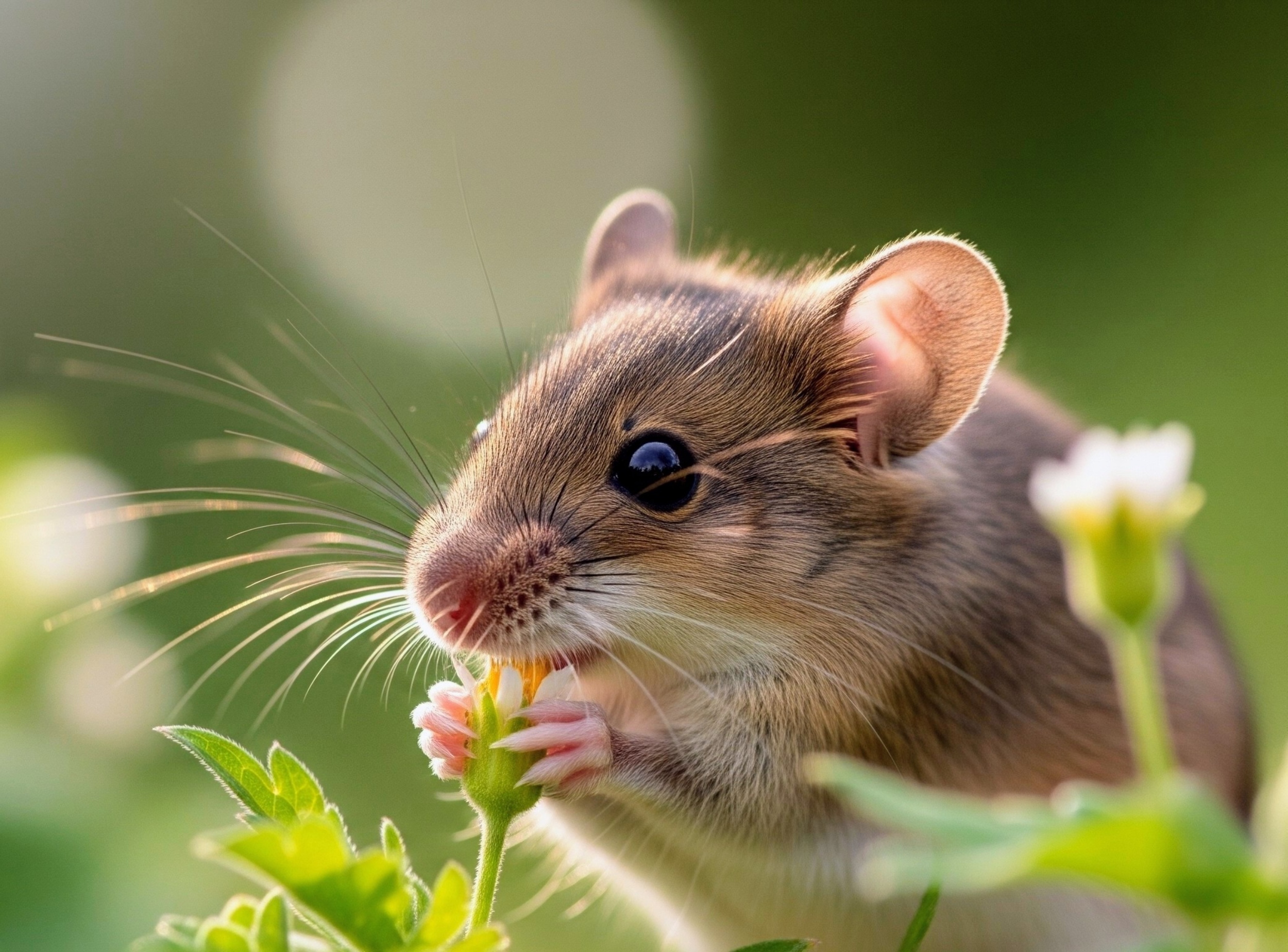
Mice scurry across the forest floor at night and stop at small piles of chestnuts. Some look fine. Others have tiny holes where moth larvae crawled out after eating from the inside.
One mouse pauses and sniffs. Then it makes a choice that could affect whether it eats well or stays alive.
This simple moment turns out to be more complicated than it looks. Choosing food takes time for mice. Time can mean danger, but skipping the inspection might mean settling for lower-quality food.
For wild mice, this trade-off plays out night after night, under real risk.
A quiet experiment in the dark
For two years, researchers placed feeding stations on a forest floor and let mice behave as they normally would.
Each station held six chestnuts. Three were healthy and three had been damaged by moth larvae. Cameras watched silently from above as mice arrived after dark.
Some mice rushed in, grabbed the nearest nut, and disappeared in one to two seconds. Others lingered. They sniffed several chestnuts, compared them, and took about five seconds before leaving.
That delay mattered. Predators hunt these mice at night, and standing still makes them easier targets.
After the second year of observations, the pattern was clear – about half the mice took the extra time. The rest did not.
When patience pays off
The patient mice made better choices. Those that sniffed and compared chestnuts were far more likely to take an undamaged one.
Over two years, cameras recorded 125 nut removals. The slow choosers consistently picked higher-quality food.
This behavior came with risk. Spending extra seconds at a feeding station increased exposure to predators. Still, some mice kept doing it. The payoff seemed to matter.
The work was led by scientists from Nagoya University. The study focused on two species, the large Japanese field mouse and the small Japanese field mouse. Both species showed both behaviors.
This finding ruled out species differences as the reason some mice were picky and others were not.
Inspecting the chestnuts
To understand what the mice were detecting, the researchers examined the nuts themselves.
Study first author Rui Kajita is a former graduate student at Nagoya University’s Graduate School of Bioagricultural Sciences.
“We cut open 100 moth-damaged nuts to understand their internal condition and found that in 95% of cases, moth larvae had consumed only 0-40% of the nut’s contents, leaving the majority intact,” noted Kajita.
Most damaged nuts still had plenty of edible material. But they came with problems.
Ninety percent showed internal discoloration. Forty percent contained feces from the larvae. These changes likely affect smell and reduce food quality.
Despite this, nearly all the chestnuts were gone by morning. Even the worst ones did not go to waste.
How mice choose food at night
Wood mice forage at night, when vision is limited. Smell becomes essential.
The cameras often captured mice lowering their heads and sniffing chestnuts repeatedly before choosing one.
This behavior suggests that scent gives them information that sight cannot. Some damaged nuts had feces near the exit holes, which likely produced strong odors.
“Despite the damage, most of the nuts disappeared from feeding stations overnight. This makes sense because chestnuts don’t contain tannins, unlike oak acorns that can cause weight loss and death in rodents,” Kajita explained.
“Even low-quality moth-damaged chestnuts remain a valuable food source. The sniffing behavior allows mice to identify the worst damage and prioritize undamaged nuts, but ultimately they take everything because chestnuts are safe to eat.”
Two ways to survive
Why do some mice inspect carefully while others rush? The study did not test causes. Competition, hunger, experience, and individual differences are all possible.
What the researchers did confirm is that both strategies work. Both types of mice survive and continue to forage.
“Owls, martens, and other predators hunt these mice, so every second a mouse spends at a feeding station could expose it to danger,” noted Professor Hisashi Kajimura.
“Yet some of them still take time to choose the best chestnut. The choice shows that food quality matters enough to take risks.”
From chestnuts to ecosystems
Mice do more than eat chestnuts – they move them. By carrying nuts away from feeding spots, mice help spread seeds across forests. Their choices affect which seeds survive and where trees grow.
If moth damage increases, or habitats change, mouse behavior may shift. That could change forest composition over time.
Understanding how animals balance food quality against safety helps scientists see how ecosystems respond to pressure.
“It’s a very relatable problem,” said Professor Kajimura. “Should you invest time in making better choices, or act quickly to minimize your risk?”
“These mice have been doing this for millions of years and have two opposing strategies. Somehow both seem to work. Finding what causes these differences could help us understand decision-making in many species, including humans.”
The full study was published in the journal Scientific Reports.
—–
Like what you read? Subscribe to our newsletter for engaging articles, exclusive content, and the latest updates.
Check us out on EarthSnap, a free app brought to you by Eric Ralls and Earth.com.
—–
Rate this article
Login to rate this article
Comments
Please login to comment
No comments yet. Be the first to comment!