
Health & Fitness
9 min read
Assessing the Resilience of Mesophotic Coral Ecosystems to Climate Change
Marine Technology News
January 20, 2026•2 days ago
AI-Generated SummaryAuto-generated
A five-year project will assess the resilience of mesophotic coral ecosystems in the Indian Ocean to predicted climate change temperature shifts. Starting in February 2026, the initiative will employ various methods, including in-situ measurements and numerical modeling, to understand these deeper reef communities' vulnerability. The research aims to inform protection strategies and quantify the potential for sustaining coral reef biodiversity under future climate scenarios.
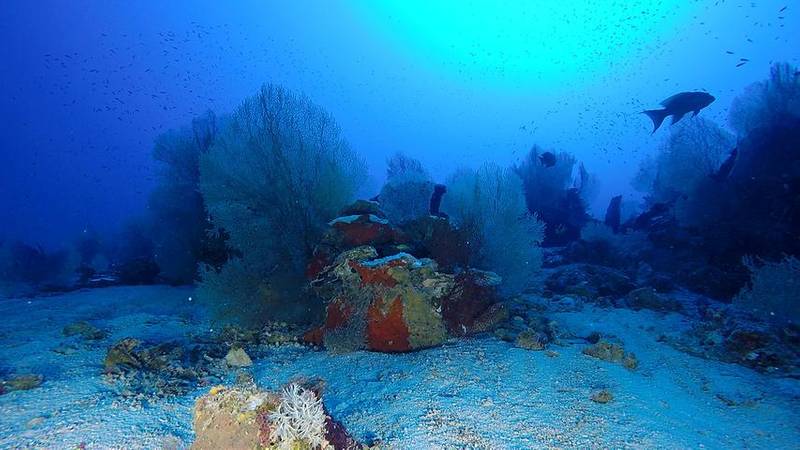
Scientists are to carry out an assessment of the response and resilience of mesophotic coral ecosystems – coral reef communities found at depths of between 30m and 150m in tropical regions – to the temperature shifts predicted under future climate change.
Over the next five years, the project will focus on these deeper coral reef communities below the surface of the Indian Ocean and employ a number of methods to assess their vulnerability to climate change.
In addition to assessing the threats they face, the project will also seek to inform ways the reefs can be protected now and in the future.
The project starts in February 2026, and is being led by experts in marine biology and oceanography from the University of Plymouth, with a core team also including experts in coral reef biodiversity from Imperial College London and specialists in numerical modelling at Plymouth Marine Laboratory (PML). They are being supported by a grant of £3.7million from the Natural Environment Research Council, part of UK Research and Innovation.
Through their previous work in the Indian Ocean, researchers from the University of Plymouth uncovered the deepest known evidence of coral reef bleaching. However, there are still fundamental gaps in knowledge and understanding around the diversity, distribution, environmental conditions and vulnerability of deeper coral ecosystems.
Shallow water corals are extremely vulnerable, with predictions suggesting that they could be almost entirely lost as a result of future climate change, says Dr Nicola Foster, project lead. “Until recently, we thought deeper coral reefs might be protected against similar threats, however our work in the Indian Ocean has challenged that assumption. This project aims to further our understanding of how resilient these deeper coral ecosystems are to warming waters, and the impact any changes in their structure and function could have on coral reef biodiversity in the Indian Ocean and globally.”
The project will use survey technologies for in-situ measurements of biodiversity, health and physical environmental parameters at locations across the Indian Ocean – with data also generated through high-resolution numerical modelling.
Studies will also take place in the Coral Spawning Laboratory at the University of Plymouth, assisted by support and training from experts at the Horniman Museum and Gardens in London, to investigate the reproductive strategies and thermal tolerance of mesophotic coral species.
Through this, researchers hope to quantify the potential for the western and central Indian Ocean to sustain coral reef biodiversity and function under future climate scenarios, with a particular focus on identifying critical areas of biodiversity and sites more vulnerable to the impacts of climate change due to their location and specific oceanographic conditions.
Rate this article
Login to rate this article
Comments
Please login to comment
No comments yet. Be the first to comment!