
Entertainment
23 min read
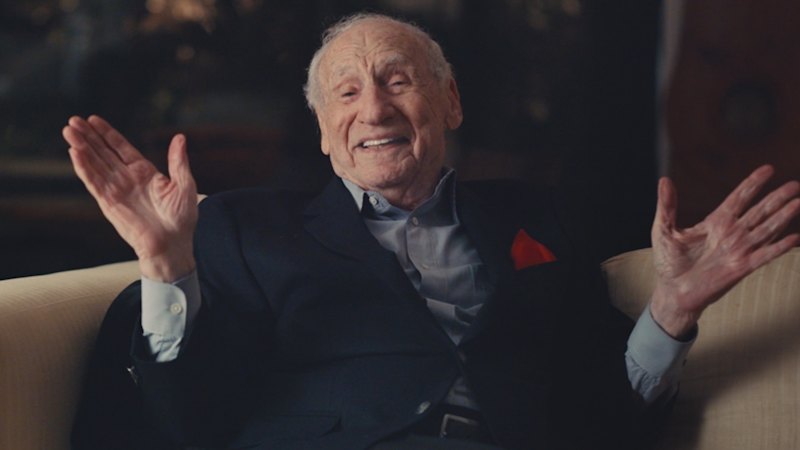
Mel Brooks: The 99-Year-Old Man - A New Documentary Explores His Legacy
The Age
January 20, 2026•2 days ago
AI-Generated SummaryAuto-generated
A new documentary, "Mel Brooks: The 99-Year-Old Man," explores the legendary comedian's career. The article recounts a 1982 interview where Brooks expressed frustration over a broadcast edit of "Blazing Saddles," highlighting his desire to challenge conventional thinking and liberate audiences through comedy. This incident marked a shift in reporter access to celebrities.
You have reached your maximum number of saved items.
Remove items from your saved list to add more.
The great comedian Mel Brooks is 100 in June, and he is this week being honoured with a two-part documentary, co-directed by Judd Apatow, on HBO Max. Talking heads include Ben Stiller, Jerry Seinfeld and Nathan Lane – all offering insight on what this titan of comedy has meant to them over the years.
But the series, Mel Brooks: The 99-Year-Old Man, also brought back an amazing memory for me from 44 years ago, an encapsulation of the truism that out of naivety and positivity, young people haven’t yet learnt what they can’t do.
First, some context. In the olden days reporters could, and often did, phone famous people out of the blue. No requests to see interview questions in advance, no off-limit topics, no minder sitting in a corner of the room, poised to veto any questions deemed a no-go. Back in the early ’80s the PR walls weren’t up yet and, if they were, there were some holes you could still sneak through.
Which is how in November 1982 I came to telephone Brooks out of the blue about a fart gag.
I was a young reporter assigned to the Green Guide TV section of The Age. At our weekly news conference we were discussing Channel Ten’s decision to broadcast the “sanitised” version of his film Blazing Saddles with its most famous scene removed.
You know the one: a bunch of cowboys sitting around a campfire, enjoying a meal of baked beans and beginning a round of uninhibited farting.
Advertisement
There were a number of different versions of the film released for screening on television, each designed to cater for the tastes of audiences in different markets. Channel Ten broadcast the American TV version, which omitted that scene, presumably to protect the public’s delicate sensibilities when exposed to the shock of a bodily function.
But how ridiculous. It was like cutting the “I’ll have what she’s having” scene from When Harry Met Sally or the horse’s head scene from The Godfather.
The editors and I thought it would be worth trying to phone Brooks himself and find out his take on it. He probably thought it was a huge joke. And huge jokes were what Brooks loved. He’d been a comedy giant since his role writing for Your Show of Shows in the early 1950s. The show was regarded as one of the most influential comedies in TV history.
Brooks went on to write the screenplay for the 1967 film The Producers, the story of a desperate Broadway producer who discovers that more money could be made from a theatrical flop than from a hit and thus schemes to produce the worst possible show, to be called Springtime for Hitler, which features dancing Nazis.
It was edgy, dangerous even, with World War II having ended just 22 years earlier. But Brooks (himself a WWII veteran) revelled in taking the piss – about anything and everything. He parodied James Bond (by co-creating Get Smart in 1967) and Alfred Hitchcock (with 1977’s High Anxiety), and spoofed Star Wars and sci-fi culture with Spaceballs (1987), and the merry folk of Sherwood Forest with Robin Hood: Men in Tights in 1993.
Advertisement
A plan to phone him sounded audacious and probably impossible. But hey, let’s see how the kid goes. Sure, ring up Mel Brooks.
I found a number for a studio I understood he was working at, in Burbank, California. I said I was a reporter in Melbourne, Australia.
“May I speak with Mel Brooks please?”
“He’s not here at the moment,” came the friendly reply. “Can I take a message and ask him to return your call?”
Can you believe that? Imagine what they’d say today. They’d think: “We’ve got a live one here, all the way from Australia.” But they’d say: “Please contact [name of PR agency]. Thanks for your call, have a nice day.”
No, there was none of that. I went to lunch and on return I found a note on my desk: “Mel Brooks returned your call. Call him on (213) …”
Advertisement
I phoned and told Brooks about the scene they’d cut. I’d touched a nerve. He was furious.
‘One of the reasons why I got into showbusiness was so I could break some of these small minds.’
Mel Brooks
“It makes me very unhappy that television hasn’t grown up with the rest of the art forms,” he said. “Television has a way of blanding everything into the same melting pot … Everything comes out of that boob tube and it’s all grey and round and there are no hard edges.
“The [editors for television] have a way of enforcing their own puritan views of a joke. You can do something that is a little double entendre that doesn’t mean anything but they will always look at the worst side of it, the filthiest side of it, and use that excuse to cut it. We are still in the hands of bureaucrats.”
This was gold.
“One of the reasons why I got into showbusiness was so I could break some of these small minds. It’s awful to be trapped again by them.”
Advertisement
Our interview wasn’t all about scene-cutting and breaking wind. We all knew Brooks as the comic wild man whose mouth, he once said, threw a party for his tongue.
He also told me a psychologist friend once called him the sanest man he had ever met; he later changed his mind.
For those growing up in the 1960s, Brooks will forever be revered as the co-creator of what we all thought was one of the greatest TV shows ever made. Watching Max, 99, the chief and all the gang in Get Smart was an after-school ritual for a generation.
Over the half-century since it first screened, quotes from that show remain lodged in everyday language, not least “cone of silence” and “missed it by that much”. It’s hard to think of a character from any TV series more beloved and enduring than Maxwell Smart.
Sure, we had Gilligan’s Island and Hogan’s Heroes and The Partridge Family, and they were all great, but Get Smart was a cut above: sharper, funnier and eminently more quotable.
In our interview, Brooks talked about how he had always wanted to shake things up. “Back in the ’50s, I would often run across the room and slide into the wall. Carl Reiner [his long-time friend and partner on Your Show of Shows] would run over and pronounce me ‘safe’.
Advertisement
“It would be my sliding into second base. Carl understood it, and Sid [Caesar, another comedy partner] often got it, but the producer would run over and throw a lit cigar at me.”
Reading the piece back this week, I could almost hear Brooks’ quick-fire raspy voice.
Soon after my piece appeared in The Age – headline “Blazing Mad”, my first story with the tag “Exclusive” – there were very few random calls to celebrities. Reporters were to request interviews in an orderly fashion. I had got in just before the door slammed shut on doing things like that.
And I’m so glad I had. Brooks had left us with some clues about what drove him, why he wanted to act crazy, what was inside that brilliant comic mind.
He said it frustrated him that people live without really living. “By doing crazy things I want to lead the way, I want to lead people into Crazyland. Too many people get neurotic and obsessive and sometimes go crazy because they’re repressed. I think if I can help liberate them I’ve done a great service.”
I hope he’s succeeded in doing that.
Mel Brooks: The 99-Year-Old Man premieres January 23 on HBO Max.
Find out the next TV, streaming series and movies to add to your must-sees. Get The Watchlist delivered every Thursday.
Rate this article
Login to rate this article
Comments
Please login to comment
No comments yet. Be the first to comment!