
Health & Fitness
12 min read
MEG Study Reveals How Sleep Quality Impacts Brain Function
insider.fitt.co
January 20, 2026•2 days ago
AI-Generated SummaryAuto-generated
MYndspan's research using MEG technology reveals a strong link between sleep quality and brain function. Poor sleep in healthy adults correlated with altered brain activity and reduced network communication, patterns also seen in cognitive decline conditions. A case study illustrated these changes, showing increased slow-wave activity and weaker connectivity after disrupted sleep, highlighting sleep as a modifiable factor impacting brain health.
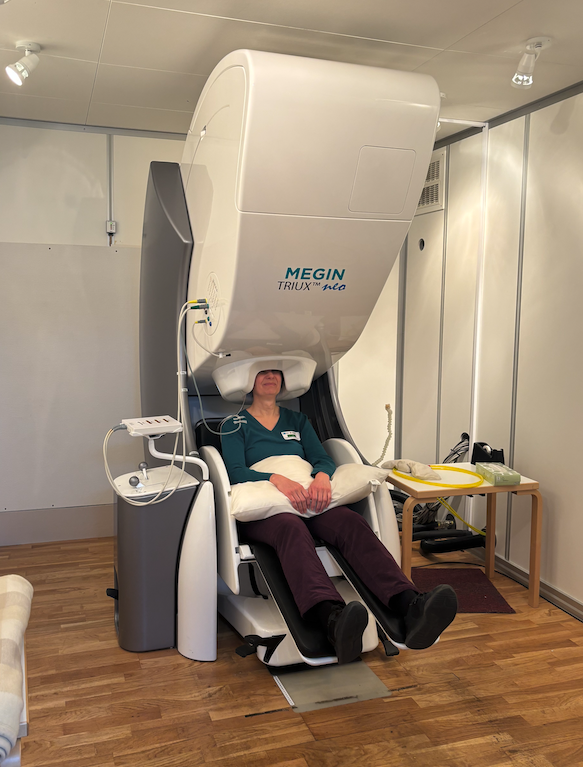
MYndspan, the first company to offer clinical-grade magnetoencephalography (MEG) brain scanning to consumers, today announced findings linking sleep quality to changes in brain function and cognition. The announcement builds on a recent preprint published and demonstrates how MEG can track functional brain changes associated with sleep disruption, changes that may be relevant to long-term brain health and early risk monitoring.
The research examined brain activity in nearly 500 healthy adults and found that poorer self-reported sleep quality was associated with increased low-frequency neural activity and reduced communication between key brain networks. These patterns are also seen in conditions linked to cognitive decline, highlighting sleep as a modifiable factor with a measurable impact on brain function.
To show how these population-level findings translate at the individual level, MYndspan shared a recent real-world case from its consumer brain health service. The individual returned for a follow-up MEG scan after reporting several weeks of disrupted sleep, lower energy, and morning fatigue. Compared to their first scan, MYndspan’s analysis revealed:
A clear increase in slow-wave brain activity, commonly linked to tiredness and mental fatigue
Reduced fast-frequency activity in the alpha and beta ranges, which support attention, clarity, and memory
Weaker connectivity between brain networks involved in attention, decision-making, and visual processing
An increase in their Functional Brain Age gap from 4.7 to 10.1 years
Despite these changes, the individual’s Brain Stability Index remained high, suggesting that the observed effects were more likely situational than structural and potentially reversible with lifestyle improvements. As the client noted:
“I came back for my second MYndspan scan knowing my sleep hadn’t been great, so I expected some drop in attention and concentration. What surprised me was seeing that reflected so clearly in my brainwaves and connectivity.”
“We’ve known for years that sleep matters for brain health, but until now it’s been difficult to measure its impact objectively,” said Caitlin Baltzer, Co-Founder and CEO of MYndspan. “MEG lets us see how sleep loss, stress, and burnout leave a measurable signature in the brain. This moves brain health out of guesswork and into data, giving people the opportunity to act earlier and more precisely.”
“This is a clear example of how sleep and other day-to-day factors show up directly in brain physiology,” said Dr. Benjamin Dunkley, Chief Science Officer at MYndspan and lead author of the preprint. “MEG allows us to see changes in neural activity and connectivity in real time, helping distinguish short-term fluctuations from more concerning patterns. That distinction is critical for preventive brain health.”
MYndspan’s non-invasive brain health service combines MEG scanning with cognitive tasks and validated lifestyle assessments, including sleep quality questionnaires. The full experience takes approximately 45 minutes, with results delivered within 24 hours. Reports track metrics such as Functional Brain Age, Brain Stability Index, brainwave activity, and neural network connectivity over time.
Bringing Advanced Neurotechnology to the Public
MEG is the most precise method available for measuring real-time brain activity but has historically been limited to research institutions and specialist hospitals due to cost and infrastructure requirements. MYndspan is expanding access through partnerships with industry leaders including MEGIN, BIOS Health, and IMEDCO.
“Neurological conditions are now the leading cause of poor health globally, and a substantial proportion of dementia cases may be preventable through earlier intervention,” said Baltzer. “By making functional brain measurement accessible, we’re building the foundation for preventive brain care that reflects how the brain actually functions day to day.”
The full preprint is available here.
Rate this article
Login to rate this article
Comments
Please login to comment
No comments yet. Be the first to comment!