
Health & Fitness
13 min read
Study Reveals Genetic Factors Significantly Impact Male Infertility in India
Times of India
January 19, 2026•3 days ago
AI-Generated SummaryAuto-generated
A study in India reveals genetic factors significantly contribute to male infertility, beyond lifestyle. Advanced sequencing methods identified mutations in genes crucial for sperm production and movement. The research also linked conditions like cystic fibrosis to male infertility, highlighting blocked sperm pathways. This study, the largest of its kind in India, offers improved diagnosis and personalized treatment for couples.
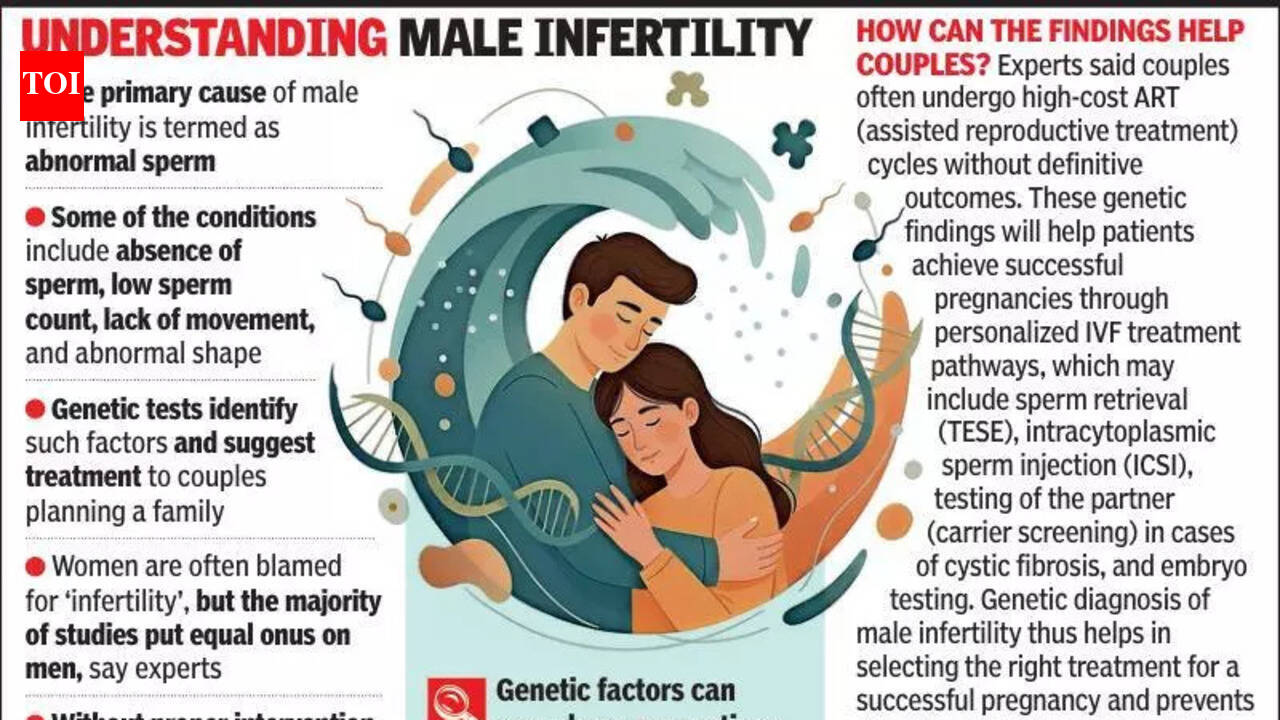
Ahmedabad: It is not just lifestyle factors that cause infertility among men in India, but also underlying genetic reasons, a recent study indicated. While conventional methods can help identify about 4–5% of the causes of infertility, a new method can improve detection by an additional 6–8%, offering new directions to couples planning a child, researchers said. According to the study, cutting-edge sequencing methods such as smMIP (single-molecule molecular inversion probes) can detect mutations in genes such as PMFBP1, DNAH1 and AR, which are crucial for sperm production, size and movement. Researchers also found conditions such as cystic fibrosis to be relevant in understanding male infertility. Cystic fibrosis generally affects children with lung and pancreatic problems, as they inherit both copies of their DNA with highly disruptive mutations. In some instances, however, one of the gene copies carries a mildly disruptive mutation. This results in individuals not developing lung or pancreatic dysfunction, but having blocked tubes in the testes. They produce sperm, but the passage through which sperms travel is blocked, leading to infertility. The study, titled ‘Genetic diversity of infertile males in India', by Dr Harsh Sheth, Dr Pritti Priya, Dr Jayesh Sheth, prof Joris Veltman and others, was published in the latest edition of the Journal of Assisted Reproduction and Genetics by Springer Nature. Dr Harsh Sheth, the lead author and head of the advanced genomic technologies division at the FRIGE Institute of Human Genetics in Ahmedabad, said the research was initiated based on the observation that infertility in general, and male infertility in particular, has been increasing over the decades in India. He said patients are often left with more questions than answers when they begin IVF or other fertility treatments. "We enrolled 247 men with known infertility issues—primarily severe sperm abnormalities—in a study where their genetic make-up was studied to understand the underlying cause or common issues," he said. "Along with conventional methods of karyotyping and AZF (azoospermia factor) testing, we also employed indigenously designed and patent-protected smMIP-based sequencing technology that targets specific gene regions responsible for sperm production and quality. While earlier tests can detect a handful of causes, the new sequencing-based technology allowed us to see a picture at a single-letter level of the DNA to find many more responsible factors. " This is the largest study on male infertility from India and the second largest globally, involving comparison of the DNA of infertile men with that of their parents to identify genetic causes that are present in the individual but not inherited from either parent, Sheth added. Box | How can the results help couples? Experts said couples often undergo high-cost ART (assisted reproductive treatment) cycles without definitive outcomes. These genetic findings will help patients achieve successful pregnancies through personalised IVF treatment pathways, which may include sperm retrieval (TESE), intracytoplasmic sperm injection (ICSI), testing of the partner (carrier screening) in cases of cystic fibrosis, and embryo testing. Genetic diagnosis of male infertility thus helps in selecting the right treatment option for a successful pregnancy and prevents genetic conditions such as cystic fibrosis from being passed on to the next generation. Pointers: Understanding male infertility - The primary cause of male infertility is termed abnormal sperm - Some of the conditions include absence of sperm, low sperm count, lack of movement, and abnormal shape - Genetic tests identify such factors and suggest treatment to couples for family planning - Women are often blamed for "infertility", but the majority of studies put equal onus on men, said experts - Without proper intervention, couples often spend lakhs of rupees without desired results - Genetic factors can be passed down generations, especially when some come from both parents
End of Article
Rate this article
Login to rate this article
Comments
Please login to comment
No comments yet. Be the first to comment!