
Space & Astronomy
6 min read
Astronomers Discover Longest Stellar Jet Ever Recorded, Stretching 32 Light-Years
NewsBytes
January 18, 2026•4 days ago
AI-Generated SummaryAuto-generated
Astronomers using the Hubble Space Telescope have discovered the longest stellar jet ever recorded, extending 32 light-years. This massive outflow, ejected from a protostar 20 times the Sun's size at 3.5 million kilometers per hour, illuminates interstellar clouds. It's the first observed jet driven by a massive star, offering new insights into stellar evolution.
By Dwaipayan Roy
Jan 18, 2026 06:14 pm
What's the story
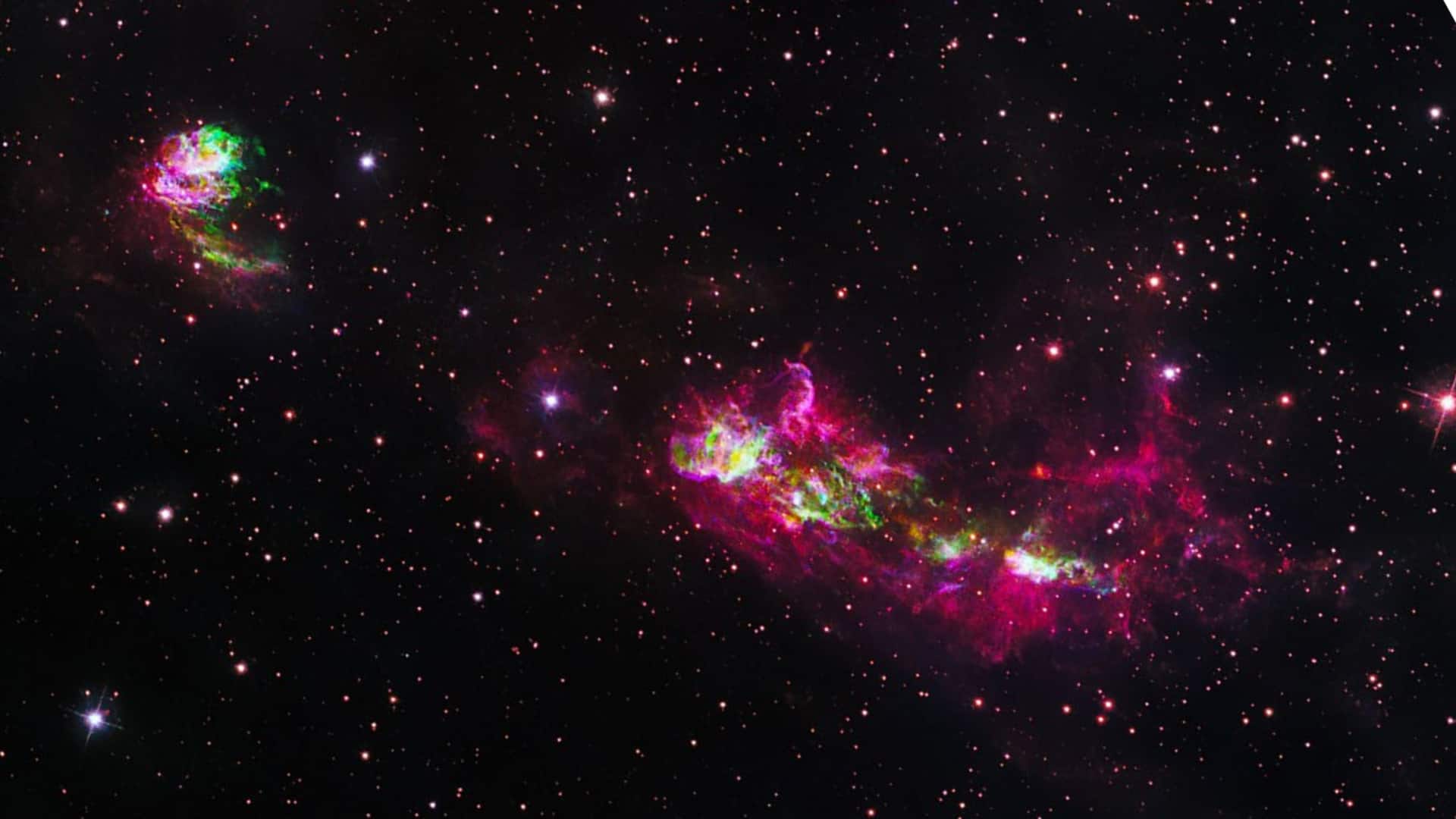
Astronomers have used the Hubble Space Telescope to observe a massive protostar, 20 times larger than our Sun, illuminating interstellar clouds. The visual effect is caused by a stellar jet moving at an unprecedented speed of 3.5 million kilometers per hour. This is the fastest outflow of this kind ever recorded and also the longest one from a forming star or protostar ever observed by scientists.
Cosmic distance
Stellar jet stretches over 32 light-years
The stellar jet in question stretches over an incredible 32 light-years, which is about eight to 10 times the width of our entire solar system. The Hubble Space Telescope captured a stunning image of this cosmic eruption, showing two Herbig-Haro (HH) objects, HH 80 and HH 81. These glowing cosmic bodies are located some 5,500 light-years away and are illuminated by IRAS 18162-2048, the most massive protostar in the molecular cloud known as L291.
Stellar evolution
Accretion disks and stellar jets: A cosmic cycle
Protostars such as IRAS 18162-2048 are fed by gas falling from surrounding clouds of gas and dust. This matter creates a swirling cloud around the protostar, known as an accretion disk, which gradually feeds this stellar newborn. However, powerful magnetic fields channel plasma in these disks to the poles of protostars, accelerating it to high speeds and blasting it out as jets.
Advertisement
Cosmic interaction
HH objects: A result of stellar jets
HH objects are formed when jets of ionized gas/plasma are blasted away from protostars at incredible speeds. These jets collide with the previously ejected gas, creating shockwaves that heat the gas and produce bright glows like those seen in HH 80 and HH 81. Notably, this is the first time astronomers have observed a jet driven by a young massive star rather than a low-mass star.
Rate this article
Login to rate this article
Comments
Please login to comment
No comments yet. Be the first to comment!