
Breaking News
14 min read
Kim Ghattas: Islamic Revolution Has Failed Iran's People
The Indian Express
January 19, 2026•3 days ago
AI-Generated SummaryAuto-generated
Author Kim Ghattas argues the Islamic Revolution has failed Iran's people, citing unprecedented violence against recent protests. She suggests internal transformation or regime collapse are possible scenarios, but warns of regional instability if the latter occurs. Ghattas highlights economic recovery as a key demand for Iranian women.
“Right now, the assessment that Trump has made is that a strike would not actually bring down the regime,” Ghattas said. That assessment, she added, could change if protests regain momentum.
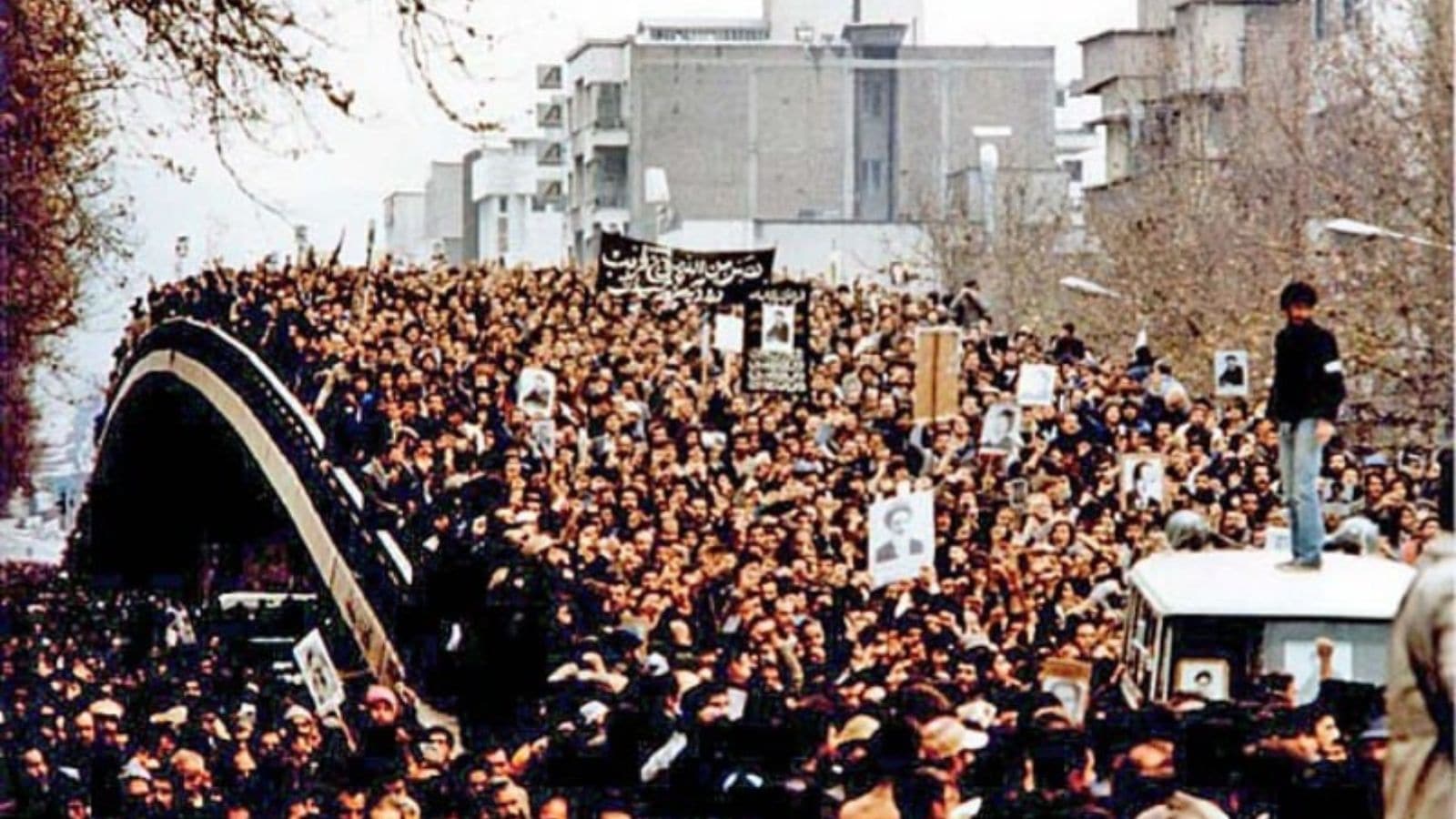
She pointed to a historical pattern familiar to Iranians: the 40-day mourning cycle following deaths during crackdowns, which sustained the revolutionary rhythm in the late 1970s. “You may see recurrent protests,” she said. “And if they build momentum and if the opposition somehow coalesces internally and externally, then we might be in a scenario where there is another strike.”
The greater risk, Ghattas said, lies in what follows a regime collapse. “Anything that just involves bombing from outside is a terrible scenario,” she said. “Iran is a country of 90 million people. Chaos inside Iran will have spillover effects across the region.”
‘Nobody is ready for the day after’
That concern, she said, explains why regional powers such as Saudi Arabia and Turkey have urged caution. “Nobody is ready for the day after,” she said.
Ghattas believes the Islamic Republic had reached the limits of its ideological project. She described the violence used against recent protests as unprecedented.
“More people died in those two weeks than during the whole revolution,” she said. The scale of repression, she added, shapes how people assess the risks of returning to the streets.
Her verdict on the status quo was stark. “The Islamic Republic has nothing left to offer the Iranian people anymore. The Islamic Revolution has failed them,” she said.
Expectations too play a role. “Trump said help is on the way, and then he didn’t deliver,” Ghattas said. “So Iranians are going to think twice before they take to the streets again.”
She avoided prescriptions for regime change, but described one scenario short of collapse: internal transformation driven by the leadership’s calculations about survival.
“If the Islamic Republic leadership feels that its survival is at stake, they could decide to make some changes,” she said. “The question is whether this goes far enough for the Iranian people.”
Discussion of alternative leadership has intensified, including renewed calls for the return of Iran’s former monarchy. Ghattas said Israeli Prime Minister Benjamin Netanyahu has developed a relationship with Reza Pahlavi, while Donald Trump has publicly expressed scepticism about his suitability. Former president Hassan Rouhani is frequently mentioned.
“Rouhani really wanted to open up the country,” Ghattas said. “But as soon as he did the nuclear deal, everything else was stopped by Khamenei.”
Ghattas’book Black Wave: Saudi Arabia, Iran, and the Forty-Year Rivalry That Unraveled Culture, Religion, and Collective Memory in the Middle East examines how the rival responses of Iran and Saudi Arabia to the upheavals of 1979 turned religion into an instrument of state power across the region.
Asked what political change would mean for Iranian women, Ghattas emphasised material outcomes over symbolism. “Women are an essential partner of these protests,” she said, referring to the demonstrations following the killing of Mahsa Amini in 2022.
While visible social changes are already underway, she cautioned against overstating their impact. “What they want is jobs. They want to feed their families. They want to send their children to school,” she said.
Economic recovery, she said, would take time even under a new political order. Years of sanctions and mismanagement have weakened the economy. “Social reforms might be very quick,” she said. “Economic reforms will take a long time.”
The long afterlife of 1979
Ghattas identified 1979 as the pivotal year for the modern Middle East, marked by the Iranian Revolution, the seizure of the Grand Mosque in Mecca, and the Soviet invasion of Afghanistan. Together, she said, these events reshaped politics, culture and religious authority across the region.
Pakistan, she added, became a critical node after 1979, as Saudi funding, the Afghan jihad and General Zia-ul-Haq’s Islamisation policies converged. “Language that turns violent leads to real violence,” she said, referring to the hardening of sectarian divisions.
She also pointed to cultural resistance that persisted despite political narrowing. The poetry of Faiz Ahmed Faiz, including Hum Dekhenge, circulated across borders and decades. “Poetry doesn’t overthrow regimes,” Ghattas said. “But it brings moral courage.”
Her closing caution returned to history. “You cannot control the consequences,” she said, reflecting on the long afterlife of 1979.
Rate this article
Login to rate this article
Comments
Please login to comment
No comments yet. Be the first to comment!