
Geopolitics
14 min read
Kenya Leads Regional Workshop to Boost Border Security Against Transnational Threats
Dawan Africa
January 20, 2026•2 days ago
AI-Generated SummaryAuto-generated
Kenya hosted a regional workshop for border security officials from five African nations. The meeting focused on developing a compendium of best practices to strengthen border security and counter transnational threats like illicit trade and extremism. The initiative aims to improve regional cooperation, harmonize procedures, and close security gaps exploited by criminal networks, fostering greater stability and economic resilience.
Kenya, 20 January 2026 - Kenya this week convened a regional gathering of border security policymakers and technical experts, reflecting growing concern that transnational threats are becoming more complex, interconnected and difficult for individual states to manage alone.
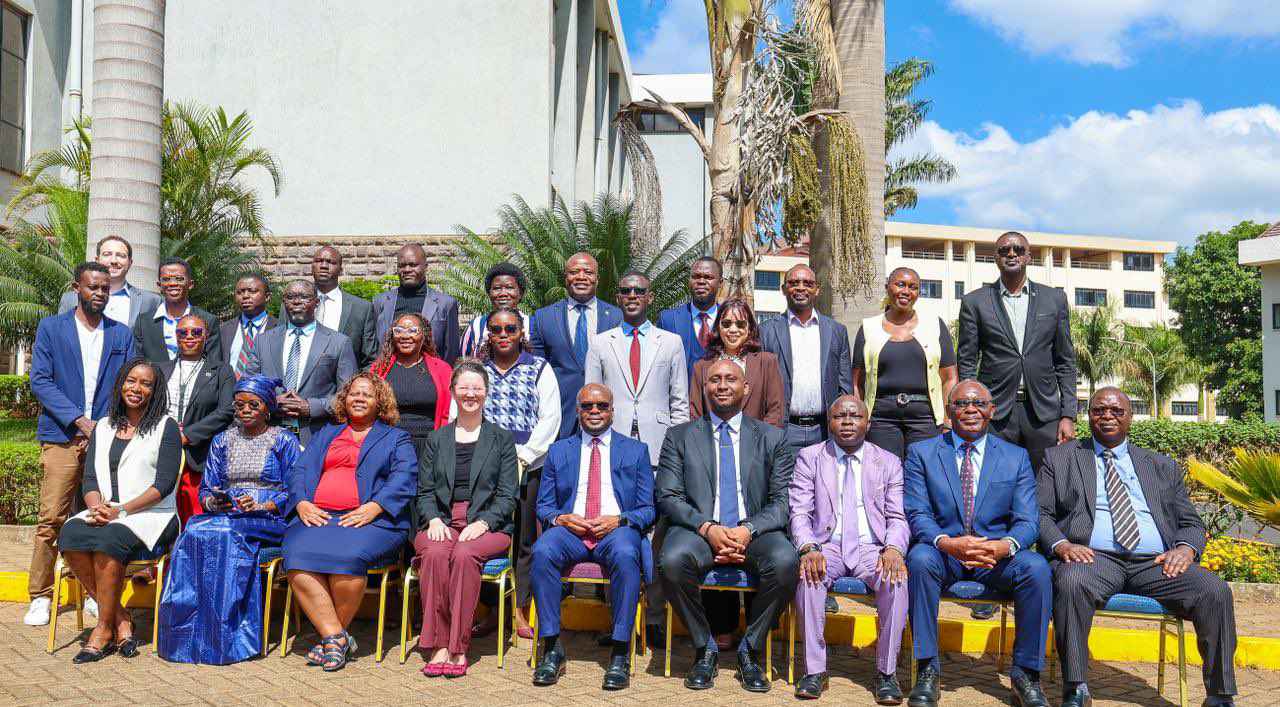
The three-day Regional Workshop, underway at the Kenya School of Government’s Lower Kabete Campus in Nairobi, brings together officials from Kenya, Somalia, Namibia, Madagascar and the Central African Republic (CAR).
The meeting is focused on developing a Regional Compendium of Best Practices to strengthen border security and counter threats such as illicit trade, transnational organised crime and violent extremism.
Hosted by the International Organisation for Migration (IOM) with support from the United States Department of State through its Export Control and Border Security (EXBS) Programme, the workshop underscores a shift toward coordinated regional approaches to border governance.
Participants are examining how states can better manage borders that are increasingly exploited by criminal networks operating across jurisdictions.
Opening the meeting, Kenya’s Principal Secretary for the State Department for Internal Security and National Administration, Dr Raymond Omollo, emphasised that modern border threats no longer respect national boundaries.
As Chair of the Border Control and Operations Coordination Committee (BCOCC), Dr Omollo noted that illicit flows of goods, weapons and people, as well as the movement of extremist actors, require enhanced inter-agency cooperation and sustained collaboration among neighbouring countries.
He observed that partnerships under the EXBS framework have enabled practical interventions across participating states, particularly in training frontline officers and strengthening operational capacities at key points of entry and exit.
According to Dr Omollo, consolidating these experiences into a shared regional reference will help countries align procedures, improve interoperability and close gaps that are often exploited by criminal networks.
At the centre of the discussions is the development of a Compendium of Best Practices, intended to document, harmonise and validate effective approaches to border governance. This includes information-sharing mechanisms, coordination among law enforcement agencies, and operational interdiction methods, while ensuring alignment with international standards and legal frameworks.
Kenya’s experience has featured prominently in the deliberations, with officials highlighting progress made through strengthened national coordination structures.
Dr Omollo pointed to milestones achieved through the BCOCC and its partners, including the establishment of six Joint Operations Centres at strategic border points, enhanced capacity-building for frontline officials, and the development and rollout of the Border Security Control Programme curriculum.
Other initiatives cited include the validation of Kenya’s National Border Porosity Assessment Report and the provision of operational equipment to improve surveillance, inspection and response capabilities. These measures, Kenyan officials argue, demonstrate how coordinated planning and targeted investment can yield tangible improvements in border management.
The EXBS partnership has also supported Kenya’s efforts to strengthen strategic trade controls. Dr Omollo noted that technical assistance under the programme contributed to the development of the Strategic Goods Control Bill, 2025, which has received Cabinet approval and is expected to be tabled in Parliament. The legislation aims to tighten controls over sensitive goods that could be diverted for illicit or destabilising purposes.
For participating countries, the workshop represents more than a technical exercise. It reflects a shared recognition that border security is integral to national stability, economic resilience and regional integration.
As cross-border trade expands and mobility increases, gaps in border management can undermine security gains and facilitate the spread of organised crime and extremism.
The meeting is expected to conclude with agreement on a practical Compendium that will inform policy development, training programmes and operational planning across the region.
Organisers say the document will serve as a living reference for border agencies and stakeholders, strengthening collective capacity to prevent and disrupt illicit flows and enhance security cooperation in an increasingly interconnected region.
Rate this article
Login to rate this article
Comments
Please login to comment
No comments yet. Be the first to comment!