
Geopolitics
22 min read
Sanae Takaichi: Japan's PM Bets on Popularity in Snap Election
CNA
January 20, 2026•2 days ago
AI-Generated SummaryAuto-generated
Prime Minister Sanae Takaichi has called a snap election in Japan, seeking a stronger mandate to enact reforms. Analysts suggest this move is a gamble, testing her personal popularity against the ruling party's weakness. The election will also gauge market confidence amid concerns over fiscal policy and strained relations with China.
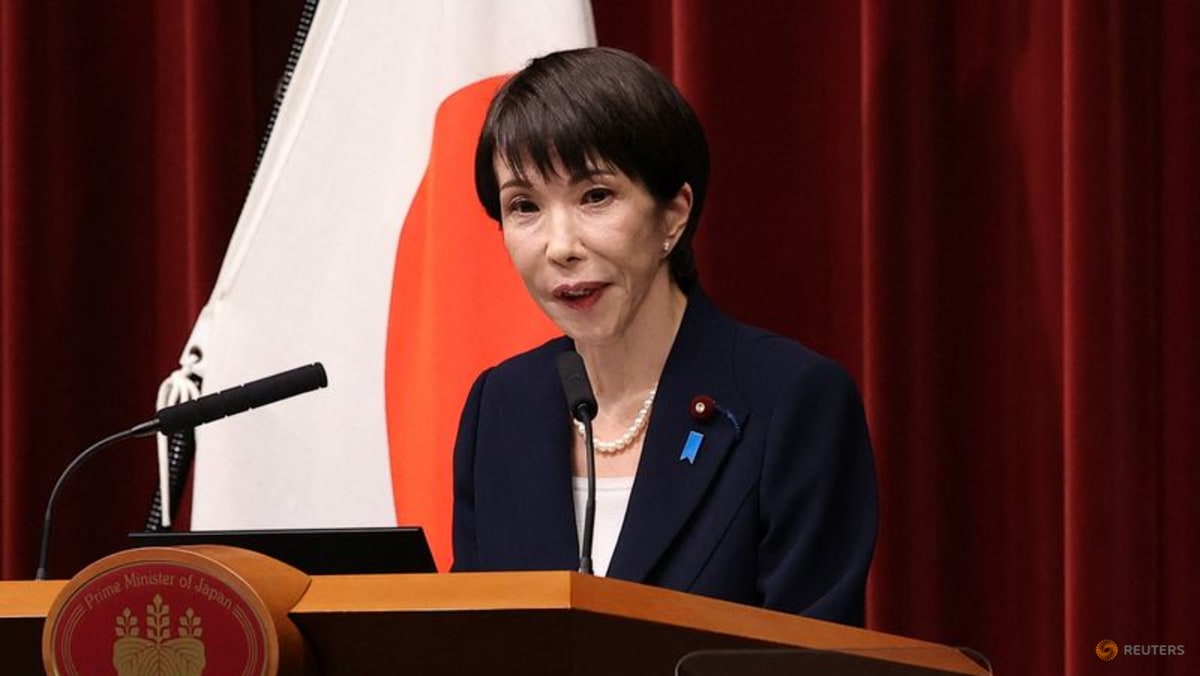
Japan will head to the polls on Feb 8 in a snap general election that Prime Minister Sanae Takaichi has cast as a test of her leadership.
Just three months into her tenure, Takaichi, the country’s first female leader, said on Monday (Jan 19) that she wants voters to decide whether she is fit to lead the world’s fourth largest economy.
She is also seeking a stronger mandate to push through sweeping fiscal, institutional and national security reforms.
But political analysts told CNA that the snap election is far more than a confidence vote.
Among other consequences, it could reshape Japan’s political landscape, test market confidence in the world’s most indebted advanced economy, and determine whether Takaichi’s personal popularity can overcome the ruling Liberal Democratic Party's (LDP) persistent weakness with voters.
Takaichi understands these risks, said Tomohiko Taniguchi, special advisor at the Fujitsu Future Studies Centre and former special adviser to the late Prime Minister Shinzo Abe.
“It certainly is a gamble. Takaichi is fully aware that she's walking on very thin ice,” he added.
“‘Give me power, more authority, to make me much, much more decisive in pushing through some of the difficult legislative bills.’ That's basically what she told the nation yesterday.”
Takaichi is expected to dissolve parliament on Friday, with campaigning to begin next Monday.
STRIKING WITH HIGH APPROVAL RATINGS
For Takaichi, the timing of her election announcement is driven by unusually strong public support.
Japan is not due for another general election until October 2028.
Opinion polls by major Japanese media outlets put her Cabinet approval rating at around 70 per cent – a level rarely sustained by Japanese leaders, said analysts.
Takaichi is keenly aware that such numbers may not last, said Jeffrey Kingston, professor of history and Asian studies at Temple University Japan.
“She’s a woman on a mission, and she wants to cash in on her sky-high approval ratings,” he noted.
“She’s figuring that the news is only going to get worse and she’s going to decline, so why not hold an election now?”
Kingston said internal LDP polls suggest that the party could even secure a standalone majority in the powerful 465-seat lower house of parliament – a result that would dramatically strengthen Takaichi’s hand.
LDP’s coalition with the Japan Innovation Party has given it a fragile majority at the moment, with just enough seats to govern.
While Takaichi is popular, LDP is not. Its approval rating hovers around 30 per cent, raising doubts about whether personal support can translate into votes for the party’s candidates.
“There is a discrepancy between the popularity ratings for Takaichi and for the LDP,” Taniguchi told CNA’s Asia First.
“By winning the majority, as she said she would, she could fill the gap. She could say to the nation, to the world, that I am popular, but the LDP is also popular as well.”
Complicating matters further is the emergence of a new opposition grouping, the Centrist Reform Alliance – comprising Komeito as well as the main opposition Constitutional Democratic Party of Japan (CDP).
When announcing the alliance’s formation last week, CDP and Komeito leaders described it as an offensive strategy to fight against the conservative ruling coalition.
Despite it being early days for the alliance and the short campaigning period leading up to the election, Kingston noted that the CDP’s and Komeito’s combined vote tally in the previous election exceeded that of the LDP.
“It’s not a risk-free gamble,” he said, though he still expects Takaichi to emerge satisfied with the election outcome.
Other analysts like Kotaro Tamura, adjunct professor at the National University of Singapore’s Lee Kuan Yew School of Public Policy, said they are more confident of Takaichi’s and the LDP’s chances.
“I think she will win at least comfortably, and in my opinion, she can win a landslide,” he said, estimating the LDP could secure 270 to 280 seats in the lower house – enough to govern alone.
Despite the LDP’s weak party branding, Tamura – a former LDP politician under the Abe government – said voters are likely to ultimately rally behind Takaichi.
“LDP itself is not popular yet, but they have no choice other than to support Takaichi in the ballot,” he told CNA’s Asia Tonight.
TIES WITH CHINA
Meanwhile, the election also comes as Japan faces strained ties with China.
Takaichi suggested in November that Tokyo could take military action if China attacked Taiwan. Beijing has sought a retraction of those comments, but Takaichi has said Japan's policy on Taiwan remains unchanged.
Her tough rhetoric on China appears to have boosted her standing at home, said analysts.
“Given the steady and very high popularity ratings, the implication is that the nation is not so much discontented about the coercive actions that they see almost daily from China. Rather, they may be broadly supportive of her overall foreign policies,” Taniguchi said.
Kingston told CNA’s East Asia Tonight that the confrontation with Beijing has played directly into Takaichi’s political narrative.
“The nation has rallied around her. Part of the reason why she's riding high in the polls is the public is backing her, and they admire the fact that she has stood up to China,” he added.
“(During) her campaign for party presidency, she kept invoking the image of Margaret Thatcher, the Iron Lady, and here she is, in a way, delivering on that,” said Kingston, referring to the former United Kingdom prime minister.
FISCAL RESPONSIBILITY
Beyond the headlines, analysts said the election is likely to become a referendum on fiscal policy.
Takaichi has embraced an expansionary economic agenda aimed at easing the cost-of-living pressures facing households, particularly pensioners on fixed incomes.
Her Cabinet has approved a record budget for the next fiscal year, and she has proposed scrapping the 8 per cent sales tax on food – a significant departure from the LDP’s traditional emphasis on fiscal discipline.
Markets, however, are uneasy. Japan’s 10-year government bond yields climbed in early trading on Tuesday to their highest in nearly three decades.
“(One) argument is that her expansionary fiscal policy and ratcheting up Japan's already record-high public-debt-to-GDP (gross domestic product) ratio, which is now about 250 per cent, is causing … interest rates to surge,” Kingston said.
“This hasn't really yet hit the average consumer, but in the next couple of months, this is going to hit hard.”
But Taniguchi said the prime minister is not ignoring market signals and is “fully cognisant of the creeping interest rate hike”.
He noted that Takaichi has stressed her government will issue fewer Japanese government bonds than before.
Still, Taniguchi cautioned that “how the market is going to react is another question”.
“Reducing consumption tax or value-added tax for food and food materials, interestingly, is now a bipartisan consensus because the opposition party is proposing almost exactly the same thing. So, it's a new landscape,” he added.
Rate this article
Login to rate this article
Comments
Please login to comment
No comments yet. Be the first to comment!