
Economy & Markets
16 min read
World's Largest Nuclear Plant Reactivated in Japan
BBC
January 21, 2026•1 day ago
AI-Generated SummaryAuto-generated
Japan has restarted a reactor at the world's largest nuclear plant, Kashiwazaki-Kariwa, the first of its owner's reactors to operate since the 2011 Fukushima disaster. This marks a step in Japan's nuclear power revival, aiming to increase reliance on nuclear energy for self-sufficiency, despite past safety concerns and public distrust. The restart is part of efforts to bolster energy security amidst rising demand.
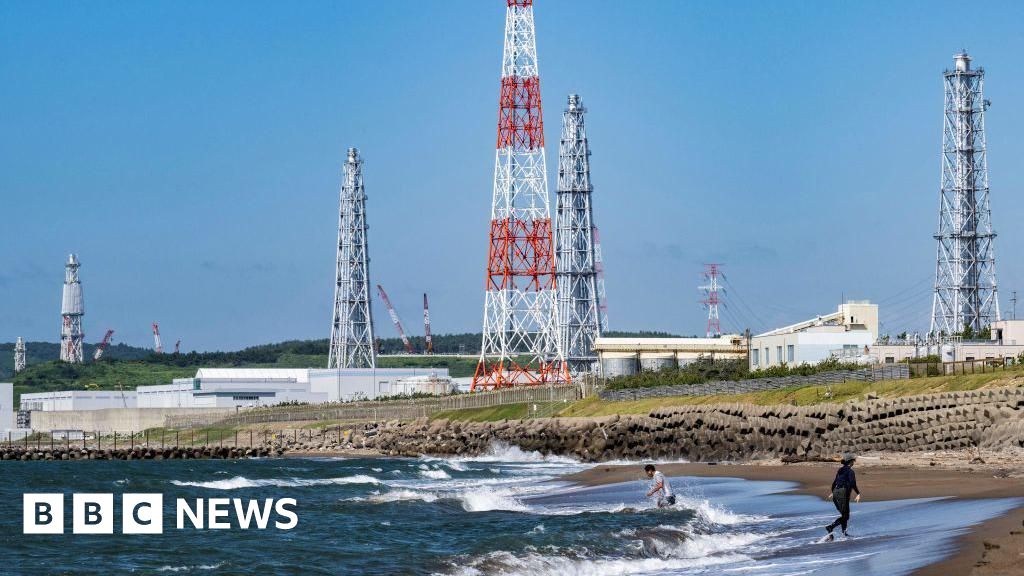
Japan has restarted a reactor at the world's largest nuclear plant nearly 15 years after a disaster at the Fukushima power plant forced the country to shut all its nuclear reactors.
Reactor no.6 at the Kashiwazaki-Kariwa plant located northwest of Tokyo was restarted on Wednesday. It was delayed by one day because of an alarm malfunction and is expected to begin operating commercially next month.
This is the latest installment in Japan's nuclear power reboot, which still has a long way to go. The seventh reactor is not expected to come back on until 2030, and the remaining five could be decommissioned. That leaves the plant with far less capacity than it once had when all seven reactors were operational: 8.2 gigawatts.
Japan, which had always heavily relied on energy imports, was an early adopter of nuclear power. But these ambitions were scuppered in 2011 by what is now remembered as one of the worst nuclear disasters in history.
Triggered by the most powerful earthquake ever recorded in Japan, the meltdown in the reactors at Fukushima Daiichi led to radioactive leakage. It traumatised local communities that were evacuated, and many have not returned despite official assurances that it was safe to do so.
Critics say the plant's owner Tokyo Electric Power Company, or Tepco, was not prepared, and the response from them and government was not well-coordinated. An independent government report called it a "man-made disaster" and blamed Tepco, although a court later cleared three of their exectuives of negligence.
Still the fear and lack of trust fuelled public opposition to nuclear power and Japan suspended its entire fleet of 54 reactors shortly after the Fukushima disaster.
It has now spent the past decade trying to wake up those power plants. Since 2015, it has restarted 15 out of its 33 operable reactors. The Kashiwazaki-Kariwa plant is the first of those owned by Tepco to be turned back on.
Before 2011, nuclear power accounted for nearly 30% of Japan's electricity and the country planned to get that up to 50% by 2030. Its energy plan last year unveiled a tamer goal: it wants nuclear power to provide 20% of its electricity needs by 2040.
Even that may be tricky.
Global momentum is building around nuclear energy, with the International Atomic Energy Agency estimating that the world's nuclear power capacity could more than double by 2050. In Japan, as of 2023, nuclear power accounted for just 8.5% of electricity.
Prime Minister Sanae Takaichi, who took office in October, has emphasised the importance of nuclear power for Japan's energy self-sufficiency. Especially as it expects energy demand to surge because of data centres and semiconductor manufacturing.
But the costs of operating nuclear reactors has surged because of new safety checks that require hefty investments from companies trying to restart their plants.
"Nuclear power is getting much more expensive than they ever thought it would," says Koppenborg.
The government could subsidise the costs, or pass them on to consumers - both unpalatable options for Japan's leaders, who have for decades been hailing the affordability of nuclear power. An expensive energy bill could also hurt the government at a time when households are protesting about rising costs.
The government's "hands are tied when it comes to financially supporting nuclear power, unless it's willing to go back on one of the main selling points", Koppenborg says.
"I think [Japan's nuclear power revival] is a drop on a hot stone, because it does not change the larger picture of nuclear power decline in Japan."
Beyond the fear of another disaster like Fuksuhima, a series of scandals have also rattled public trust.
The Kashiwazaki-Kariwa plant in particular found itself embroiled in a couple of them. In 2023, one of its employees lost a stack of documents after placing it on top of their car and forgetting it there before driving away. In November, another was found to have mishandled confidential documents.
A TEPCO spokesperson said the company reported the incidents to the Nuclear Regulation Authority (NRA), adding that it aimed to continue improving security management.
These revelations are "a good sign" for transparency, says Koppenborg. But they also reveal that "Tepco is struggling to change its ways [and] the way it approaches safety".
Earlier this month, the NRA suspended its review to restart nuclear reactors at Chubu Electric's Hamaoka plant in central Japan, after the company was found to have manipulated quake data in its tests. The company apologised saying: "We will continue to respond sincerely, and to the fullest extent possible, to the instructions and guidance of the NRA."
Nei, the former nuclear official, said while he was "surprised" by the scandal at Hamaoka, he believed the harsh penalty dealt to its operator should deter other companies from doing the same.
"Power companies should recognise the importance not to [falsify data]," he said, adding that authorities will "reject and punish" offending companies.
Rate this article
Login to rate this article
Comments
Please login to comment
No comments yet. Be the first to comment!