
Politics
32 min read
Israel's Strategic Silence: A Path to Iran Regime Change?
The Times of Israel
January 18, 2026•4 days ago
AI-Generated SummaryAuto-generated
Israel is adopting a restrained approach regarding Iran's internal unrest. Instead of direct intervention, Jerusalem hopes to support regime change by not publicly engaging, believing overt involvement could empower the Iranian government. This strategy aims to avoid disrupting potential internal shifts or American-led initiatives, while acknowledging limited Israeli influence and high costs of public action.
For weeks, Israel’s closest ally has been openly threatening to strike its arch-nemesis, yet Jerusalem has been notably quiet.
No stranger to verbal and military confrontation with the Iranian regime, in recent weeks Prime Minister Benjamin Netanyahu has stood off to the side while US President Donald Trump repeatedly issued bellicose warnings to the Islamic Republic that it could face military strikes in response to attempts to violently suppress widespread protests in Tehran and beyond.
Iran’s response that it would attack Israel and American military assets in retaliation for US action was met with veritable crickets from Jerusalem, rather than the bombastic saber-rattling that would normally follow such threats.
From the get-go, Netanyahu reportedly instructed cabinet ministers to maintain radio silence on Iran when protests triggered by worsening economic woes in the country of over 90 million broke out late last month.
The premier has himself remained relatively taciturn, releasing only a brief statement encouraging the downfall of the regime and offering strength to the Iranian people.
He was even said to have asked Trump last week to delay potential plans for a strike on Iran, apparently to buy Israel time to prepare for any possible retaliation.
This restraint isn’t for lack of desire to see the collapse of a regime that has long been sworn to Israel’s destruction. Instead, it’s likely a calculated approach taken to avoid disrupting a process of regime change that may be driven internally without the need for intervention — or through American, rather than Israeli, initiative.
“[Israel’s] thinking is that our ability to help is limited, and the cost is high, because any visible involvement would give the Iranians an excuse to intensify repression,” said Danny Citrinowicz, a senior researcher at the Institute for National Security Studies and former head of Iran research in an Israeli military intelligence branch.
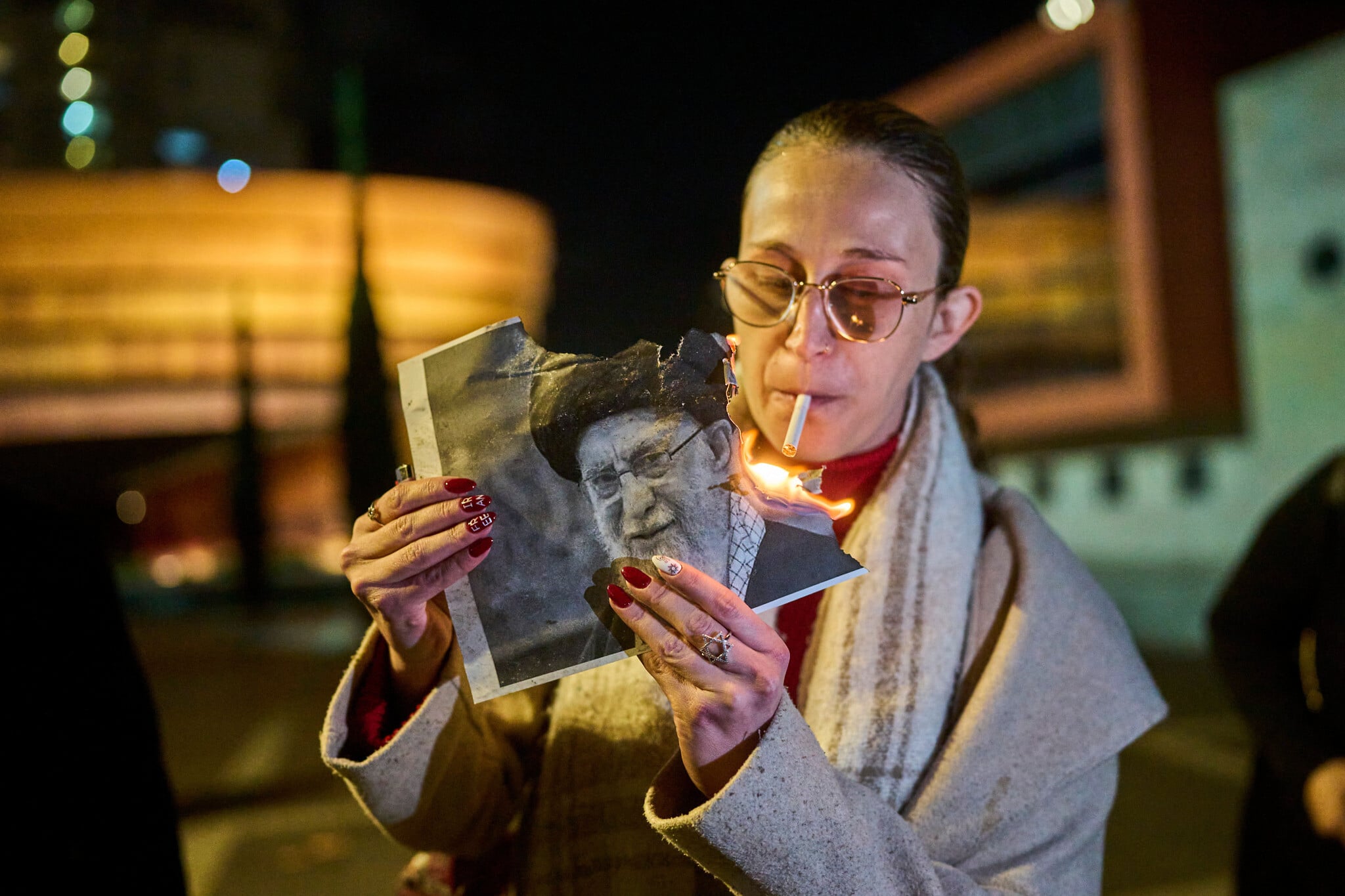
In stark contrast to the approach by Trump — who anyway has seemingly backed off his threats in recent days — Jerusalem has apparently concluded that little good can come of it intervening publicly. Doing so would only confirm the regime’s claims that the protesters are Zionist agents, a charge that could shift popular anger onto the demonstrators and douse the movement.
A US strike carries a similar risk of allowing the regime to rally support by focusing the public’s rage on an outside agitator rather than their own leaders, though it’s unclear if this calculation is behind Trump’s recent vacillations. Regardless, if Trump does choose to strike, Israel would prefer that the US — with its greater offensive and defensive capabilities — carry out the attack and take responsibility for the aftermath.
For now, Tehran appears to have successfully quelled the uprising by killing thousands of its own citizens in a bloody campaign of violent suppression. But the issues behind the protests are unresolved and the deep wellsprings of anger and despair that brought tens of thousands of Iranians into the streets for what was considered the most serious protest movement since the 1979 revolution remain a potent threat to the regime’s survival.
If, and when, protests flare again, in Israel, mum will likely remain the word.
Letting things play out
Israel’s restraint is shaped not only by military caution but also by a sense that direct involvement may be unnecessary to achieve regime change.
The current unrest is viewed by many analysts as unprecedented in nature and scale. Due to the state of Iran’s economy and the regime’s inability to address the demands of its citizens in the short or long term, these protests appear especially destabilizing for the regime — convincing Israel that intervention could be unneeded.
“The Iranian regime is probably finished — no matter what happens,” said Eran Lerman, vice president of the Jerusalem Institute for Strategy and Security and past deputy director of Israel’s National Security Council.
“The problems that produced the current protests exist on a completely different plane than before. We’re now talking about an economy that’s been destroyed to the core… Even if protests rise and fall — the governing infrastructure of the regime has, in my view, been irreversibly undermined,” he said.
For Israel, there is also a strategic fear of miscalculation, with the scars from the last bout with Iran still visible.
Amid increasing reports of renewed Iranian missile production since the June war with Israel, analysts have warned that Israel may be less equipped now to defend itself against Tehran’s ballistic missiles and drones, giving Israel all the more reason to prepare defensively and avoid needless provocation.
“We can hope for change in Iran — but Israel’s ability to influence it is very limited,” Citrinowicz asserted.
With little ability to do much to help things in Tehran, Israel is unlikely to get involved unless severely threatened or presented with a high chance of success.
“We need to be very sober about our ability to exert decisive influence — unless there’s an exceptional opportunity,” Lerman said.
Such an opportunity could mean an “intelligence window that allows a decapitating strike,” he explained, saying that Israel must keep a sharp eye out for “a fracture inside the enforcement apparatus, meaning within the Revolutionary Guards.”
If, as some reports already suggest, Iran’s leaders begin to flee or otherwise signal an imminent regime collapse, the IRGC won’t risk itself “for people who are about to run away anyway,” Lerman continued. “Once that truly crystallizes in a meaningful way — that’s the point where intensified pressure could cause final collapse. But we’re not there yet.”
“Even then,” he added, “it would be preferable for the Americans to do it, not us.”
‘Mixed messages’
While Israel concluded that it was most prudent to keep quiet, Washington had seemed to take a different tack, with Trump threatening to get involved to protect protesters. But on Friday, he indicated that he had canceled any plans for a strike after Iran’s ostensible decision to call off the planned execution of 800 protesters, even as reports put the number killed in the regime’s bloody crackdown in the thousands.
According to Hebrew-language news outlets, Israeli officials believe Trump may still hit Iran. Trump and Netanyahu have held multiple phone calls over the past week, indicating coordination behind the scenes.
The oscillation between threats and moderation could reflect indecision by Trump, or be part of a deception strategy, as was the case in the lead-up to Israel’s summer campaign against Iran’s nuclear facilities, which the US eventually joined.
According to Jason Brodsky, policy director of United Against Nuclear Iran, Trump’s back and forth could have been designed to keep pressure on Tehran until the military threat was ready for deployment.
Even as Trump appeared to back away from threats to strike last week, the US pushed ahead with repositioning the Abraham Lincoln aircraft carrier from the South China Sea into the Middle East.
“These mixed messages are, in part, a package of a psychological operation to shape the decision-making of the Iranian regime and to lower their guard a little bit while the US moves assets into place,” said Brodsky, who is also a non-resident scholar at the Middle East Institute’s Iran Program.
Even if Trump decides to intervene militarily, his definition of success remains unclear.
A US attack could aim to batter Iran’s internal repression apparatus, target key regime leaders, significantly degrade missile capabilities to prevent retaliation, or take many other forms.
But as with Israel, any action also carries significant risks. A US military campaign that fails to actually remove the regime could wind up bolstering the ayatollahs, focusing anger on Washington instead of Tehran while undercutting the opposition and exposing protesters to charges of being American stooges.
At the same time, Trump is opposed to getting the US involved in the type of prolonged military conflict necessary to bring down the Iranian regime.
There is no figure capable of capitalizing on [the regime’s fall]. That’s the core problem.
Operationally speaking, “There is no American strike that would bring about regime change in Iran. Regime change would require prolonged, extensive, sustained strikes over time,” Citrinowicz explained.
The scope of Washington’s theoretical offensive will directly influence Israel’s involvement. The more limited the strike, the lower the likelihood that Israel gets drawn in. But the broader the campaign — and the more dangerous the Iranians perceive it as — the more likely Israel will take action, either offensively or defensively.
Eyes open, mouth shut
Should the regime survive, it will likely be only a matter of time until its next confrontation with Israel.
Having quashed domestic opposition, the leadership in Tehran will likely seek to shore up control by neutralizing any foreign threats to its rule as well.
“That could mean turning toward diplomacy and trying again for a [nuclear] deal with the Americans — something Israel strongly opposes. Or it could mean crossing thresholds in the nuclear realm, believing that only nuclear deterrence can protect the regime from external threats,” Citrinowicz said.
Beyond that, Israel has said it will not abide Iran’s continued buildup of ballistic missile stocks.
“Israel, especially after October 7, cannot live with thousands of missiles aimed at it,” Citrinowicz said. “If Iran’s force buildup continues, I believe Israel will reach a direct confrontation with the regime in 2026.”
But the collapse of the regime also brings no guarantees, and would carry a plethora of unknown and potentially disastrous consequences.
Among those potential consequences, according to Citrinowicz, is a power vacuum that results in a full takeover by the Revolutionary Guards, further threatening Israel in the long term.
“There is no opposition leadership. There is no figure capable of capitalizing on [the regime’s fall]. That’s the core problem,” he said.
With risks abounding no matter what happens, there seems to be sense in Israel keeping its eyes wide open and mouth tightly shut for now.
“We need humility,” Lerman said. “Bigger and stronger actors than us have failed at regime change.”
Barring exceptional circumstances, he added, “This has to be the work of the Iranian people. Not ours.”
Rate this article
Login to rate this article
Comments
Please login to comment
No comments yet. Be the first to comment!