
Politics
20 min read
Ireland's Saltmarshes Face Alarming Decline in Number and Quality
RTE.ie
January 18, 2026•4 days ago
AI-Generated SummaryAuto-generated
Irish saltmarshes are experiencing a significant decline in both size and ecosystem quality. A recent report indicates their overall health is "bad," a stark contrast to a 2019 assessment of "favourable." This degradation threatens their vital functions as carbon sinks, habitats for wildlife, and coastal protection. Climate change, overgrazing, land reclamation, and invasive species are key contributing factors.
Saltmarshes are in decline all over the world, including in Ireland, which is seeing the size of its wetlands decreasing as well as a significant decline in the quality of the ecosystems.
There are about 250 saltmarshes in Ireland making up around 6,000 hectares of land.
Dr Grace Cott, an ecologist specialising in saltmarsh ecosystems at UCD, said though saltmarshes take up a relatively small landmass, they are "hugely beneficial".
A report from the National Parks and Wildlife Service (NPWS) on Ireland's habitats found the overall health of the country's saltmarshes was "bad".
Dr Cott explained that this means the structure, function and condition of the habitat is decreasing "and our future prospects aren't good with relation to sea level rise and climate change threats," she added.
A 2019 report from the NPWS marked the habitats as "favourable".
Listen: Saltmarshes are in decline all over the world and Ireland is no exception
We need your consent to load this rte-player contentWe use rte-player to manage extra content that can set cookies on your device and collect data about your activity. Please review their details and accept them to load the content.Manage Preferences
Saltmarshes are in decline globally with estimates putting the loss of these small ecosystems at between 1-2% each year.
"We really need to protect them because we are losing them, unfortunately," Dr Cott said.
"They're so valuable," she said, "they punch above their weight in the important benefits that they provide."
The wetland areas not only act as a carbon sink, but they also provide important habitats for several key species, Dr Cott said.
"Species such as waterfowl, wading birds, and particularly our overwintering Brent geese ... they protect the coastline from storm surges, they act like little buffers almost along the coast," she said.
During storm surges, saltmarshes can break the strength of strong waves as well as give additional water a place to go, however storms could also harm or destroy marshes if they become too strong or too frequent - a possibility in Ireland as climate breakdown deepens.
If sea level rise happens gradually, saltmarshes will be able to adapt, but not if it happens too fast.
Other threats to saltmarshes include overgrazing, land reclamation, where the area is drained to make way for agriculture or development as well as invasive species that choke the marsh.
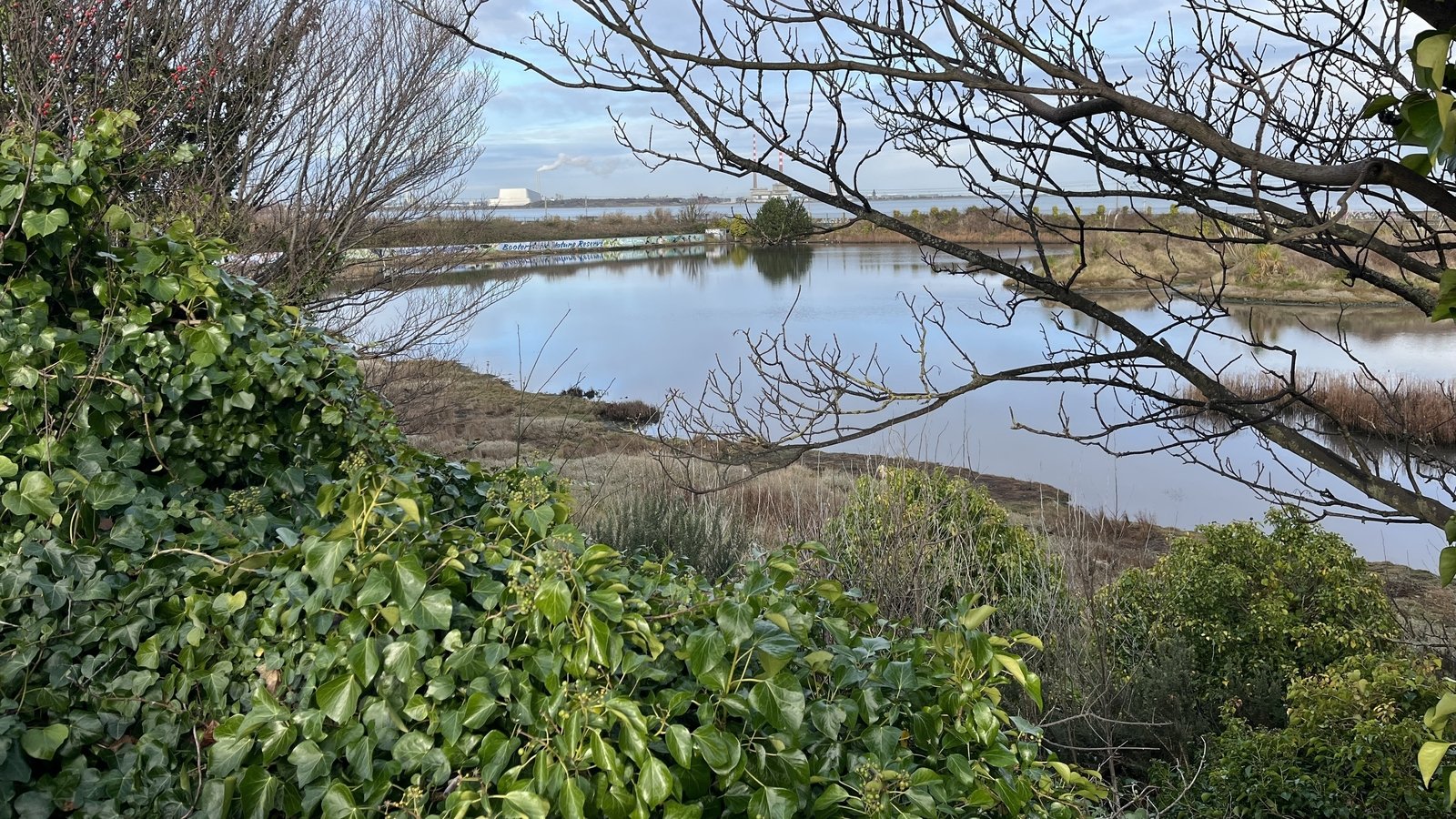
Booterstown saltmarsh
Rebecca Jeffares has been volunteering at Booterstown saltmarsh since the late 1980s.
"It was in very poor condition when I first saw it," she said. "The oil was here then."
A team of national and international volunteers came to Booterstown in the late 1980s to help clear out the oil. "I was the tea lady," Ms Jeffares said in jest.
Since then, the Booterstown saltmarsh has become a special protection area for birds, providing them with a space to rest when Dublin Bay is at high tide.
Nearly 40 years after she began, Ms Jeffares is still working to protect Booterstown marsh.
Litter, pollution, land encroachment and invasive species are all issues that Ms Jeffares as well as other An Taisce volunteers are monitoring.
The eight-acre site is surrounded by Dart rail tracks, a car park, a busy urban road and an abandoned site.
"The sea comes in under the railway line twice a day," Ms Jeffares explained.
The Nutley stream, which is polluted with sewage and grey water when it enters the marsh enters the sea unpolluted.
"The marsh naturally cleans it," Ms Jeffares said.
The neighbouring Elm Park stream, which is also polluted, goes out directly onto the strand.
When Ms Jeffares began working on the marsh, locals would tell her the area was smelly and ugly. Now, she says the perception of the area has totally changed.
"People really appreciate its importance and how vital it is for the birds and as an amenity. It's also a public amenity for people," she said.
She added: "It's a fantastic place, but it's more that we want to keep it. It's very precious, not just for Dublin, but also for the whole country.
"This is a protected site and it's a threatened site. It could very easily disappear.
"Wetlands all over the world are disappearing at an alarming rate. And they're the most, probably the most threatened ecosystem that we have.
"It's not just for the birds."
Harper's Island saltmarsh
Harper's Island Wetlands Nature Reserve near Glounthaune in Cork was once agriculture land.
The land was sold to Cork County Council in order to build a dual carriageway.
"When the council finished building the dual carriageway, they just put a padlock on it," said local ornithologist and BirdWatch Ireland volunteer Jim Wilson.
A plan was submitted by BirdWatch Ireland to make the marsh a nature reserve which was eventually implemented.
"Cork County Council have been amazing. They actually own the island and they have been fully supportive since the idea was first pitched to them back in 2008," Mr Wilson said.
The 80-acre site is now a special area of conservation and includes three birdwatching hides, a meadow and an apple orchard.
Between 4,000-5,000 birds can be on the reserve at one time during high tide. In January, bird species on Harper's Island includes grebes, dunlins, curlew, shelduck and golden plover.
As a wetland ecosystem, the marsh is also home to shrimp, plankton, small fish, insects and otters.
Cork County Council provides a small annual budget to Harper's Island, but the reserve is dependent on local volunteers for its upkeep.
The bird hides were built by the local men's shed and the orchard was planted by a boy scouts group.
Chair of Glounthaune Tidy Towns Ailbe Ryan said people can walk around the site but a tall bank has been built between the footpath and the water so that the birds are not disturbed.
A people counter on the way into the site tallied 26,000 visitors last year.
Harper's Island has also hosted numerous scientific studies and along the footpath are information boards for walkers to learn more about the reserve.
"We continue to develop all of the amenities here every year with different plans," Mr Ryan said.
The next item on the agenda is a wildlife mural on the bridge for walkers as they enter the marsh.
"Every year we have objectives and plans for this area and we'll continue to do so," Mr Ryan added.
The marsh is "totally secure now," Mr Wilson added.
"The only threat to the marsh that I can think of is climate change."
Rate this article
Login to rate this article
Comments
Please login to comment
No comments yet. Be the first to comment!