
Politics
21 min read
Iran's President Warns of 'Full-Scale War' if US Attacks Supreme Leader
The Times of Israel
January 18, 2026•4 days ago
AI-Generated SummaryAuto-generated
Iran's president warned that any US strike would result in a harsh response, and an attack on the Supreme Leader would be "full-scale war." This statement follows US President Trump's call for new Iranian leadership. Meanwhile, Iran's judiciary indicated potential executions for those arrested during recent unrest, despite ongoing internet disruptions and reports of significant protest casualties.
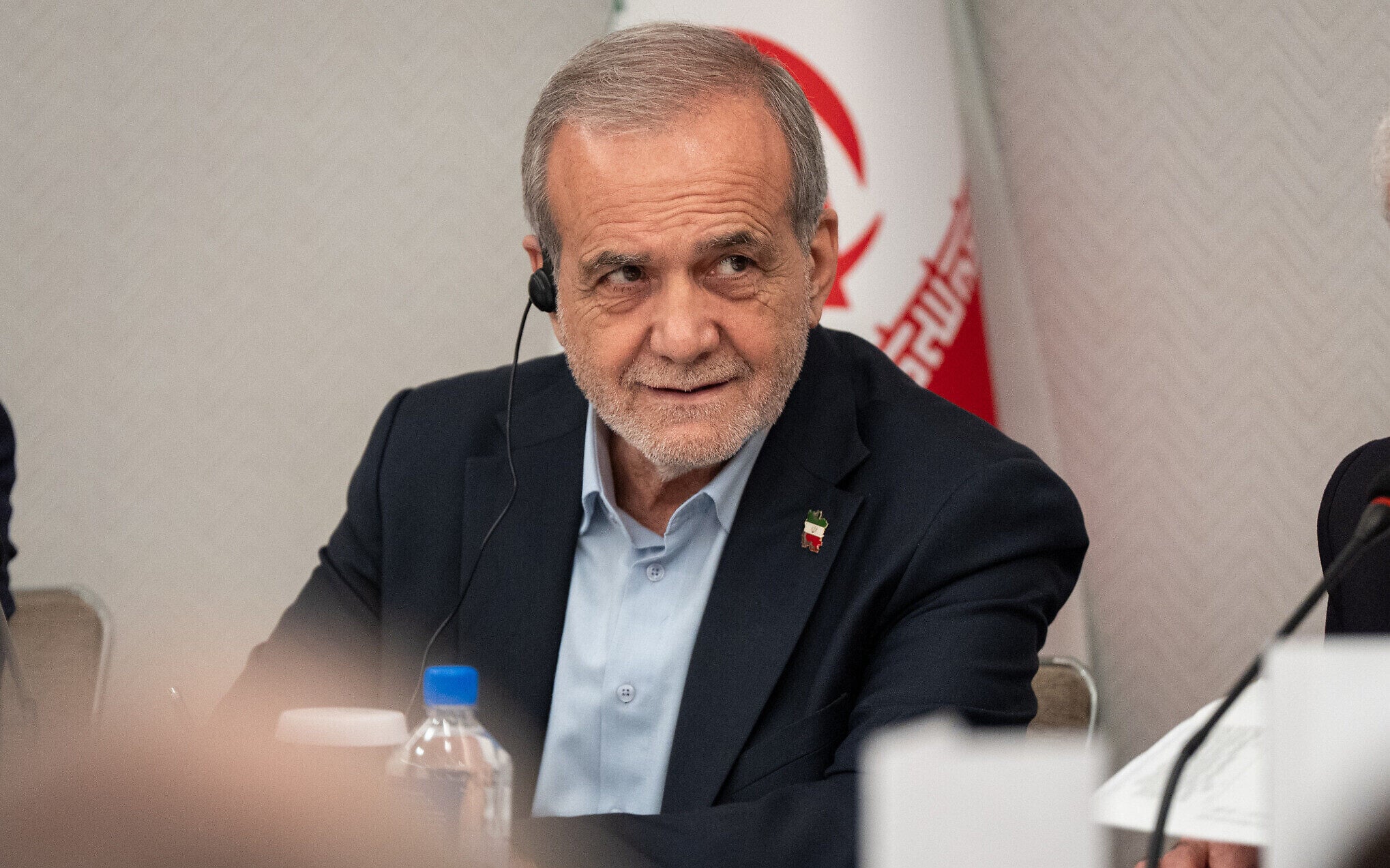
Iran’s president warned on Sunday that any US strike on the country would provoke a “harsh response,” and that any attack on its Supreme Leader Ali Khamenei would be “tantamount to a full-scale war on the Iranian nation.”
Masoud Pezeshkian’s threats came as the Islamic Republic’s judiciary hinted that it may go forward with executions of people arrested amid the recent unrest, which seems to have quelled after a violent crackdown.
Limited internet access briefly returned in Iran on Sunday but went down again shortly thereafter, as news broke that the chief executive of Irancell, Iran’s second-largest mobile phone operator, was dismissed for failing to comply with the shutdown.
Due in part to the internet blackout, the exact scale of the killings that took place amid the mass protests remains unclear. The demonstrations were sparked by an economic crisis, but grew into calls for the fall of the regime.
A Sunday Times report, based on information from doctors in Iran, said more than 16,500 people were killed and more than 330,000 injured during the unrest. An Iranian official said authorities had verified at least 5,000 people had been killed in protests, including about 500 security personnel.
In a post to X on Sunday, Iranian President Masoud Pezeshkian said: “An attack on the great leader of our country [Supreme Leader Ali Khamenei] is tantamount to a full-scale war with the Iranian nation.” In his post, Pezeshkian also blamed the US and its allies for the hardship experienced by Iranians.
The statement came a day after US President Donald Trump called Khamenei a “sick man” in an interview with Politico, and said, “It’s time to look for new leadership in Iran.” It appeared to be the first time Trump had called for the end of Khamenei’s rule in Iran.
Despite having repeatedly threatened to attack Iran if the regime were to start killing protesters, Trump has held off on any immediate military action against the Islamic Republic. He has moved US military assets into the region but has not specified what he might do.
Executions may go forward
Trump has cited, as a reason for his restraint up until now, Tehran’s allegedly canceling “the hanging of over 800 people,” saying: “I greatly respect the fact that they canceled.”
Iranian judiciary spokesperson Asghar Jahangir, however, told a press conference on Sunday: “A series of actions have been identified as Mohareb, which is among the most severe Islamic punishments.”
Mohareb, an Islamic legal term meaning to wage war against God, is punishable by death under Iranian law.
“All those who played a decisive role in these calls for violence, which led to bloodshed and significant damage to public finances, will not be spared,” Jahangir said.
A family member of detained Iranian protester Erfan Soltani said Sunday that the 26-year-old is in good physical health and was able to see his family days after his planned execution was postponed.
A close relative of Soltani who is living abroad told the AP that the family had been told his execution would be set for Wednesday, but it was postponed when they reached the prison in Karaj, a city northwest of Tehran.
“I ask everyone to help in securing Erfan’s freedom,” the relative Somayeh, who asked to be identified by first name only for fear of government reprisal, said in a video message.
Report: Israel, Saudis urged Trump against strike
Axios reported Sunday that the US military had been waiting for a green light from Trump to strike Iran last week, but that he decided against pulling the trigger under pressure from Israel and Arab allies.
The report cited four US officials, two Israeli officials, and two sources with knowledge of the details.
The US’s initial intelligence assessment was that the anti-regime protests in Iran were too contained to threaten the survival of the regime, but that position changed on January 8 when massive protests hit Tehran and other major cities, according to the report.
The first high-level meeting on a potential military response was chaired by US Vice President JD Vance on January 9, reported Axios. Iran’s Foreign Minister Abbas Araghchi contacted top Trump envoy Steve Witkoff that same weekend to open a de-escalation channel.
Trump chaired his first meeting on the protests on January 13, and was presented with several options for strikes, including from US naval ships and submarines.
According to Axios, Trump chose his favorite option and ordered preparations to be completed. According to a US official, a strike plan was ready that day but not approved.
Prime Minister Benjamin Netanyahu called Trump that same day to tell him Israel wasn’t ready to defend itself if Iran attacked the Jewish state after an American attack, and that the US plan wouldn’t achieve its goal, according to Axios.
Saudi Crown Prince Mohammed bin Salman also urged Trump not to attack, citing the need for regional stability, according to the report.
No protests have been reported for days in Iran, where the streets have returned to an uneasy calm. Instead, some Iranians chanted anti-Khamenei slogans from the windows of their homes on Saturday night, the chants reverberating around neighborhoods in Tehran, Shiraz and Isfahan, witnesses said.
One new pro-regime banner in central Tehran showed a set of dominoes with images including the former shah of Iran, ousted Iraqi ruler Saddam Hussein and Trump with the caption, “dominoes falling.”
Schools reopened on Sunday after a week of closure and authorities said “internet access would also be gradually restored,” Tasnim news agency reported on Saturday.
Telecom CEO fired for failing to block internet
Internet access was down again in Iran after a brief restoration of limited services, a monitor said on Sunday.
“As of internet shutdown hour 240, traffic levels have fallen after a brief, heavily filtered restoration of select Google and messaging services in Iran,” Netblocks said on X. “During this time, some Iranians were able to give updates detailing the severity of the crisis on the ground.”
Iran cut off all communications on January 8, as the protests intensified.
The chief executive of Irancell, Iran’s second-largest mobile phone operator, was dismissed for failing to comply with the shutdown, the Fars news agency reported Sunday.
“Alireza Rafiei was removed from the position of CEO of the company after about a year of activity,” Fars reported.
“Irancell disobeyed the orders of the decision-making institutions in implementing the announced policies regarding the restriction of internet access in crisis situations,” the agency said.
“The relevant institutions decided to dismiss the CEO of Irancell, citing ‘failure to comply with the announced rules in crisis situations’,” Fars added.
Iranian authorities have announced they are planning to restore internet access “gradually.”
Rate this article
Login to rate this article
Comments
Please login to comment
No comments yet. Be the first to comment!