
Geopolitics
26 min read
Can the US Cut Iran's Communication Blackout with Satellite Tech?
ABC News
January 19, 2026•3 days ago
AI-Generated SummaryAuto-generated
Iranian activists are urging the U.S. to allow direct-to-cell satellite service to bypass the country's internet blackout. This service would bypass local infrastructure, providing a secure connection to smartphones. U.S. approval from the FCC and Treasury Department is required. This comes as the internet shutdown continues amidst protests and a reported high death toll.
LONDON -- Iranian activists say they are lobbying the Trump administration to allow U.S. satellite and communications companies to switch on their direct-to-cell service over Iran.
The appeal for special access to this service, which allows people's cell phones to get an internet connection directly from satellites in space as opposed to a telecommunications tower, comes as an internet blackout in the country enters its second week after nationwide anti-government protests intensified last week.
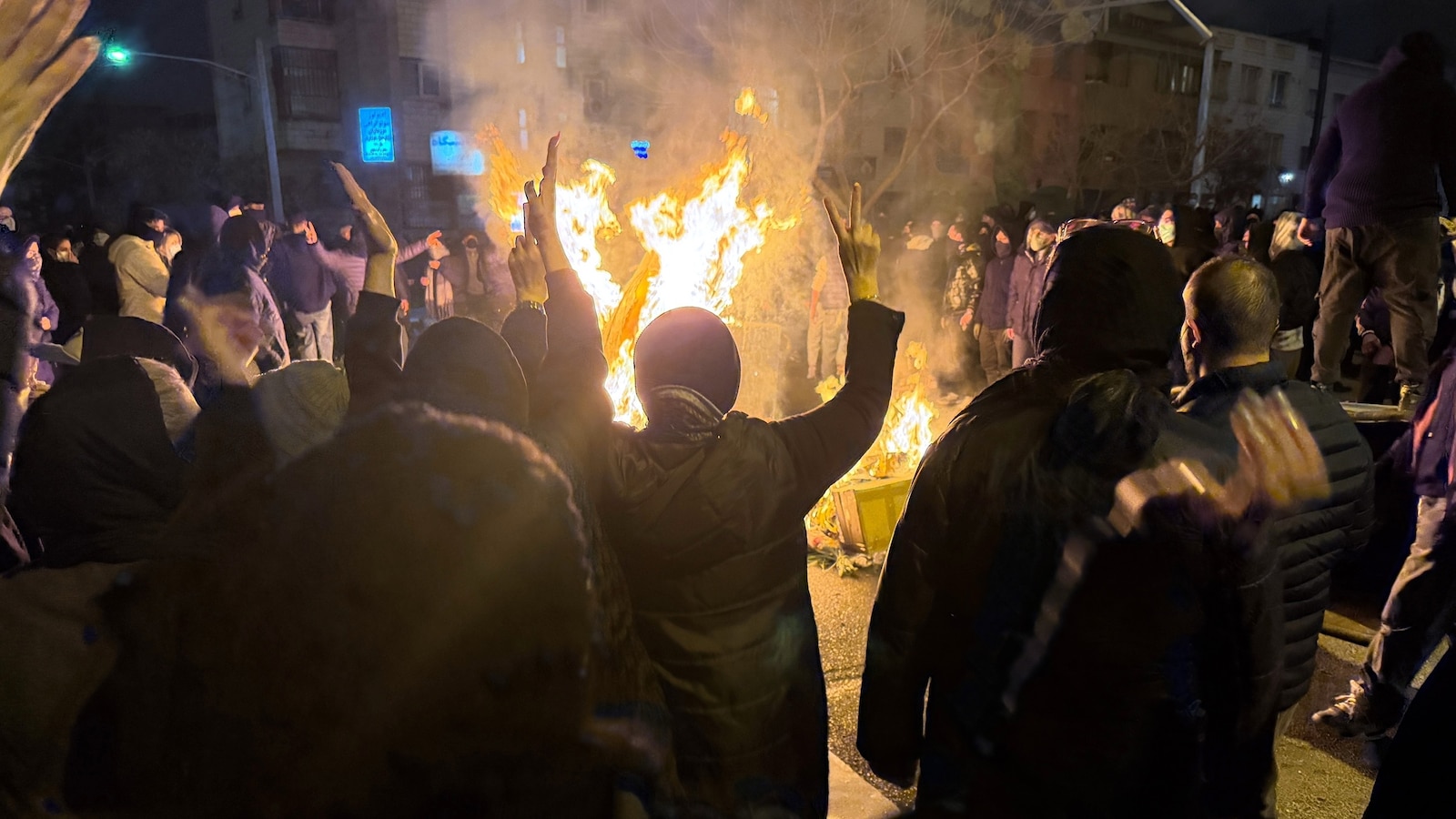
Demonstrations began in late December with protesters chanting in Tehran against rising inflation and the falling value of the national currency before spreading across Iran and becoming more explicitly anti-government.
More than 4,000 people have died in Iran since the demonstrations began on Dec. 28, including nearly 3,800 protesters, according to the latest data published by the Human Rights Activists News Agency (HRANA), a U.S.-based group that relies on a network of activists in Iran for its reporting and has been accurate during previous unrest. While ABC News cannot confirm the number independently, the true toll is expected to be higher.
Iran has been in an internet blackout since Jan. 8, when Iranian authorities imposed a near-total shutdown on the twelfth straight day of protests as demonstrations spread across the country, creating an "information vacuum," according to online monitoring and advocacy group NetBlocks.
Iranian Vice President Hossein Afshin said Monday that the country’s internet network will gradually return to "normal" and that existing restrictions will be lifted soon, as reported by the semi-official Tasnim News Agency.
With the Iran internet blackout now in its twelfth day on Monday, NetBlocks posted on X that metrics show the national connectivity "remains minimal." The advocacy group added that in recent days, messages were occasionally allowed to go through, suggesting that the regime is testing a more heavily filtered intranet.
Since the blackout began, human rights groups and the international community have struggled to get any information out of the country to assess the extent of the Islamic Republic regime's crackdown, described by several Iranian experts as "unprecedented."
Internet, landline and cellphone services have remained cut nationwide for most of the time, with the exception of very limited and short-lived windows since Wednesday when some people have been able to make international calls via mobile phones.
Activists on the ground in Iran have been relying on SpaceX's Starlink satellite terminals to beam images of the protests to the outside world. The devices, which are illegal in Iran, are the size of a small laptop and connect directly with satellites, providing a Wi-Fi connection to users. On Wednesday, SpaceX dropped all service charges for using Starlink in Iran.
The number of Starlink terminals currently in Iran is limited and smuggling more devices into the country would be dangerous and take time, according to Iranian opposition activist and cyber expert Nariman Gharib.
Since online traffic via Starlink does not go through Iranian infrastructure, the connection is independent and highly secure. But due to the high cost of the devices and the limited number of them in the country, people with Starlink terminals often share their internet connection with others through a virtual private network, or VPN, which also encrypts traffic but uses local infrastructure and is detectable by analyzing traffic patterns, according to Amir Rashidi, director of internet security and digital rights at the Miaan Group. The group is a U.S.-based human rights nonprofit focusing on Iran as well as the broader Middle East and North Africa region.
Gharib told ABC News he's heard from people in Iran that authorities are going to households suspected of possessing illegal satellite dishes, which people use to watch international television channels, such as the U.K.-based Iran International.
Detectability shouldn't be a concern with direct-to-cell service, which is when a mobile phone connects directly with a satellite overhead, bypassing any local infrastructure, as Rashidi said.
"Is it doable? Is it possible? I think so," Rashidi told ABC News, in answer to whether activating the service is possible. "But being implemented is a completely different story, I think not only for this technology, [but] for any other technology that can help."
The U.S. Federal Communications Commission (FCC) would have to approve a license for American companies to offer direct-to-cell service in Iran.
ABC News has reached out to SpaceX for comment on the possibility of offering direct-to-cell service in Iran.
Gharib said companies are licensed to operate this service within specific geographic areas and regulatory parameters, and so the FCC's authorization would be necessary for U.S. companies to beam signals into Iran.
"The FCC has the authority to issue special temporary authorizations or emergency licenses when circumstances warrant it," Gharib told ABC News.
The U.S. Department of Treasury would also need to ensure that issuing such an authorization wouldn't violate existing sanctions against Iran, according to Gharib.
The White House did not immediately respond to ABC News' request for comment on the matter.
Gharib said direct-to-cell is a growing market and several international companies offer the service. He estimates about 20% of Iranians would currently be able to access a direct-to-cell network.
Only relatively recent models of smartphones can access a direct-to-cell network and Gharib said the three most popular ones in Iran -- the Samsung Galaxy A32, A51 and A54 -- are all compatible. No additional hardware is needed as newer models can automatically connect, according to Gharib.
He said any delay in getting such a service up-and-running is "entirely bureaucratic" and a question of "political will" on the part of the U.S. government.
Rashidi agreed that "political willingness" from the U.S. and greater international community is one of "three key elements," along with "having the right policy" and, of course, "money."
"If you put together these three, there are solutions," Rashidi told ABC News.
Amid reports of a mounting death toll and fears of executions for the thousands detained in Iran, U.S. President Donald Trump initially expressed his support for the Iranian protesters, telling them in a social media post Tuesday to "keep protesting" and that "help is on its way." However, Trump told reporters Friday that he decided not to take military action on Iran at this time after the regime canceled all scheduled hangings for Thursday -- more than 800 of them, he said.
Being shut off from the internet -- and thus disconnected from the outside world -- has instilled in the minds of many Iranians a sense of total helplessness, as they feel their voices have been silenced. The issue is "of great significance to the Iranian people" as the right to access information and freedom of speech are "fundamental rights," Gharib said.
As the nationwide internet blackout in Iran surpassed the 200-hour mark, NetBlocks said in a social media post Saturday morning that "metrics show a very slight rise in internet connectivity," but "overall connectivity remains at ~2% of ordinary levels and there is no indication of a significant return." Earlier this week, NetBlocks noted the ongoing blackout had exceeded "the core duration of the 2019 shutdown," and that "in 2019, it was only after connectivity was restored that the scale of the brutal crackdown became known."
Filterwatch, a project of the Miaan Group, published a report Thursday warning that newly obtained intelligence indicates "a confidential plan is underway to turn international internet access into a 'government privilege.'"
"State media and government spokespersons have already signaled that this is a permanent shift, warning that unrestricted access will not return after 2026," Filterwatch stated in the report.
Filterwatch explained in a post on X Sunday that the temporary partial restorations of services might be a sign of the regime developing a so-called "whitelist" of users. The list would consist of a very limited number of accounts, officials, government organizations and entities trusted by the regime that will be granted privileged internet access.
Rate this article
Login to rate this article
Comments
Please login to comment
No comments yet. Be the first to comment!