
Politics
15 min read
IFAD Urges Global Leaders at WEF: Invest in Small-Scale Farmers Now
Devdiscourse
January 21, 2026•1 day ago
AI-Generated SummaryAuto-generated
IFAD urges global leaders at WEF to prioritize investment in small-scale farmers. Supporting these farmers is presented as a strategic opportunity for economic growth, job creation, and global stability. IFAD highlights that these investments are crucial for resilient food value chains and can unlock trillions in business opportunities while addressing poverty and conflict.
As the World Economic Forum (WEF) gets underway, Alvaro Lario, President of the International Fund for Agricultural Development (IFAD), alongside Sabrina Dhowre Elba, IFAD Goodwill Ambassador, is calling on global leaders and business executives to recognise investment in small-scale farmers and rural entrepreneurs as a critical economic and strategic opportunity.
Speaking ahead of high-level discussions at WEF, IFAD leaders stressed that supporting rural economies at the “first mile” of food value chains can drive prosperity, strengthen resilience, and enhance global stability in an era of climate, environmental, and geopolitical uncertainty.
“Investing in small-scale food producers and rural entrepreneurs is a triple win: it drives economic growth and jobs, unlocks business opportunities, and strengthens stability,” Lario said.
“For governments, investors and businesses alike, resilient rural economies are not only a development priority — they are a geostrategic imperative for stable global food value chains.”
Small-Scale Farmers Central to Global Food Security
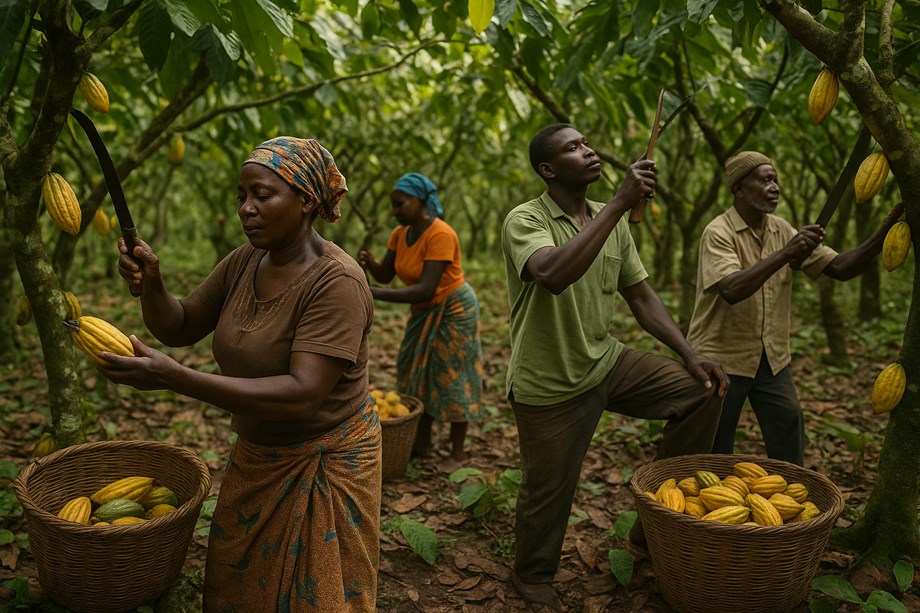
Small-scale farmers produce around one-third of the world’s food, making them indispensable to global food systems. However, IFAD warns that continued underinvestment in their productivity and climate resilience risks far-reaching consequences.
Without adequate support, vulnerabilities in rural economies can:
Undermine local livelihoods and rural development
Disrupt global commodity markets
Drive up food prices and import bills for food-deficit countries
Exacerbate social instability and insecurity
IFAD said strengthening rural economies is essential not only for development outcomes, but also for protecting the resilience of global food supply chains.
Mobilising Private Capital Through Public Investment
Lario emphasised the need to move faster in using public and concessional finance to mobilise private sector investment into rural economies.
“We must move faster to use public and concessional finance to mobilise private capital, and to scale innovative solutions that crowd in investment,” he said.
“Partnering with the private sector is not optional. It is a catalyst for sustainable and inclusive growth, resilience, and long-term development.”
At WEF, the IFAD President is outlining how de-risking mechanisms — including investment platforms, guarantee instruments, and impact funds with first-tranche loss protection — can unlock private investment in agriculture and rural enterprises.
Trillions in Economic Opportunity
Transforming food systems presents a major economic opportunity. IFAD estimates that food system transformation could generate up to US$4.5 trillion in business opportunities annually by 2030.
In Africa alone, food and beverage markets are projected to reach US$1 trillion by 2030, driven by population growth, urbanisation, and rising demand.
Investment in rural economies delivers broad-based benefits, including:
Higher agricultural productivity
Stronger and more resilient food value chains
Increased farmer incomes
New employment opportunities
Overall economic growth
Proven Impact on Jobs and Incomes
IFAD’s experience shows that targeted investments in rural communities deliver strong economic returns.
Across a sample of IFAD-financed projects:
Participant incomes increased by 34 per cent
Production and market access rose by 35 per cent
Between 2022 and 2024, IFAD-supported projects helped create nearly 390,000 jobs, highlighting the sector’s potential as a major employment engine.
Investing in Rural Economies Strengthens Global Security
IFAD also highlighted the role of rural investment in addressing the root causes of instability, including poverty, climate vulnerability, and social exclusion.
Evidence from IFAD programmes shows:
In Ethiopia, increased land productivity linked to IFAD investments was associated with a significant reduction in conflict
In Mali, areas receiving IFAD investment experienced an eight per cent decline in conflict
By strengthening livelihoods and resilience, rural investment helps reduce conflict risks, foster stability, and provide viable alternatives to forced migration.
Persistent Underinvestment in Rural Communities
Despite their central role in food systems and employment, small-scale farmers and rural entrepreneurs remain severely underfunded.
Official development assistance for agriculture has hovered at around US$10 billion annually in recent years — far below what is needed — and is projected to decline further in 2025.
At the same time, rural small and medium-sized enterprises (SMEs), which have strong potential to generate jobs and economic growth, remain largely underserved by financial institutions.
IFAD warned that closing this investment gap is essential to unlocking rural economies’ full potential and ensuring long-term global food security.
A Call to Action at WEF
Rate this article
Login to rate this article
Comments
Please login to comment
No comments yet. Be the first to comment!