
Space & Astronomy
5 min read
World's Largest Iceberg A23a Faces Rapid Disintegration
news.cgtn.com
January 19, 2026•3 days ago
AI-Generated SummaryAuto-generated
China's Fengyun-3D satellite data indicates A23a, formerly the world's largest iceberg, is rapidly disintegrating. Its size has dramatically reduced, and it is expected to vanish within weeks due to hydrofracturing and warming Southern Hemisphere conditions. Melting ponds and warmer ocean temperatures are accelerating its collapse.
China's Fengyun-3D satellite has found that A23a, once the world's largest iceberg, is entering the final stages of its disintegration.
True-color imagery with 250-meter resolution captured by the Fengyun-3D satellite on January 14 showed that the main body of A23a has shrunk to just 506 square kilometers, according to the China Meteorological Administration, less than one-eighth of its original size of 4,170 square kilometers when it first detached from the Antarctic ice shelf in 1986.
The collapse has accelerated significantly in recent weeks, as the main body of the iceberg measured 948 square kilometers just three weeks ago.
Zheng Zhaojun, a chief expert with the National Satellite Meteorological Center, said the iceberg is likely to vanish completely within the coming weeks.
Tracking by the Fengyun-3 constellation since 2023 showed a dramatic acceleration in the breakup at the start of this year.
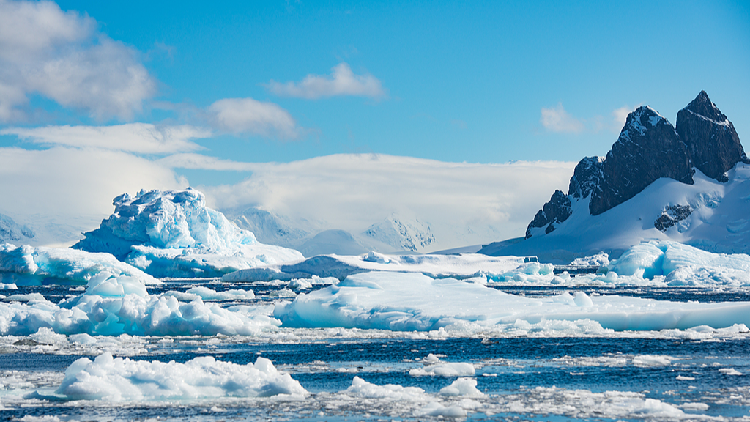
The rapid disintegration is being driven by "hydrofracturing," a process where meltwater ponds and glacial lakes on the iceberg's surface exert immense pressure on the ice. Satellite images clearly showed blue meltwater accumulating in the center, trapped by natural ridges at the edges.
Current conditions in the Southern Hemisphere summer are further hastening the demise of A23a. Relatively clear weather, rising air temperatures and seawater exceeding 3 degrees Celsius are eroding the ice, while ocean currents continue to push the fragments into warmer northern waters, according to Zheng.
A23a, once the world's largest iceberg by surface area, calved from Antarctica's Filchner Ice Shelf in 1986.
Rate this article
Login to rate this article
Comments
Please login to comment
No comments yet. Be the first to comment!