
Economy & Markets
7 min read
HMM's First Wing Sail: Korea's Landmark Emission Reduction on MR Tanker
LM - Logistics Manager
January 20, 2026•2 days ago
AI-Generated SummaryAuto-generated
HMM has installed Korea's first Wing Sail wind-assisted propulsion system on the MR tanker Oriental Aquamarine. This domestically developed technology harnesses wind power to reduce engine load, potentially saving 5-20% on fuel. The system is designed for safety and efficiency, with a two-year trial planned to assess fleet-wide rollout for decarbonization.
New Wind-Assisted Technology Targets up to 20% Fuel Savings on Trans-Oceanic Routes
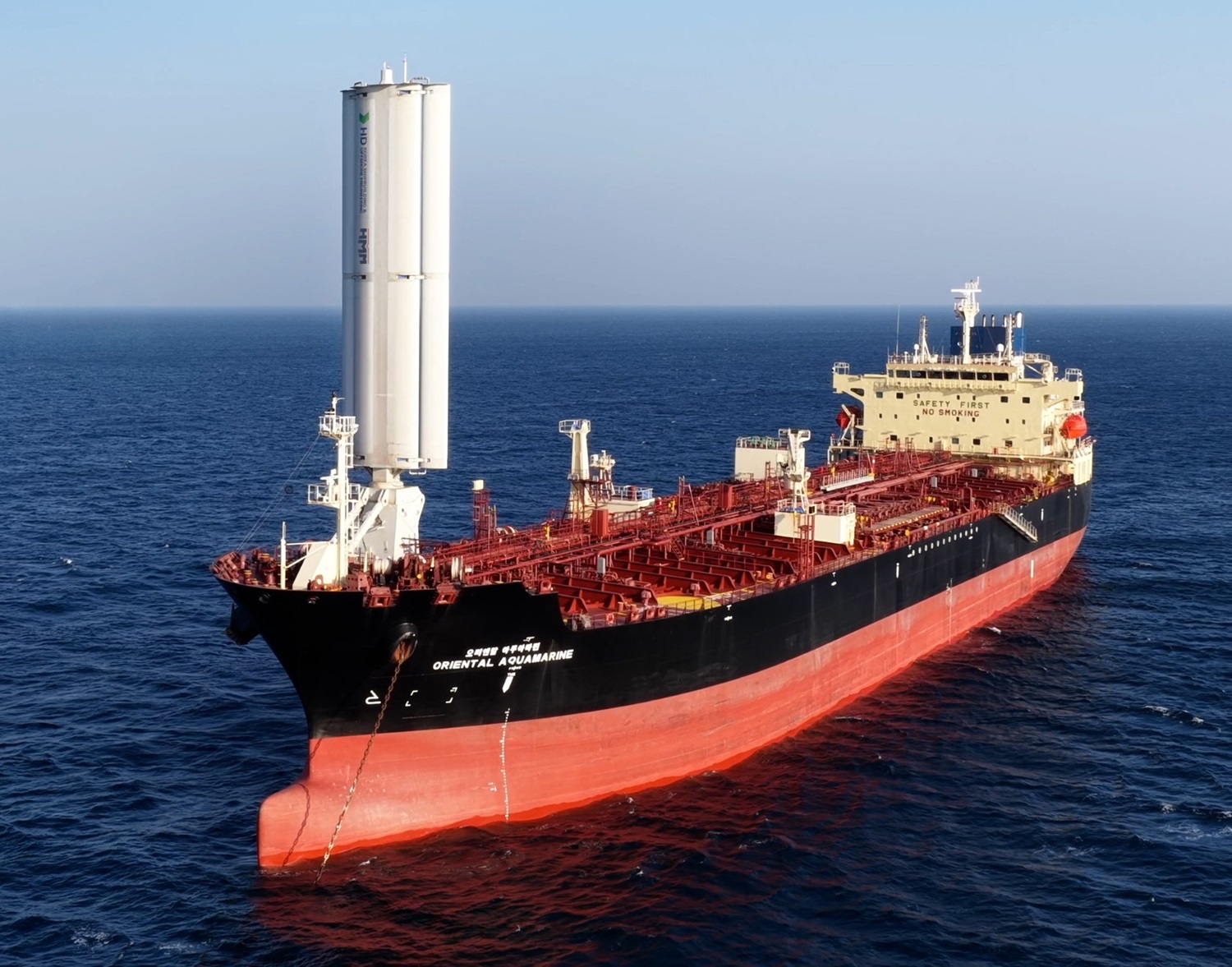
HMM has reached a major decarbonization milestone with the successful installation of its first Wing Sail wind-assisted propulsion system. The unit was fitted onto the Oriental Aquamarine, a 50,000-dwt Medium Range (MR) tanker, which officially commenced operations with the technology on 5 January 2026.
The Wing Sail, a domestically developed technology by HD Korea Shipbuilding & Offshore Engineering (HD KSOE), marks the first time a South Korean shipping company has deployed such a system on a tanker in active service. Standing 30 meters high and 10 meters wide, the rigid airfoil structure harnesses wind power to generate aerodynamic lift, providing additional thrust that directly reduces the load on the main engine.
Technical Innovation and Efficiency Gains
The installation on the Oriental Aquamarine features several advanced design elements optimized for the harsh marine environment:
Auxiliary Wing Integration: The structure includes smaller side wings to maximize wind utilization even when wind angles are less than ideal.
Tilting and Folding Function: To ensure operational safety, the sail can be lowered during severe weather or when navigating under height-restricted infrastructure like bridges.
Significant Savings: Depending on weather conditions and trading routes, HMM projects fuel savings between 5% and 20%.
Regulatory Compliance: The system is a key tool for meeting the IMO’s Carbon Intensity Indicator (CII) and the European Union’s FuelEU Maritime standards.
Two-Year Data Trial for Fleet-Wide Rollout
HMM intends to take a data-driven approach before committing to a broader rollout. Over the next two years, the carrier will collect high-fidelity operational data to verify the Wing Sail’s performance, reliability, and maintenance requirements in real-world conditions.
“Building on the low-emission technologies applied across our fleet, we will continue to advance the adoption of innovative solutions to further strengthen the long-term sustainability of our business,” an HMM official stated. If the pilot proves successful, HMM plans to expand the installation of wind-assisted propulsion across its entire bulk fleet, complementing its existing investments in LNG and methanol-powered newbuilds.
Rate this article
Login to rate this article
Comments
Please login to comment
No comments yet. Be the first to comment!